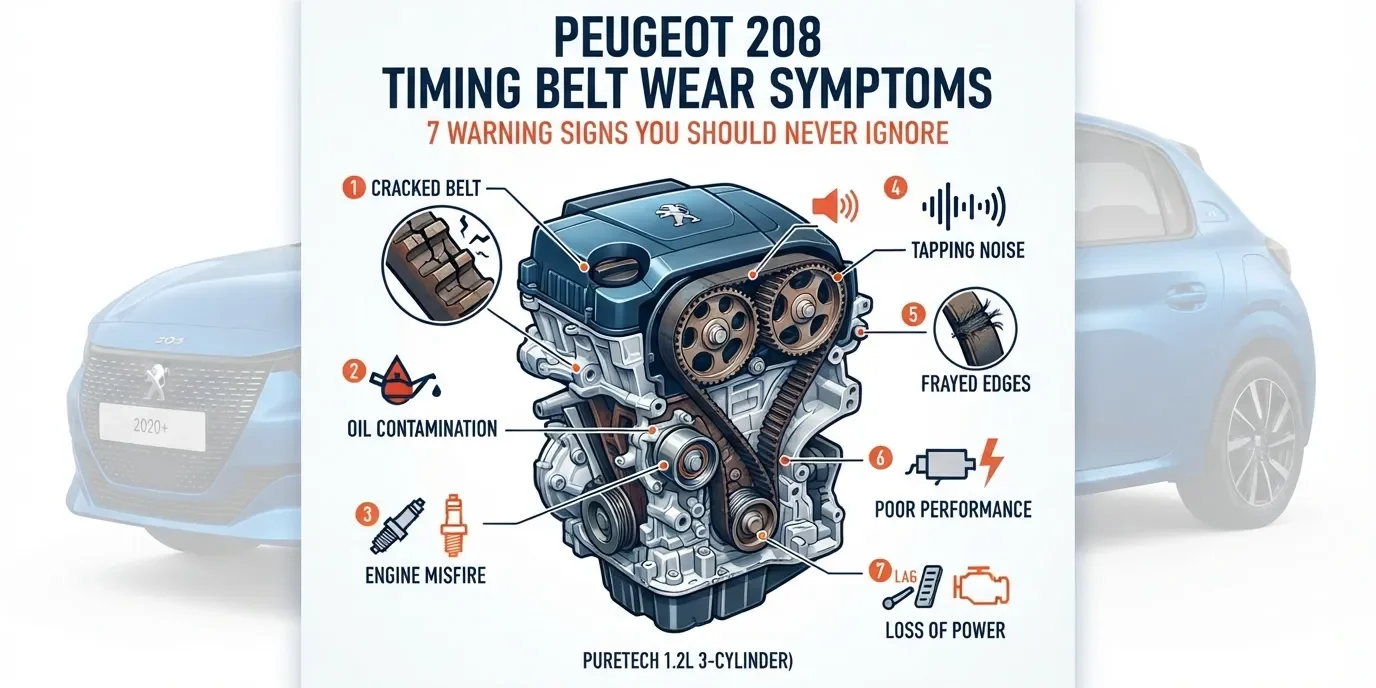
Your Peugeot 208 may start perfectly every morning, but hidden timing belt damage can put its engine at serious risk. The problem is that timing belt wear does not always produce obvious symptoms before a failure occurs.
Understanding the Peugeot 208 timing belt wear symptoms can help you recognise potential problems early and avoid expensive engine repairs. This is particularly important for Dubai drivers who regularly deal with high temperatures, traffic, and demanding driving conditions.
In this guide, we explain seven warning signs, why timing belts deteriorate, what Peugeot owners should check, and when to arrange a professional inspection at Car Garage Auto Services in Dubai.
Understanding the Peugeot 208 Timing Belt System
A timing belt is an essential engine component that synchronises the crankshaft and camshaft. It ensures the engine valves open and close at the correct time while the pistons move inside the cylinders.
When the timing belt operates correctly, the engine maintains proper combustion and smooth performance. However, as the belt ages or deteriorates, its ability to maintain accurate engine timing can become compromised.
An important detail for Peugeot 208 owners is that different engine versions may have different timing systems.
Some Peugeot 208 models equipped with 1.2 PureTech petrol engines use a wet timing belt. Unlike a conventional dry belt, a wet belt operates inside the engine and comes into contact with engine oil.
This design makes oil quality particularly important. Using unsuitable engine oil or delaying oil changes can contribute to premature belt deterioration.
Other Peugeot 208 versions have different timing arrangements. Therefore, checking the vehicle’s manufacturing year, engine code, and service history is essential before arranging a replacement.
7 Peugeot 208 Timing Belt Wear Symptoms You Should Never Ignore
Recognising early warning signs can help you take action before a minor mechanical issue becomes a major engine repair.
Here are seven symptoms that deserve attention.
1. Unusual Ticking, Rattling, or Whining Noises
An unusual noise from the engine compartment is one possible indication of a timing system problem.
A worn timing belt, damaged tensioner, or failing pulley may produce unfamiliar mechanical sounds. Depending on the underlying problem, you might notice ticking, rattling, scraping, or whining noises.
Pay attention to when the sound appears.
For example, if your Peugeot 208 makes an unusual rattling noise during a cold start that becomes quieter as the engine warms up, it deserves investigation. However, this noise is not proof of timing belt damage.
Other components, including auxiliary belts, pulleys, bearings, and engine accessories, can produce similar sounds.
A professional mechanic should inspect the timing system and related components before recommending repairs.
2. Engine Warning Light Appears on the Dashboard
An illuminated check engine light is another warning that should not be ignored.
When the engine develops a timing or lubrication-related problem, the vehicle’s engine management system may detect abnormal operating conditions.
You may notice:
- Check engine warning light staying illuminated.
- Engine management fault messages.
- Irregular engine performance.
- Reduced acceleration.
- Unusual engine behaviour.
However, a check engine light does not automatically mean your timing belt is damaged. Faulty sensors, ignition coils, fuel delivery problems, and other engine issues can trigger similar warnings.
The correct approach is to perform a diagnostic scan and investigate the recorded fault codes.
For Peugeot 208 owners in Dubai, an early diagnostic check can help identify whether the problem involves the timing system or another engine component.
3. Reduced Engine Power and Slow Acceleration
Has your Peugeot 208 started feeling slower than usual?
A timing belt that has stretched, deteriorated, or moved out of its correct position can affect the relationship between the crankshaft and camshaft.
When engine timing becomes incorrect, the combustion process may become less efficient. This can affect acceleration, engine response, and overall performance.
Common symptoms include:
- Slower acceleration than normal.
- Hesitation when pressing the accelerator.
- Reduced engine responsiveness.
- Difficulty maintaining consistent speed.
- Unusual changes in engine performance.
For example, you may notice that your Peugeot 208 struggles to accelerate when joining Sheikh Zayed Road or climbing an inclined parking ramp.
Although these symptoms can indicate a timing problem, they may also result from restricted airflow, fuel system faults, or ignition problems.
A proper engine inspection can help identify the actual cause.
4. Rough Idling and Engine Misfires
A properly functioning Peugeot 208 engine should maintain a relatively smooth idle when the vehicle is stationary.
If the timing belt becomes significantly deteriorated or loses its correct position, valve timing can become inaccurate. This may affect combustion and cause the engine to run unevenly.
You might experience:
- Noticeable engine vibration while stationary.
- Uneven engine speed.
- Repeated engine misfires.
- Shaking when waiting at traffic signals.
- Hesitation during acceleration.
Imagine sitting in traffic in Dubai and noticing that your Peugeot 208 begins shaking even though the vehicle is in Park or Neutral.
This could be related to ignition coils, spark plugs, fuel injectors, engine mounts, or a timing-related problem.
Rather than replacing parts without proper testing, have the engine diagnosed to identify the underlying fault.
5. Oil Pressure Warning Light
<mark>This is particularly important for Peugeot 208 models equipped with affected 1.2 PureTech wet-belt engines.</mark>
A wet timing belt operates inside the engine and remains exposed to engine oil. When the belt material deteriorates, small rubber particles may separate from its surface.
These particles can enter the lubrication system and potentially restrict the oil pump pickup strainer.
When oil circulation becomes restricted, engine oil pressure may drop. This can put important internal components, including bearings and other moving parts, at risk of serious damage.
Watch for:
- Red oil pressure warning light.
- Unusual engine noises.
- Signs of poor lubrication.
- Engine performance problems.
- Repeated oil pressure warnings.
Important: If the red oil pressure warning light appears while driving, stop safely as soon as possible and switch off the engine. Do not continue driving or restart it repeatedly. Arrange professional assistance.
Ignoring low oil pressure can turn a belt-related issue into extensive engine damage.
6. Visible Cracks, Fraying, or Belt Deterioration
Physical deterioration is another reason to investigate the timing system.
During a suitable inspection, a mechanic may identify signs such as:
- Cracks or damaged belt surfaces.
- Frayed edges.
- Swelling or unusual expansion.
- Missing sections of belt material.
- Abnormal belt width.
- Damaged teeth or surface deterioration.
Wet timing belts require additional attention because their condition can be affected by the engine oil they operate in.
For applicable 1.2 PureTech engines, technicians may use a dedicated measuring tool to check whether the belt has expanded beyond the acceptable specification.
It is important to understand that a visual inspection alone cannot guarantee that a timing belt is healthy. Some forms of internal deterioration are difficult to identify without the correct inspection procedure.
7. Difficulty Starting or Unexpected Engine Stalling
Starting problems can sometimes indicate a serious engine timing issue.
If the timing belt becomes excessively worn or jumps a tooth, the engine’s valve timing may become incorrect. This can interfere with combustion and prevent the engine from operating normally.
You may experience:
- Longer cranking before the engine starts.
- Repeated starting difficulties.
- Unexpected engine stalling.
- Severe engine vibration.
- An engine that refuses to start.
A broken timing belt can cause much more serious damage, particularly in interference engines where the pistons and valves can collide.
However, starting problems can also result from a weak battery, faulty starter motor, fuel delivery issues, or ignition problems.
If your Peugeot 208 suddenly stalls or develops severe mechanical symptoms, avoid repeated starting attempts and arrange a professional inspection.
Why Does a Peugeot 208 Timing Belt Wear Out?
Timing belts naturally deteriorate through age, mileage, and operating conditions. However, several factors can contribute to premature wear.
Incorrect or Poor-Quality Engine Oil
This is particularly relevant to wet-belt Peugeot 208 engines.
Because the belt operates inside engine oil, using a lubricant that does not meet the manufacturer’s required specifications can affect belt durability.
Always use engine oil approved for your exact engine version. Do not choose oil based only on viscosity or price.
High Temperatures and Driving Conditions in Dubai
Dubai’s climate creates demanding conditions for vehicle maintenance.
High ambient temperatures, heavy traffic, frequent short journeys, and repeated stop-and-go driving can place additional demands on engine cooling and lubrication systems.
These conditions make regular servicing particularly important. Peugeot also identifies climate as one factor that can contribute to premature timing belt wear.
Delayed Oil Changes
Postponing engine oil changes can affect lubrication quality.
For wet-belt engines, degraded or unsuitable oil can contribute to belt deterioration. Following the correct oil service schedule is therefore an important part of timing belt maintenance.
Excessive Mileage and Vehicle Age
A timing belt does not last forever.
Even when a vehicle has relatively low mileage, its timing belt can deteriorate as it ages. Both mileage and time must be considered when determining the correct replacement schedule.
A used Peugeot 208 with an incomplete service history deserves particular attention.
Coolant Leaks and Water Pump Problems
Coolant leaks can also affect timing belt life.
Peugeot’s maintenance guidance identifies water pump leakage and coolant loss as factors that can shorten the service life of timing system components.
This is why the water pump and surrounding components should be checked when arranging timing belt replacement.
How Often Should You Replace a Peugeot 208 Timing Belt?
There is no single replacement interval that applies to every Peugeot 208.
The correct schedule depends on several factors:
- Engine type and engine code.
- Manufacturing year.
- Vehicle mileage.
- Previous maintenance history.
- Driving conditions.
- Latest manufacturer maintenance recommendations.
Some 1.2 PureTech engines use wet timing belts, while other Peugeot 208 versions have different timing system configurations.
If you own a used Peugeot 208 and cannot confirm when the timing belt was last replaced, do not assume it is still safe based on mileage alone.
Check the manufacturer’s maintenance schedule for your specific vehicle. If the service history is missing, arrange an inspection to establish the next maintenance requirement.
Preventive replacement is generally much less expensive than repairing an engine after timing belt failure.
How Can You Prevent Peugeot 208 Timing Belt Problems?
Good maintenance habits can help reduce the risk of premature timing system deterioration.
Here are five practical steps Peugeot owners should follow.
- Follow the correct oil specification. Use manufacturer-approved engine oil suitable for your exact Peugeot engine.
- Change engine oil on schedule. Avoid extending oil change intervals, especially if your vehicle uses a wet timing belt.
- Check the timing belt condition. Ask your mechanic to inspect the timing system according to the manufacturer’s procedure.
- Monitor coolant levels. Investigate coolant loss or water pump leakage instead of repeatedly topping up the reservoir without finding the cause.
- Keep maintenance records. Maintain invoices and service records showing previous belt inspections and replacements.
These simple steps can help you identify potential problems earlier and maintain better engine reliability.
Professional Peugeot Timing Belt Inspection and Engine Repair in Dubai
If your Peugeot 208 is showing unusual engine noises, rough idling, reduced performance, or an oil pressure warning, arranging a professional inspection is a sensible next step.
At Car Garage Auto Services, we help Peugeot owners in Dubai identify engine problems and understand which repairs their vehicles actually need.
A proper timing system inspection may include:
- Checking the vehicle’s engine type and maintenance requirements.
- Inspecting the timing belt and related components.
- Checking for oil leaks and lubrication problems.
- Examining the water pump and cooling system.
- Performing an engine diagnostic scan when required.
- Assessing whether timing belt replacement or further engine repair is necessary.
For applicable wet-belt engines, checking belt condition and the lubrication system is particularly important. Replacing the belt without investigating an existing oil pressure problem may leave the underlying issue unresolved.
Our approach is to identify the source of the problem before recommending a repair.
If your Peugeot 208 needs timing belt replacement, related engine work, or a general mechanical inspection, contact Car Garage Auto Services in Dubai to discuss your vehicle’s requirements.
Conclusion
Peugeot 208 timing belt problems should never be ignored, particularly when the vehicle develops unusual noises, rough idling, reduced engine power, or oil pressure warnings.
Understanding these seven warning signs can help you recognise when your car needs professional attention.
Remember that not every Peugeot 208 uses the same timing belt system, and visible symptoms do not always reveal the full extent of wear. Following the correct manufacturer maintenance schedule and checking the belt according to the appropriate inspection procedure are essential.
If you are unsure about your Peugeot 208’s timing belt condition, arrange an inspection with Car Garage Auto Services in Dubai before a potential problem develops into expensive engine damage.
Protecting your engine starts with the right maintenance at the right time.
Frequently Asked Questions
1. What are the most common Peugeot 208 timing belt wear symptoms?
Common warning signs include unusual engine noises, rough idling, reduced acceleration, engine misfires, oil pressure warnings, visible belt deterioration, and starting difficulties. However, some timing belt problems develop without obvious symptoms, so following the correct inspection and replacement schedule is important.
2. Does the Peugeot 208 1.2 PureTech have a wet timing belt?
Some Peugeot 208 models with 1.2 PureTech petrol engines use a wet timing belt that operates inside engine oil. However, the exact configuration depends on the engine version and production year. Check your engine code and vehicle specifications before arranging maintenance.
3. Can a worn Peugeot 208 timing belt damage the engine?
Yes. If the timing belt breaks or moves out of position, the engine’s valve timing can be disrupted. In interference engines, this can cause pistons and valves to collide, resulting in serious internal engine damage.
4. Can I drive my Peugeot 208 with timing belt warning symptoms?
It depends on the symptoms. Minor unusual noises should be investigated promptly, but a red oil pressure warning, severe engine noise, sudden stalling, or suspected timing belt failure requires you to stop safely and switch off the engine. Arrange professional assistance rather than continuing to drive.
5. Where can I get a Peugeot 208 timing belt inspection in Dubai?
You can contact Car Garage Auto Services in Dubai for a professional inspection of your Peugeot 208 timing system. A technician can check the engine configuration, inspect relevant components, and advise whether timing belt replacement or additional engine repairs are required.