Foggy mornings in Dubai can turn a normal daily commute into a serious driving challenge. Reduced visibility makes it harder to judge distances, notice other vehicles and react to sudden changes in traffic. Even experienced drivers can struggle when thick fog appears on busy roads and highways.
Before heading out, your vehicle needs to be ready for these conditions. Clear headlights, effective wipers and tyres with proper tread can make an important difference to your safety.
In this guide, we explain how to prepare your car for foggy weather in Dubai, what to inspect before driving and when professional car maintenance can help keep your vehicle road-ready.
Why Is Fog Driving Risky in Dubai?
Fog reduces the distance you can see ahead. This means you may notice a stopped vehicle, road obstruction or sudden traffic movement much later than usual.
In Dubai, fog can be particularly challenging during early morning journeys. Drivers travelling on Sheikh Mohammed Bin Zayed Road, Emirates Road and other major routes may experience sudden changes in visibility.
The biggest problem is that fog does not always appear evenly. One section of the road may have reasonable visibility, while another can become extremely difficult to navigate within minutes.
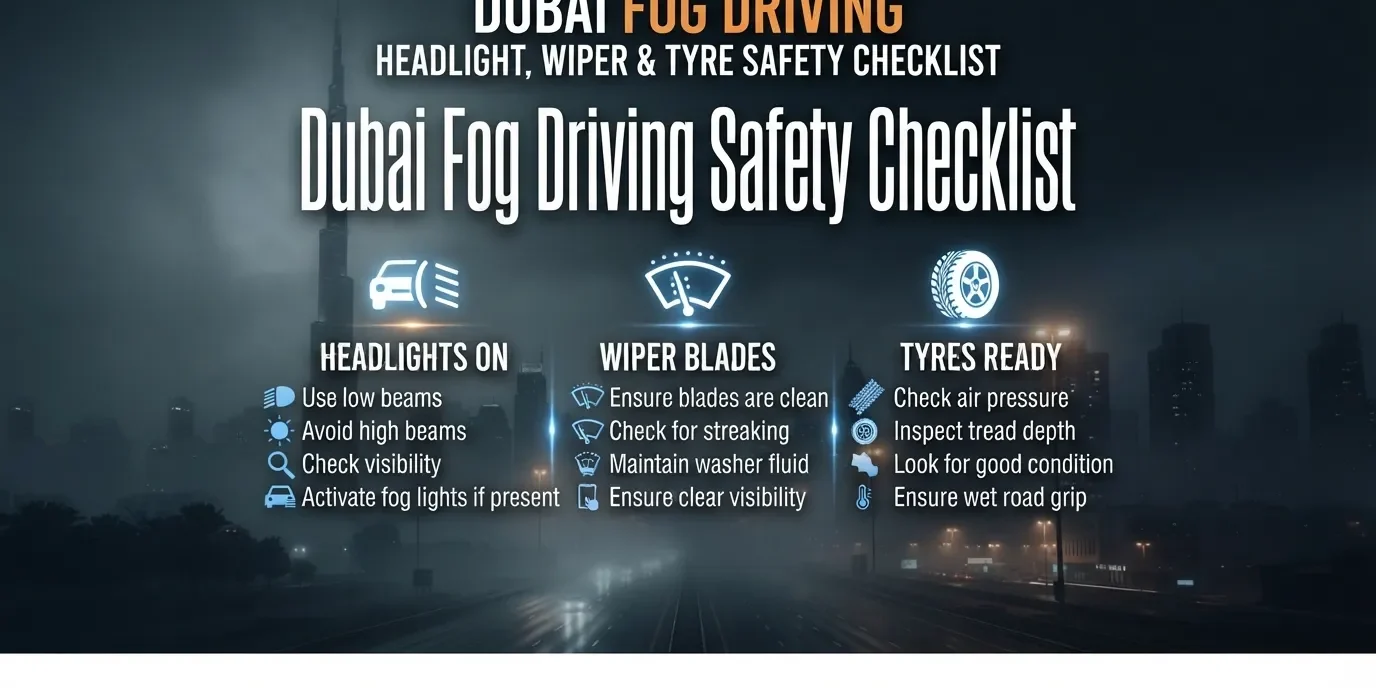
Three vehicle components deserve particular attention before driving in these conditions:
- Headlights: Help you see the road and make your vehicle visible to others.
- Wipers: Keep the windscreen clear from moisture, dust and dirt.
- Tyres: Provide the grip needed to maintain control and stop safely.
A problem with any of these components can increase driving risks when visibility is already limited.
1. Check Your Headlights Before Driving in Fog
Your headlights are one of the most important safety features during foggy weather. However, simply switching them on is not enough. They must be clean, correctly aligned and working properly.
Dust, heat and sunlight in Dubai can affect headlight lenses over time. Plastic covers may become cloudy or yellow, reducing the amount of light reaching the road.
Low Beam or High Beam: Which Should You Use?
Always use low-beam headlights when driving in fog. High-beam lights can reflect off tiny water droplets in the air, creating glare and making it harder to see the road.
If your vehicle has front fog lights, use them alongside low beams when conditions require them. Rear fog lights should be used only when visibility is seriously reduced, as their brightness can disturb drivers behind you.
Headlight Safety Checklist
Before driving, check the following:
- Both low-beam headlights are working.
- High beams switch on and off correctly.
- Front fog lights function properly.
- Rear fog lights work when needed.
- Headlight lenses are clean and free from heavy cloudiness.
- Headlights point in the correct direction.
- Brake lights and indicators are clearly visible.
Why does headlight alignment matter?
Incorrectly aligned headlights can create problems for both you and other drivers. Lights pointing too high may cause glare, while lights pointing too low may not illuminate enough of the road ahead.
If your headlights look dim, uneven or cloudy, consider a professional lighting inspection. Headlight restoration or replacement may be necessary depending on the condition of the lenses.
2. Inspect Your Wipers and Windscreen Condition
Many drivers associate wipers with rainy weather, but they are also important during foggy mornings.
Moisture, overnight condensation and dust can create a thin layer on your windscreen. If your wiper blades are worn, they may spread dirt and moisture instead of clearing the glass properly.
This can create streaks and reflections from surrounding headlights, making visibility even worse.
Signs Your Wiper Blades Need Replacement
Pay attention to these common warning signs:
- Streaking: Water remains on the windscreen after each wipe.
- Squeaking: Blades produce unusual sounds when moving.
- Skipping: Wipers move unevenly across the glass.
- Cracked rubber: The blade edges appear dry, split or damaged.
- Uncleared areas: Parts of the windscreen remain dirty or wet.
Dubai’s summer heat can cause wiper rubber to harden, even when the blades are not used frequently. This is why checking them before the foggy season is a sensible maintenance habit.
Check Your Windscreen Washer System
Working wipers need an effective washer system.
Make sure the washer fluid reservoir is filled with suitable screen-wash fluid. Check that the spray nozzles are not blocked and that the fluid reaches the windscreen correctly.
Also clean the inside of your windscreen. Dust and oily deposits can increase glare when headlights shine through fog.
Helpful tip: If your windscreen starts fogging from the inside, use your vehicle’s air conditioning and front defogger. These systems help remove moisture from the glass and restore visibility.
3. Check Tyre Condition and Pressure for Better Road Grip
Tyres play a major role in vehicle stability and braking. During foggy weather, roads may also have moisture on their surfaces, reducing available grip.
Worn tyres can make it harder to maintain control, particularly during sudden braking or steering movements.
Before the foggy season, inspect all four tyres carefully.
Check Tyre Tread Depth
Tyre tread consists of grooves designed to help move water away from the contact area between the tyre and road.
As the tread wears down, the tyre becomes less effective at maintaining grip on wet surfaces.
The UAE minimum legal tread depth is 1.6 mm. However, reaching the legal minimum does not mean a tyre is performing at its best. Replacing tyres earlier may be sensible when tread wear is significant or performance has declined.
Look for these warning signs:
- Tread grooves appear shallow.
- Wear indicators are level with the tyre surface.
- One side of the tyre is wearing faster than the other.
- Cracks or cuts appear on the sidewalls.
- Bulges or unusual shapes are visible.
If you notice any of these problems, arrange a professional tyre inspection.
Check Tyre Pressure
Incorrect tyre pressure can affect handling, braking and tyre wear.
Check pressure when tyres are cold, preferably before starting your journey. Follow the manufacturer’s recommended pressure shown on the driver’s door sticker or vehicle manual.
Do not rely on the maximum pressure printed on the tyre sidewall as your normal inflation target.
Also check the spare tyre if your vehicle carries one. A properly maintained spare can be valuable during an unexpected tyre problem.
Do Not Ignore Tyre Age
Tyres can deteriorate even when their tread looks acceptable. Heat exposure, storage conditions and normal ageing can affect rubber quality.
Check the manufacturing date printed on the tyre sidewall. If you notice cracks, hardening or other signs of deterioration, ask a tyre professional whether replacement is necessary.
4. Inspect Your Brakes Before Foggy Morning Journeys
Good visibility helps you react to hazards, but reliable brakes help you respond safely.
Foggy conditions often require slower driving and more distance between vehicles. Your braking system must be in suitable condition to handle unexpected situations.
Watch for these warning signs:
- Squealing or grinding sounds when braking.
- Steering wheel vibration during braking.
- A brake pedal that feels unusually soft.
- Longer stopping distances.
- Brake warning lights on the dashboard.
Worn brake pads, damaged discs or brake fluid problems should never be ignored.
If you experience unusual braking behaviour, have the system inspected before continuing regular journeys.
5. Check Your Windscreen, Mirrors and Defogger
Your visibility depends on more than headlights and wipers. Clean glass and properly adjusted mirrors also help you understand what is happening around your vehicle.
Before leaving home, clean your windscreen, rear window and side mirrors. Remove dust, fingerprints and any oily film that could create glare.
Check that your front and rear defogger systems work correctly. If your vehicle has heated mirrors, make sure they function as intended.
A clean windscreen combined with a working defogger can make a noticeable difference during early morning fog.
6. Essential Fog Driving Tips for Dubai Roads
Even a well-maintained vehicle cannot remove every risk associated with fog. Your driving behaviour remains one of the most important safety factors.
Follow these practical precautions:
Reduce your speed gradually. Drive at a speed that matches the available visibility. Avoid sudden acceleration or harsh braking.
Maintain a safe following distance. Leave more space between your vehicle and the one ahead. You need additional time to react when visibility is poor.
Avoid high-beam headlights. Use low beams and appropriate fog lights instead.
Avoid unnecessary overtaking. Changing lanes or passing other vehicles can be dangerous when you cannot see far ahead.
Follow road markings. Use lane markings and the right edge of the road as visual guides. Do not rely entirely on the taillights of the vehicle in front.
Keep your windows clear. Use the air conditioning and defogger to prevent condensation.
Avoid distractions. Keep your attention on the road and avoid using your mobile phone while driving.
Follow official warnings. Check weather updates and road instructions before travelling.
If visibility becomes too poor to continue safely, move to a suitable safe location away from moving traffic. Do not stop in an active traffic lane.
For additional guidance, follow the Roads and Transport Authority’s recommendations for driving in fog.
7. When Should You Book a Professional Car Inspection?
A quick home inspection can identify obvious problems, but some vehicle issues require professional attention.
For example, a headlight may turn on but still produce weak illumination. Tyres may show uneven wear caused by wheel alignment problems. Wiper motors may also become weak without completely stopping.
A professional inspection can help identify these issues before they affect your daily driving.
Consider arranging a car inspection if:
- Your headlights appear dim or incorrectly aligned.
- Your wipers leave streaks despite cleaning the windscreen.
- Your tyres show uneven wear or sidewall damage.
- Your brakes produce unusual sounds.
- Your vehicle pulls to one side while driving.
- Dashboard warning lights remain illuminated.
Regular vehicle maintenance is particularly useful for cars that travel long distances or spend considerable time on Dubai’s roads.
How Car Garage Auto Services Helps Prepare Your Vehicle for Foggy Weather
Preparing your vehicle for foggy conditions involves more than checking whether the engine starts properly. Lighting, tyres, brakes, windscreen visibility and other safety components all deserve attention.
At Car Garage Auto Services in Al Quoz, Dubai, vehicle owners can arrange professional maintenance and inspection support to help keep their cars in good working condition.
Our automotive service team can assist with relevant vehicle maintenance requirements, including:
- Car inspection: Identify visible vehicle condition and maintenance concerns.
- Tyre services: Check tyre condition and identify potential replacement needs.
- Brake inspection: Assess brake components for signs of wear or performance issues.
- Electrical services: Investigate lighting and other electrical problems.
- Wiper system checks: Identify issues affecting windscreen cleaning and visibility.
- General car maintenance: Address developing problems before they become more serious.
Whether you drive a BMW, Mercedes-Benz, Audi, Toyota, Nissan, Land Rover or another vehicle brand, keeping essential safety components in good condition is important throughout the year.
If you notice any warning signs before the foggy season, arrange an inspection rather than waiting for the problem to become worse.
Final Thoughts
Driving in Dubai fog requires preparation, patience and a vehicle that is ready for reduced visibility.
Check your headlights, replace worn wiper blades, maintain correct tyre pressure and inspect your brakes regularly. Just as importantly, reduce your speed, maintain a safe distance and follow official road safety instructions.
A few simple checks before your morning journey can help you identify problems early and reduce avoidable driving risks.
If your vehicle needs attention, contact Car Garage Auto Services in Al Quoz, Dubai, to discuss the appropriate inspection or maintenance service. A properly maintained vehicle gives you greater confidence when road conditions become challenging.
Frequently Asked Questions
1. Which headlights should I use when driving in fog in Dubai?
Use low-beam headlights when driving in fog. If your vehicle has front fog lights, use them alongside low beams when visibility requires it. Avoid high beams because their light can reflect off moisture droplets and create glare.
2. How often should I check my car wiper blades in Dubai?
Inspect your wiper blades regularly, particularly before the foggy season and after long periods of hot weather. Replace them if they produce streaks, skip across the glass or have cracked rubber edges.
3. What is the minimum legal tyre tread depth in the UAE?
The minimum legal tyre tread depth in the UAE is 1.6 mm. However, tyres may need replacement earlier if they have uneven wear, cracks, bulges or reduced performance.
4. Can worn tyres affect driving in fog?
Yes. Foggy conditions may involve damp road surfaces, and worn tyres can provide less grip. This can affect vehicle stability and braking, especially when drivers need to react quickly.
5. What should I check before driving on Dubai highways during fog?
Check your headlights, fog lights, wipers, washer fluid, tyre pressure, tread depth and brakes. Clean your windows and mirrors, check weather warnings and allow extra travel time.
6. Where can I get my car inspected before foggy weather in Dubai?
You can contact Car Garage Auto Services in Al Quoz, Dubai, to discuss a vehicle inspection and relevant maintenance services. A professional check can help identify lighting, tyre, brake and visibility-related problems.