Introduction
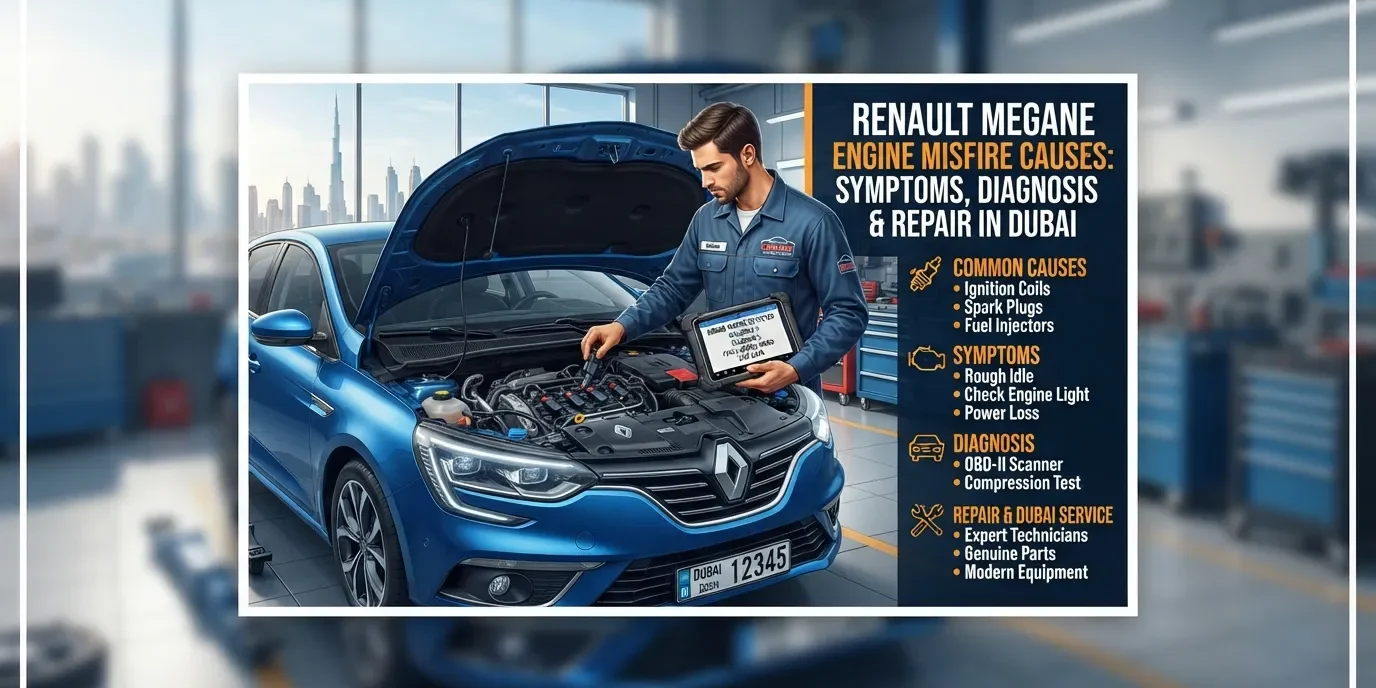
Does your Renault Megane shake when you stop at traffic lights, hesitate when accelerating, or struggle to maintain a smooth idle? These problems may indicate an engine misfire. Although the car might still run, ignoring the symptoms can lead to poor fuel economy, reduced performance, and expensive engine or exhaust repairs. Understanding the common Renault Megane engine misfire causes can help you identify the problem before it becomes more serious. In this guide, we explain the warning signs, possible mechanical faults, and professional repair options available for Renault Megane owners in Dubai.
What Is an Engine Misfire in a Renault Megane?
An engine misfire happens when one or more cylinders fail to burn the air and fuel mixture properly. This interrupts the normal combustion process and prevents the affected cylinder from producing its expected power.
Your Renault Megane needs the correct balance of air, fuel, and ignition to run smoothly. If any part of this process fails, you may notice engine vibration, hesitation, rough idling, or reduced acceleration.
For example, imagine driving through Al Quoz during busy afternoon traffic. Your Megane feels normal at first, but when you stop at a traffic signal, the engine starts shaking. Once you press the accelerator, the car hesitates before moving forward.
This behaviour can indicate a misfire, although other engine and mounting problems can produce similar symptoms. A proper inspection is necessary to identify the actual cause.
Common Renault Megane Engine Misfire Symptoms
An engine misfire does not always start with a major performance problem. In many cases, the first signs are small changes in how your vehicle sounds, feels, or responds.
Here are some common symptoms Renault Megane owners should watch for.
1. Rough Idling and Engine Shaking
One of the earliest signs of an engine misfire is rough idling. You may notice the engine vibrating more than usual when the car is stationary.
The vibration can become more noticeable when waiting at traffic lights or running the air conditioning. This may happen because one cylinder is not producing consistent power.
However, worn engine mounts can also cause similar vibrations. Technicians should inspect both the combustion system and engine mounts before recommending repairs.
2. Loss of Engine Power
Does your Renault Megane feel weaker than usual when accelerating?
A misfiring cylinder cannot contribute its normal share of engine power. As a result, the vehicle may struggle when joining a highway, overtaking another car, or climbing an incline.
If the power loss happens suddenly, avoid pushing the engine harder. Continued driving with a serious misfire can create additional damage.
3. Hesitation During Acceleration
Another common symptom is hesitation when pressing the accelerator.
You may feel the car jerking, responding slowly, or struggling to increase speed smoothly. This can happen when ignition coils, spark plugs, or fuel injectors fail to deliver consistent combustion.
The problem may become more noticeable when the engine is under load because it needs a reliable supply of fuel and a strong ignition spark.
4. Check Engine Light
Your Renault Megane uses an engine management system to monitor combustion and other operating conditions.
When the system detects a misfire, it may store a diagnostic trouble code and activate the Check Engine warning light.
Common misfire-related codes include:
- P0300: Random or multiple cylinder misfire.
- P0301: Cylinder 1 misfire.
- P0302: Cylinder 2 misfire.
- P0303: Cylinder 3 misfire.
- P0304: Cylinder 4 misfire.
The codes help technicians narrow down the problem, but they do not automatically identify which component needs replacement.
Important: A flashing Check Engine light can indicate an active and severe misfire. Reduce engine load, stop somewhere safe, switch off the engine, and arrange professional assistance. Continuing to drive may damage the catalytic converter.
5. Increased Fuel Consumption
A misfiring engine may burn fuel inefficiently. Depending on the fault, some fuel may not burn properly inside the affected cylinder.
You might notice that your Renault Megane needs more frequent refuelling even though your daily driving routine has not changed.
Worn spark plugs, weak ignition coils, injector problems, and incorrect air and fuel mixtures can all contribute to poor fuel economy.
6. Unusual Exhaust Smell
Incomplete combustion can allow unburned fuel to enter the exhaust system.
This may produce an unusual fuel smell or irregular exhaust behaviour. If you notice a strong petrol smell alongside engine shaking, stop driving and arrange an inspection.
What Are the Main Causes of a Renault Megane Engine Misfire?
Several components work together to keep your engine running correctly. A problem in the ignition, fuel delivery, air intake, electrical system, or internal engine can interrupt combustion.
Understanding these possible faults helps explain why professional diagnosis is important.
1. Worn or Damaged Spark Plugs
Spark plugs create the electrical spark that ignites the air and fuel mixture inside petrol engine cylinders.
Over time, their electrodes wear down. Carbon deposits, oil contamination, and excessive gaps can also affect their performance.
When a spark plug becomes weak or damaged, your Renault Megane may develop rough idling, difficult starting, hesitation, and reduced engine power.
Replacing spark plugs with the correct manufacturer specified parts can restore proper ignition when worn plugs are confirmed as the cause.
The replacement interval depends on your Megane’s engine type, model year, and spark plug specification.
2. Faulty Ignition Coils
Ignition coils convert the vehicle’s electrical supply into the high voltage required by spark plugs.
If a coil becomes weak or stops working, the affected cylinder may not receive enough electrical energy to ignite the air and fuel mixture correctly.
Common signs of ignition coil problems include:
- Engine shaking at idle.
- Misfires during acceleration.
- Difficulty starting the engine.
- Reduced fuel efficiency.
- An illuminated Check Engine light.
In some Renault Megane petrol engines, individual ignition coils are fitted to each cylinder. The exact arrangement depends on the engine version.
A technician can inspect the coils, electrical connections, and diagnostic data to identify the faulty component.
3. Dirty or Faulty Fuel Injectors
Fuel injectors deliver a controlled amount of fuel into the engine. They must operate correctly to maintain the right air and fuel balance.
When an injector becomes clogged or develops an electrical fault, the affected cylinder may receive too little fuel or an incorrect spray pattern.
This can result in rough running, hesitation, engine vibration, and increased fuel consumption.
In Dubai, vehicles exposed to frequent traffic and demanding driving conditions still require regular fuel system maintenance. However, injector problems should be confirmed through testing rather than assuming that cleaning is always necessary.
Depending on the inspection results, professional injector cleaning, servicing, or replacement may be recommended.
4. Weak Fuel Pump or Low Fuel Pressure
Your Renault Megane needs consistent fuel pressure to maintain proper engine operation.
A weak fuel pump, restricted fuel supply, or faulty pressure control component can prevent the engine from receiving enough fuel.
You may notice that the car runs reasonably well at low speeds but struggles when accelerating or driving at higher engine loads.
Fuel pressure testing can help determine whether the problem comes from the pump, fuel delivery system, or another component.
5. Air Intake Leaks and Faulty Sensors
The engine management system uses sensor information to control the air and fuel mixture.
A damaged intake hose, vacuum leak, or faulty airflow or pressure sensor can provide incorrect information to the engine control unit.
For example, an intake leak may allow additional air into the engine that has not been properly measured. This can create a lean mixture and contribute to unstable combustion.
A professional inspection may include checking intake hoses, vacuum connections, sensor readings, and electrical wiring.
6. Carbon Deposits Inside the Engine
Carbon deposits can build up in certain areas of an engine over time.
Depending on the Renault Megane engine design, deposits around intake valves or combustion chambers may affect airflow and combustion quality.
This can contribute to rough idling, reduced performance, and misfires.
Direct injection petrol engines can be more susceptible to intake valve carbon deposits because fuel does not pass over the intake valve surfaces in the same way as in some port injection systems.
The correct cleaning method depends on the engine design and the amount of carbon buildup.
7. Low Engine Compression
Not every engine misfire is caused by ignition or fuel delivery problems.
Internal mechanical faults can also prevent a cylinder from producing enough compression for proper combustion.
Possible causes include damaged valves, worn piston rings, cylinder head gasket problems, and other internal engine damage.
If a misfire continues after the ignition and fuel systems have been checked, a compression test or cylinder leak down test may be necessary.
These tests help technicians understand whether the problem is related to the internal condition of the engine.
8. Damaged Wiring or Electrical Connections
Modern Renault Megane engines depend on electrical connections between sensors, injectors, ignition coils, and the engine control unit.
Loose connectors, damaged wiring, corrosion, or poor electrical contact can interrupt normal component operation.
Sometimes, the engine may misfire intermittently. The problem might appear during certain driving conditions and disappear temporarily.
A detailed electrical inspection can help identify damaged wires, poor connections, and inconsistent component signals.
How Dubai’s Driving Conditions Can Affect Renault Megane Engine Performance
Dubai’s driving environment can place additional demands on your vehicle. High temperatures, dusty surroundings, heavy traffic, and frequent air conditioning use can make existing engine problems more noticeable.
These conditions do not automatically cause misfires, but they can increase the importance of regular maintenance.
High temperatures: Extreme outdoor temperatures place additional demands on the cooling system and other engine components. If your Megane already has a cooling or electrical problem, the symptoms may become more noticeable during hot weather.
Dusty surroundings: Dust can affect air filters and intake components. A heavily restricted air filter may reduce airflow and affect engine performance.
Stop and go traffic: Frequent acceleration, braking, and extended idling can make existing ignition or fuel delivery problems easier to notice.
Frequent AC use: The air conditioning system adds load to the engine. If your Megane already has unstable idling or a combustion problem, you may notice stronger vibrations when the AC compressor operates.
Regular inspections can help identify developing faults before they cause more serious problems.
How Is a Renault Megane Engine Misfire Diagnosed?
Replacing parts without confirming the actual fault can waste money and leave the original problem unresolved.
For example, a P0302 code indicates a misfire in cylinder 2, but it does not prove that the ignition coil or spark plug is defective.
A proper Renault Megane engine misfire diagnosis should involve several checks.
Step 1. Computerised Diagnostic Scanning
A suitable diagnostic scanner is connected to the vehicle’s diagnostic port to retrieve stored fault codes.
Technicians can review misfire codes, engine operating data, and other available information to identify the affected cylinder or narrow down the possible cause.
Step 2. Spark Plug Inspection
For petrol engines, technicians inspect the spark plugs for electrode wear, carbon deposits, oil contamination, and other signs of abnormal combustion.
Comparing the condition of different spark plugs can also provide useful information about the engine.
Step 3. Ignition Coil Testing
The ignition coils and their electrical connections are checked for weak output, internal failure, or wiring problems.
Where appropriate, controlled testing can help determine whether the misfire follows a particular ignition coil.
Step 4. Fuel System Inspection
Fuel pressure and injector operation are checked according to the engine’s specifications.
If a fuel delivery problem is suspected, further testing can help determine whether the issue involves a restricted injector, weak pump, or pressure control fault.
Step 5. Air Intake and Sensor Checks
Technicians inspect intake hoses, vacuum connections, airflow measurements, and relevant engine sensors.
Smoke testing may also be used to identify air leaks that are difficult to locate through a visual inspection.
Step 6. Engine Compression Testing
If ignition, fuel, and air intake checks do not explain the misfire, technicians may perform a compression test or cylinder leak down test.
These tests help identify internal mechanical problems involving valves, piston rings, or cylinder sealing.
Once the underlying fault is confirmed, the appropriate repair can be recommended.
Renault Megane Engine Misfire Repair Solutions
The correct repair depends on the actual cause of the misfire, your vehicle’s engine configuration, and the condition of its components.
Common repair solutions include:
- Spark plug replacement: Worn or damaged spark plugs are replaced with the correct specification.
- Ignition coil replacement: Defective ignition coils are replaced after testing confirms the fault.
- Fuel injector servicing: Clogged injectors may require professional cleaning, while damaged injectors may need replacement.
- Fuel system repair: Faulty fuel pumps and pressure control components are repaired or replaced when necessary.
- Air intake repair: Damaged hoses, vacuum leaks, and restricted air filters are addressed.
- Sensor and wiring repair: Faulty sensors, damaged wiring, and loose electrical connections are repaired.
- Internal engine repair: Mechanical problems involving valves, piston rings, or cylinder sealing may require more extensive engine work.
After the repair, the vehicle should be tested again to confirm that the misfire has been resolved and that the relevant fault codes do not return.
Is It Safe to Drive a Renault Megane With an Engine Misfire?
Driving with an engine misfire is not recommended because continued misfiring can affect engine performance and damage the catalytic converter.
A mild intermittent problem may not immediately stop the vehicle, but that does not mean it is safe to ignore.
Pay attention to these warning signs:
- Flashing Check Engine light.
- Severe engine shaking.
- Sudden loss of engine power.
- Strong fuel smell.
- Engine overheating.
- Serious engine warning messages.
If you notice these symptoms, stop somewhere safe and switch off the engine. Arrange professional assistance instead of continuing your journey.
Following the warning instructions in your Renault Megane owner’s manual is also important.
How Can You Prevent Future Renault Megane Engine Misfires?
Although not every engine misfire can be prevented, proper maintenance can reduce the risk of common ignition, fuel, and airflow problems.
Here are some useful maintenance practices for Renault Megane owners in Dubai:
- Follow the spark plug replacement schedule. Use the correct spark plugs and follow the recommended service interval for your engine.
- Inspect ignition components. Check ignition coils and electrical connections when engine performance changes.
- Maintain the air filter. Inspect and replace restricted filters to support proper airflow.
- Monitor fuel system performance. Pay attention to difficult starting, hesitation, and unusual engine behaviour.
- Watch engine temperature. Make sure the cooling system is working correctly, especially during Dubai’s hotter months.
- Respond to warning lights. Arrange diagnostic testing when the Check Engine light appears.
- Keep up with scheduled servicing. Regular maintenance can help identify developing problems before they become more expensive.
Your Renault Megane’s maintenance requirements may vary according to its model year, mileage, and engine type. Always follow the correct manufacturer recommendations.
Renault Megane Engine Misfire Repair in Dubai at Car Garage Auto Services
An engine misfire can have several possible causes. Replacing spark plugs or ignition coils without proper testing may not solve the original problem.
At Car Garage Auto Services, Renault Megane owners in Dubai can seek professional assistance for engine performance concerns and related mechanical problems.
Whether your vehicle is experiencing rough idling, hesitation, reduced acceleration, or a Check Engine warning light, the first step is to identify what is causing the problem.
A proper inspection can help determine whether the issue involves ignition coils, spark plugs, fuel injectors, air intake components, electrical connections, or internal engine condition.
Once the fault is identified, the appropriate repair can be discussed based on your vehicle’s needs.
If your Renault Megane is not running as smoothly as it should, arranging an inspection early can help you avoid unnecessary repairs and further mechanical damage.
Contact Car Garage Auto Services to discuss your Renault Megane engine problem and arrange a professional inspection in Dubai.
Frequently Asked Questions
1. What Is the Most Common Cause of a Renault Megane Engine Misfire?
Common causes include worn spark plugs, faulty ignition coils, clogged fuel injectors, and fuel delivery problems. However, the actual cause depends on your Megane’s engine type, mileage, and condition. A diagnostic scan and component inspection can help identify the specific fault.
2. Can Bad Spark Plugs Cause My Renault Megane to Shake?
Yes. Worn or damaged spark plugs can prevent proper combustion inside one or more cylinders. This may cause rough idling, engine vibration, hesitation, and reduced acceleration. Replacing the plugs can resolve the problem if they are confirmed as the cause.
3. Why Does My Renault Megane Misfire When Accelerating?
A misfire during acceleration may be caused by weak ignition coils, worn spark plugs, clogged injectors, low fuel pressure, or air intake leaks. These components must work correctly when the engine requires more power. Proper testing is needed to identify the exact problem.
4. Can I Drive My Renault Megane With a Misfire?
Driving with an engine misfire is not recommended because it can damage the catalytic converter and affect vehicle performance. If the Check Engine light flashes or the engine shakes severely, stop safely, switch off the engine, and arrange professional assistance.
5. How Much Does Renault Megane Engine Misfire Repair Cost in Dubai?
The repair cost depends on the underlying fault, required parts, and labour involved. Replacing spark plugs may be less expensive than repairing a fuel system or internal engine problem. A professional inspection is the best way to receive an accurate repair estimate.
6. How Can I Prevent Engine Misfires in My Renault Megane?
Follow the recommended maintenance schedule, replace spark plugs when required, inspect ignition coils, maintain clean air filters, and monitor engine performance. Regular servicing can help identify developing faults before they become serious.
Conclusion
A Renault Megane engine misfire can start with something as simple as a worn spark plug or develop from more serious fuel, electrical, or internal engine problems.
Recognising symptoms such as rough idling, engine shaking, hesitation, poor acceleration, and warning lights can help you take action early.
For Renault Megane owners in Dubai, regular maintenance and accurate fault diagnosis are important for keeping the engine running smoothly under demanding driving conditions.
If your Renault Megane is showing signs of an engine misfire, do not rely on guesswork or unnecessary part replacements. Contact Car Garage Auto Services to discuss the problem and arrange a professional inspection in Dubai.