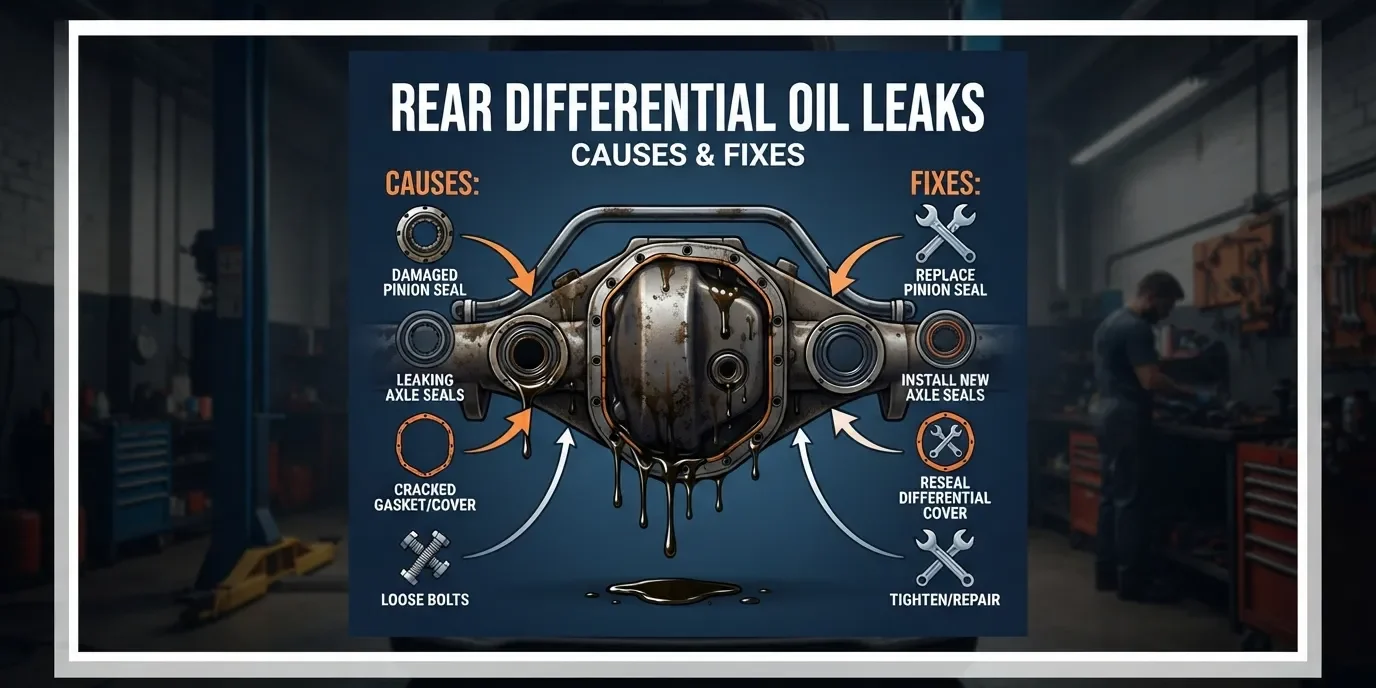
A small oil spot underneath your vehicle may not seem like a serious problem, but if it comes from the rear differential, ignoring it can lead to expensive drivetrain damage. Rear differential oil leaks are often caused by worn seals, damaged gaskets, loose plugs, or pressure buildup inside the differential housing. These problems can affect sedans, SUVs, 4WD vehicles, and luxury cars.
Dubai’s hot weather, daily traffic, and long-distance driving can put additional stress on vehicle components. Understanding the warning signs can help you identify a leak before it becomes a major repair. In this guide, we explain what causes rear differential oil leaks, how mechanics diagnose them, and which repair solutions can protect your vehicle.
What Is a Rear Differential and Why Does It Need Oil?
The rear differential is an important part of a vehicle’s drivetrain. It transfers engine power to the rear wheels while allowing them to rotate at different speeds, especially when taking corners.
For example, when your car turns, the outside rear wheel travels a longer distance than the inside wheel. The differential allows this movement without forcing both wheels to rotate at exactly the same speed.
Differential gear oil lubricates the internal gears, bearings, and other moving components. It also helps control heat and reduce friction during operation.
Without enough differential oil, metal components can experience excessive wear. This is why even a small oil leak deserves attention.
What Causes Rear Differential Oil Leaks?
Rear differential oil leaks can develop for several reasons. Some involve simple sealing problems, while others may indicate damage to the differential housing or internal components.
Here are the most common causes.
1. Worn Rear Differential Pinion Seal
The pinion seal is located where the driveshaft connects to the differential. Its job is to prevent gear oil from escaping around the rotating pinion shaft.
Over time, the seal can become hard, cracked, or worn due to heat and normal use. Once it loses its ability to maintain a tight seal, differential oil can start leaking from the front section of the rear differential.
You may notice fresh oil around the driveshaft connection or underneath the differential housing.
A worn pinion seal usually needs replacement. However, a mechanic should also inspect the pinion flange and bearing condition before completing the repair.
2. Damaged Rear Axle Seals
Axle seals prevent differential oil from escaping where the axle shafts connect to the differential housing.
These seals experience continuous movement and can deteriorate over time. If an axle seal becomes damaged, oil may appear around the rear axle or near the inside of a wheel.
This type of leak should not be ignored because differential oil can contaminate nearby brake components, depending on the vehicle’s design.
A proper inspection can confirm whether the axle seal is responsible and whether additional components need attention.
3. Leaking Differential Cover Gasket
The differential cover protects the internal gears and keeps the gear oil inside the housing.
A gasket or sealing compound creates a tight connection between the cover and the differential casing. With age, heat, vibration, or incorrect installation, this sealing material can lose its effectiveness.
Common warning signs include:
- Oil collecting around the edges of the differential cover.
- Wetness around the cover bolts.
- Fresh oil appearing underneath the rear differential.
- Visible residue around the housing joint.
The usual solution is to remove the cover, clean the sealing surfaces, inspect them for damage, and install the correct gasket or manufacturer-approved sealant.
4. Loose Drain Plug or Fill Plug
The drain and fill plugs are used during differential oil servicing. Each plug must be properly tightened and sealed to prevent fluid loss.
If a plug is loose, its sealing washer is damaged, or the threads are worn, gear oil may escape slowly.
This problem can sometimes develop after an oil change if the plug was not installed correctly.
A mechanic should inspect the plug, washer, and housing threads. Simply tightening the plug without checking for thread damage may not solve the problem.
5. Blocked Differential Breather
A differential breather allows air pressure inside the housing to equalise as the gear oil heats up and cools down.
If the breather becomes blocked by dirt or debris, pressure can build up inside the differential. This pressure may push oil past seals that would otherwise remain properly sealed.
In some cases, replacing a seal without checking the breather can lead to another leak.
Cleaning or replacing the blocked breather can help prevent the problem from returning.
6. Cracked or Damaged Differential Housing
The differential housing protects the internal gears and holds the lubricating oil.
Road impacts, accidents, or physical damage can crack the casing and create an oil leak. Corrosion or previous repair damage may also affect the housing.
Unlike a worn seal, a cracked housing may require specialist repair or complete housing replacement.
A mechanic should assess the damage carefully before recommending a repair.
What Are the Warning Signs of a Rear Differential Oil Leak?
Not every differential leak produces an obvious puddle. Sometimes, the first signs appear as unusual sounds or changes in vehicle performance.
Look out for these symptoms:
Oil spots underneath the rear of your vehicle: Thick, oily patches near the rear axle or differential housing may indicate leaking gear oil.
Whining or humming noises: Low differential oil can increase friction between gears and bearings, creating unusual sounds during acceleration or driving.
Burning oil smell: If leaking gear oil reaches hot exhaust components, you may notice an unpleasant burning smell.
Vibrations from the rear drivetrain: Worn or poorly lubricated differential components may cause unusual vibrations.
Visible oil around the axle seals: Wetness near the rear wheels or axle connections can indicate a damaged axle seal.
One important point is that these symptoms do not always confirm a differential leak. Transmission fluid, engine oil, and other vehicle fluids can also collect underneath a car. A proper inspection is necessary to identify the source.
Is It Safe to Drive With a Rear Differential Oil Leak?
Driving with a rear differential oil leak is not recommended because the differential needs the correct oil level to protect its internal components.
When the fluid level drops, the gears and bearings may experience increased friction and heat. Continued driving can lead to serious internal damage and expensive repairs.
The level of risk depends on how much oil is leaking and whether the differential has already suffered damage.
If you notice a small amount of oil, arrange an inspection as soon as possible rather than assuming the vehicle is safe.
Stop driving and arrange professional assistance if you experience:
- Loud grinding or whining noises from the rear drivetrain.
- Heavy oil loss or a large puddle underneath the vehicle.
- Strong vibrations or unusual mechanical sounds.
- Signs of overheating or serious drivetrain problems.
If differential oil has reached the braking system, the vehicle should not be driven until the affected components have been inspected and made safe.
How Do Mechanics Diagnose Rear Differential Oil Leaks?
Finding the exact source of a leak is more important than simply replacing the first damaged-looking seal.
A professional inspection normally involves several checks.
Visual Inspection
The mechanic examines the differential housing, pinion seal, axle seals, cover gasket, and drain plugs.
They look for wet oil marks, dirt mixed with gear oil, damaged sealing surfaces, and visible cracks.
Differential Oil Level Check
The mechanic checks the differential oil level according to the manufacturer’s recommended procedure.
Low oil may indicate an active leak or previous fluid loss. The condition of the oil can also provide useful information about possible internal wear.
Breather and Seal Inspection
The differential breather is checked for blockages, while the seals are examined for wear and damage.
This step is important because excessive internal pressure can cause repeated seal leaks.
Inspection for Internal Damage
If the vehicle has been driven with low differential oil, the mechanic may inspect the gears and bearings for unusual wear, scoring, or damage.
Unusual noises may also indicate that the problem has gone beyond a simple oil leak.
Final Testing
After identifying the source, the mechanic recommends the appropriate repair. Once the work is completed, the differential is refilled with the correct specification of gear oil and checked for further leakage.
A road test may also be performed when the vehicle is safe to drive.
How Can You Fix Rear Differential Oil Leaks?
The correct repair depends on the damaged component. Replacing a seal, repairing a gasket, or addressing a blocked breather requires different procedures.
Here are the common repair solutions.
Pinion seal replacement: The damaged pinion seal is removed and replaced. The pinion flange and bearing condition should also be checked to avoid overlooking the reason for the leak.
Axle seal replacement: The affected axle components are accessed, and the worn seal is replaced with a suitable part.
Differential gasket replacement: The cover is removed, sealing surfaces are cleaned, and a new gasket or approved sealant is installed.
Drain plug repair: A damaged washer or plug is replaced. If the housing threads are damaged, additional repair may be necessary.
Breather cleaning or replacement: A blocked breather is cleaned or replaced to restore proper pressure equalisation.
Differential housing repair: Cracked or severely damaged housings may require specialist repair or replacement, depending on the manufacturer’s recommendations.
After any repair, the mechanic should refill the differential using the correct oil grade and quantity. Some vehicles also require specific friction modifiers or manufacturer-approved fluids.
How Much Does Rear Differential Leak Repair Cost in Dubai?
The cost of rear differential oil leak repair in Dubai depends on the vehicle model, leak location, replacement parts, and labour involved.
For example, replacing a damaged gasket is generally less complex than removing an axle assembly to replace an axle seal. A cracked differential housing or damaged internal gears can require significantly more work.
The main factors affecting repair costs include:
- Vehicle make and model.
- Type and location of the oil leak.
- Cost and availability of replacement seals or gaskets.
- Labour required to access the damaged component.
- Differential oil specification and quantity.
- Additional damage to gears, bearings, or housing.
Luxury vehicles and performance SUVs may require specialised parts and more complex repair procedures.
The best approach is to have the leak inspected before approving any major replacement. A clear diagnosis helps you understand what needs fixing and avoids spending money on parts that are not responsible for the problem.
How Does Dubai’s Climate Affect Rear Differential Maintenance?
Dubai’s climate creates challenging operating conditions for vehicles. High ambient temperatures, heavy traffic, long highway journeys, and frequent stop-and-go driving can increase the workload on drivetrain components.
Differential oil helps manage friction and heat inside the housing. However, it does not prevent seals from ageing or protect against physical damage.
Regular inspection is particularly useful for vehicles that frequently travel long distances, tow heavy loads, or operate on rough roads.
To help reduce the risk of differential problems:
- Follow the manufacturer’s differential oil replacement schedule.
- Check for oil spots after parking your vehicle.
- Inspect axle seals and the pinion seal during routine servicing.
- Ask your mechanic to check the differential breather.
- Avoid ignoring unusual whining or grinding noises.
- Repair small leaks before they lead to low oil levels.
Preventive maintenance is usually less expensive than repairing a differential that has suffered internal damage.
Why Choose Car Garage Auto Services for Rear Differential Repair in Dubai?
A rear differential oil leak requires more than simply topping up the gear oil. The source of the leak must be identified, the damaged component repaired, and the correct fluid installed.
At Car Garage Auto Services, we understand the importance of accurate vehicle diagnosis and proper drivetrain maintenance. Our car repair and maintenance services help vehicle owners address mechanical problems before they develop into more serious issues.
If your vehicle shows signs of a rear differential oil leak, a professional inspection can help determine whether it needs seal replacement, gasket repair, breather servicing, or further differential work.
Whether you drive a daily-use sedan, a family SUV, or a luxury vehicle in Dubai, addressing drivetrain issues early can help protect your vehicle’s performance and reliability.
If you notice oil underneath your vehicle or unusual noises from the rear axle, contact Car Garage Auto Services to arrange an inspection and discuss the appropriate repair.
Frequently Asked Questions
1. What Is the Most Common Cause of Rear Differential Oil Leaks?
Worn pinion seals, damaged axle seals, and leaking differential cover gaskets are common causes of rear differential oil leaks. Loose drain plugs and blocked breathers can also allow gear oil to escape. The exact cause depends on the vehicle and the location of the leak.
2. Can I Drive My Car With a Rear Differential Oil Leak?
Driving with a differential oil leak is not recommended. As the oil level decreases, internal gears and bearings may experience excessive friction and heat. Arrange an inspection promptly, and avoid driving if there is heavy leakage, grinding noise, or serious vibration.
3. How Do I Know If My Rear Differential Seal Is Leaking?
Look for wet oil marks around the pinion seal, axle connections, or differential housing. Oil near the driveshaft connection may indicate a pinion seal problem, while oil near the rear wheels may suggest an axle seal leak. A mechanic can confirm the source.
4. Can a Blocked Differential Breather Cause Oil Leaks?
Yes. A blocked differential breather can prevent pressure from escaping the housing. As internal pressure increases, gear oil may be pushed past the seals. Checking the breather is an important part of diagnosing repeated differential leaks.
5. How Long Does Rear Differential Oil Leak Repair Take?
Repair time depends on the damaged component and vehicle design. A minor plug or gasket repair may take a few hours, while axle seal or pinion seal replacement can require additional labour. Housing replacement or internal differential repairs may take considerably longer.
6. What Happens If I Ignore a Rear Differential Oil Leak?
Ignoring a leak can cause the differential oil level to drop below the required amount. This increases friction and heat, which may damage internal gears and bearings. In severe cases, the differential may require major repairs or replacement.
7. Does Differential Oil Need to Be Replaced After a Leak Repair?
Yes, the differential oil level and condition should be checked after the repair. The mechanic should refill the housing with the manufacturer-recommended oil grade and quantity. Some repairs may also require a complete fluid replacement.
Final Thoughts
Rear differential oil leaks may start with a small oil spot, but the problem can become expensive if the differential runs with insufficient lubrication. Worn seals, damaged gaskets, loose plugs, and blocked breathers are some of the most common causes.
The key is to identify the source early and choose the correct repair instead of repeatedly topping up the oil.
If you notice oil underneath your vehicle, unusual rear axle noises, or signs of differential fluid loss, arrange a professional inspection. Car Garage Auto Services in Dubai can help you identify the problem and determine the right repair to keep your vehicle running reliably.