Hearing a high-pitched squealing sound every time you press the brake pedal in your Toyota RAV4? It may seem like a minor issue, but unusual brake noise can sometimes indicate worn components or problems that affect stopping performance. Dubai’s dusty roads, busy traffic and frequent braking can also put additional demands on your vehicle’s braking system.
Understanding the reason behind your Toyota RAV4 brake squeal in Dubai can help you avoid unnecessary repairs and prevent further damage. In this guide, we explain the common causes, warning signs, professional repair solutions and how regular brake maintenance can keep your RAV4 safe on Dubai roads.
What Does a Toyota RAV4 Brake Squeal Mean?
Brake squeal is a high-pitched noise caused by vibrations between components in the braking system, particularly the brake pads and rotors. It can happen when you apply light pressure to the brake pedal, slow down at a traffic signal or bring your vehicle to a complete stop.
Sometimes, the noise is temporary and comes from moisture or dust. However, continuous squealing may indicate worn brake pads, glazed friction material, damaged rotors or loose brake hardware.
The timing of the noise can help identify the possible problem:
- Squealing during light braking: Could indicate worn pads, vibration or damaged anti-squeal shims.
- Noise after parking overnight: May be caused by moisture or light surface rust.
- Squealing at low speeds: Could indicate brake pad wear or contact between braking components.
- Grinding sounds: May indicate severely worn pads or metal-to-metal contact.
- Vibration with brake noise: May point towards rotor surface problems or uneven braking.
The sound alone cannot confirm which component needs replacement. A proper inspection is necessary before choosing a repair.
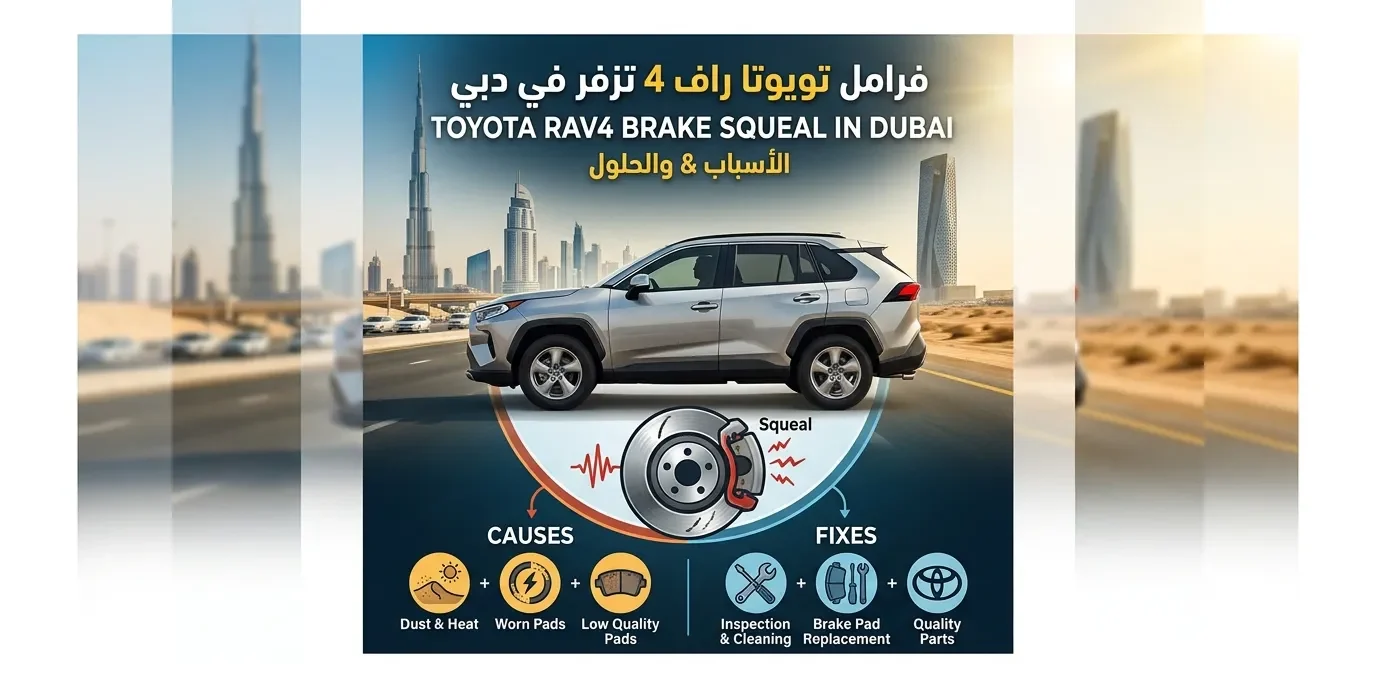
6 Common Causes of Toyota RAV4 Brake Squeal in Dubai
Several issues can make your Toyota RAV4 brakes produce unusual sounds. Here are six common causes worth checking.
1. Worn Toyota RAV4 Brake Pads
Worn brake pads are one of the most common reasons for squealing brakes. Brake pads contain friction material that gradually becomes thinner as you use your vehicle.
Many brake pads include a small metal wear indicator. When the friction material reaches a certain level, this indicator contacts the rotor and creates a high-pitched warning sound.
If you regularly drive your RAV4 through busy areas such as Al Quoz, Business Bay or Downtown Dubai, frequent braking can contribute to brake pad wear.
How to fix it: A technician should measure the remaining brake pad material and check for uneven wear. If the pads have reached their service limit, replacement with suitable quality parts is necessary.
2. Brake Dust and Sand Accumulation
Dubai’s dusty environment can contribute to brake contamination. Fine sand and road particles may enter the wheel assembly and become trapped around the brake pads or rotor surfaces.
When these particles interfere with the contact between braking components, they can produce squeaking or scraping sounds.
This issue may become more noticeable after driving through dusty roads, construction areas or locations with loose sand.
How to fix it: Professional brake cleaning can help remove accumulated dust and debris. If particles have damaged the friction surfaces, the affected components may need further inspection or replacement.
3. Glazed Brake Pads and Rotors
Brake glazing happens when excessive heat changes the surface of the brake friction material. The affected surface can become unusually smooth and may not create consistent friction against the rotor.
Repeated hard braking, riding the brakes or frequent heavy braking can contribute to this condition.
For example, a RAV4 driver who regularly travels through heavy Dubai traffic and brakes aggressively may experience increased brake temperatures.
How to fix it: A mechanic should inspect the pads and rotors for glazing. Depending on their condition and manufacturer specifications, cleaning, approved resurfacing or component replacement may be recommended.
4. Damaged or Uneven Brake Rotors
Brake rotors are metal discs that rotate with the wheels. The brake pads press against these discs to slow down your Toyota RAV4.
Over time, rotors can develop grooves, uneven wear, corrosion or thickness variations. These problems may cause squealing, vibration or a pulsating brake pedal.
Some common warning signs include:
- Steering wheel vibration during braking.
- Scraping or squeaking sounds.
- Uneven brake pad wear.
- Pulsation through the brake pedal.
How to fix it: A technician should inspect the rotor surfaces and measure their thickness. If the rotors are damaged or below the manufacturer’s minimum thickness, replacement is generally required.
5. Sticking Brake Calipers or Faulty Hardware
Brake calipers control the pressure applied to the brake pads. If a caliper piston or sliding pin becomes stuck, the pads may remain in contact with the rotor even when you release the brake pedal.
This can create continuous friction, overheating and uneven brake pad wear.
Damaged anti-squeal shims, loose clips or incorrectly installed hardware can also produce unwanted vibrations and noise.
How to fix it: The caliper, sliding pins, mounting hardware and pad movement should be checked. Depending on the inspection, cleaning, lubrication with the correct brake-compatible product, hardware replacement or caliper repair may be necessary.
6. Moisture and Surface Rust on Brake Rotors
Have you noticed your Toyota RAV4 making a slight squeaking sound during the first few stops after being parked overnight?
Moisture can collect on exposed rotor surfaces and create a thin layer of surface rust. This can produce temporary noise when the brake pads first contact the discs.
In many cases, the sound disappears after a few normal brake applications. However, persistent noise should not automatically be blamed on moisture.
How to fix it: If the noise disappears quickly and braking remains normal, it may be temporary surface rust. If it continues, have the braking system inspected to rule out worn pads, corrosion or other damage.
How Dubai Driving Conditions Affect Toyota RAV4 Brakes
Your driving environment plays an important role in brake maintenance. Although Dubai’s climate does not automatically cause brake failure, certain local conditions can increase the demands placed on braking components.
Stop-and-go traffic: Frequent braking around Sheikh Zayed Road, Al Barsha and Business Bay can increase brake pad usage over time.
Dusty roads: Fine sand and road debris can enter the braking area, contributing to contamination and unwanted noise.
High temperatures: Braking already generates heat through friction. Repeated heavy braking can increase operating temperatures and contribute to friction material glazing.
Long-distance driving: Regular highway journeys require the braking system to handle higher energy levels when slowing down from speed. Maintaining a safe following distance helps reduce unnecessary hard braking.
Understanding these conditions can help Toyota RAV4 owners make better maintenance decisions.
How to Fix Toyota RAV4 Brake Squeal
The correct repair depends on the actual cause of the noise. Replacing brake pads without checking the rotors, calipers and supporting hardware may not solve the problem permanently.
A professional Toyota RAV4 brake inspection should include the following:
- Brake pad inspection: Check the remaining friction material, wear patterns and condition of both inner and outer pads.
- Rotor inspection: Examine the discs for grooves, corrosion, cracks and uneven surfaces. Measure rotor thickness where necessary.
- Caliper inspection: Check piston movement, sliding pins and signs of brake drag.
- Brake hardware inspection: Examine clips, shims and other mounting components for damage or incorrect installation.
- Brake fluid inspection: Check fluid condition and level, and investigate any signs of leakage.
- Road test: When the vehicle is safe to operate, confirm whether the noise has disappeared after the repair.
This process helps identify the source of the problem rather than replacing parts based on sound alone.
When Should You Replace Toyota RAV4 Brake Pads?
There is no single replacement interval that applies to every Toyota RAV4. Brake pad life depends on driving habits, traffic conditions, vehicle load, pad material and maintenance history.
You should arrange a brake inspection if you notice:
- Persistent high-pitched squealing.
- Grinding or scraping when applying the brakes.
- Reduced braking performance.
- Uneven brake pad wear.
- Brake pedal vibration.
- A brake warning light.
Toyota also advises drivers to have the pads checked when the wear indicators produce squealing or scraping sounds. Continuing to drive with severely worn pads can damage the brake rotors.
Never ignore grinding noises or changes in braking performance. If the vehicle has a soft brake pedal, significant loss of braking power or a red brake system warning, stop in a safe location and arrange professional assistance.
Professional Toyota RAV4 Brake Repair in Dubai
If your Toyota RAV4 continues to produce squealing sounds, professional diagnosis can help prevent a minor braking issue from becoming a more expensive repair.
At Car Garage Auto Services in Al Quoz, Dubai, we provide vehicle inspection and repair solutions to help identify common braking problems. Our technicians can assess brake pads, rotors, calipers and related components to determine which repairs are actually required.
Depending on the inspection findings, the recommended service may include:
- Toyota RAV4 brake pad replacement.
- Brake rotor inspection and replacement.
- Brake caliper inspection and repair.
- Brake dust cleaning.
- Anti-squeal hardware inspection.
- Brake fluid inspection and maintenance.
We focus on identifying the cause of the problem before recommending a repair. This helps Toyota owners understand their vehicle’s condition and make informed maintenance decisions.
Whether your RAV4 produces a light squeaking sound or a more noticeable grinding noise, arranging an inspection is a sensible step towards maintaining dependable braking performance.
Conclusion
Toyota RAV4 brake squeal can result from worn brake pads, dust accumulation, glazed friction material, damaged rotors, faulty calipers or temporary moisture on the discs.
For drivers in Dubai, frequent traffic stops, dusty roads and demanding driving conditions make regular brake inspections an important part of vehicle maintenance.
The best solution is to identify the actual source of the noise before replacing any components. If your Toyota RAV4 brakes continue to squeal, contact Car Garage Auto Services in Al Quoz, Dubai, to arrange a professional brake inspection and get your vehicle checked before the problem becomes more serious.
Frequently Asked Questions
1. Why does my Toyota RAV4 squeal when braking at low speeds?
Low-speed brake squealing can result from worn brake pads, vibration between braking components, damaged anti-squeal shims or accumulated dust. Some Toyota RAV4 model years also have documented front brake squeak conditions. A technician should inspect the specific vehicle before recommending a repair.
2. Can brake dust cause Toyota RAV4 squeaking?
Yes. Brake dust and small road particles can collect around the pads and rotors. When debris interferes with the braking surfaces, it may produce squeaking or scraping sounds. Professional cleaning and inspection can help identify whether contamination is responsible.
3. How much does Toyota RAV4 brake pad replacement cost in Dubai?
The cost depends on the RAV4 model year, brake pad quality, axle being serviced and the condition of the rotors. Additional repairs, such as rotor or caliper replacement, can increase the total cost. Request an inspection and quotation before approving the work.
4. Should I replace brake rotors when changing Toyota RAV4 brake pads?
Not necessarily. Rotors can often remain in service if their thickness, surface condition and measurements meet the manufacturer’s specifications. However, damaged, excessively worn or unsuitable rotors may require replacement.
5. How can I prevent brake squealing in my Toyota RAV4?
Follow the recommended maintenance schedule, arrange regular brake inspections, use suitable replacement components and avoid unnecessary hard braking. If unusual noise develops, have the braking system checked instead of relying on temporary cleaning or lubrication.