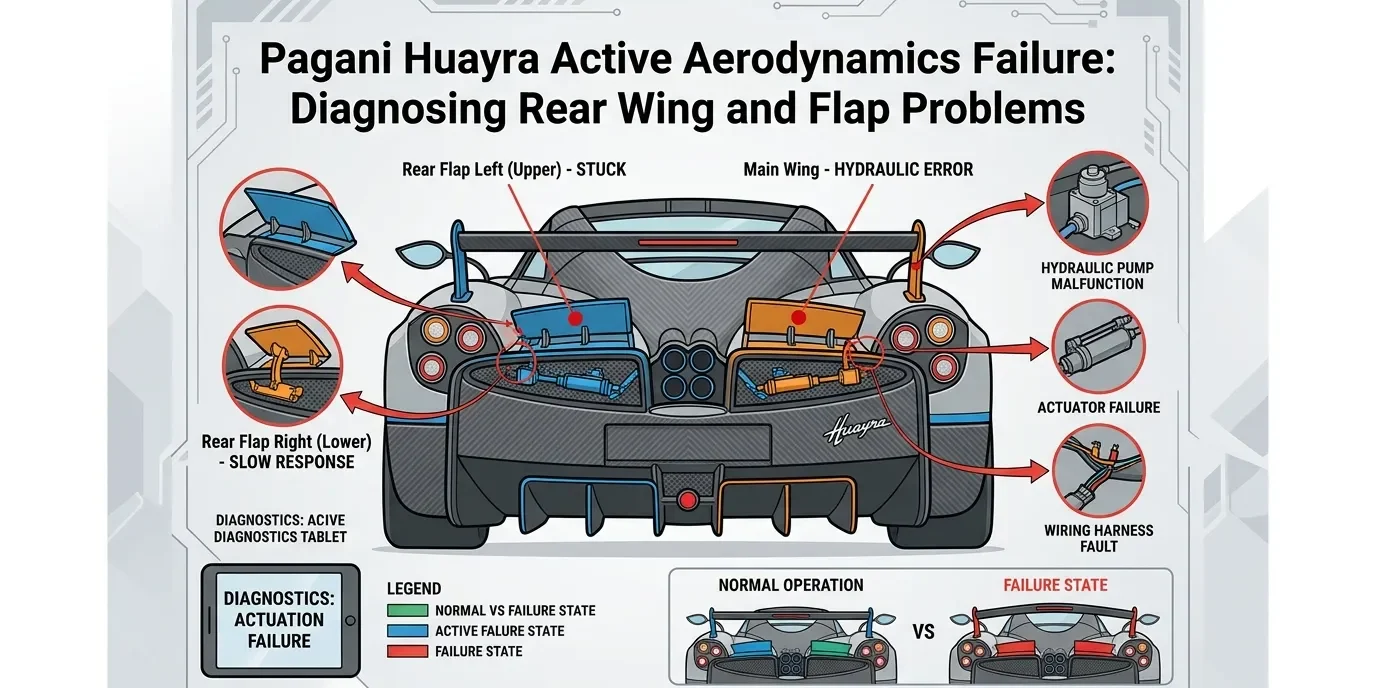
Owning a Pagani Huayra means driving a hypercar designed around advanced engineering, lightweight materials, and aerodynamic performance. Its active aerodynamic system plays an important role in maintaining stability, especially when the car accelerates, brakes, or changes direction at high speeds. But what happens when the rear wing or active flaps stop working correctly?
A fault in these components can affect more than appearance. It may change how the vehicle manages airflow and aerodynamic balance. In this guide, we explain common Pagani Huayra active aerodynamics problems, how rear wing and flap faults can be diagnosed, and why professional Pagani Carbon Fibre Repair Dubai services matter when these components are damaged.
How Does the Pagani Huayra Active Aerodynamics System Work?
The Pagani Huayra uses an advanced active aerodynamic system designed to adjust airflow according to driving conditions. Instead of relying only on fixed spoilers, the vehicle uses movable aerodynamic surfaces that can change their positions to help manage downforce and drag.
The system includes four independently controlled active flaps, positioned around the vehicle. Their movement helps manage aerodynamic forces depending on acceleration, braking, cornering, and vehicle speed.
For example, during hard braking, the aerodynamic surfaces can adjust to help create additional aerodynamic resistance. During acceleration, their positions can change to support the vehicle’s aerodynamic balance.
These components are carefully integrated into the Huayra’s body design. Their operation depends on mechanical parts, electronic controls, sensors, actuators, and supporting systems working together.
This is why diagnosing an active aerodynamics fault requires more than checking whether a rear wing moves.
Common Signs of Pagani Huayra Active Aerodynamics Failure
An active aerodynamic problem may develop gradually or appear suddenly. Some faults are related to electrical controls, while others involve mechanical damage, movement restrictions, or problems with the aerodynamic surfaces themselves.
Here are some warning signs worth investigating.
1. Rear Wing Not Moving Correctly
The rear wing is an important part of the Huayra’s aerodynamic design. If it fails to move when required, the problem could involve an actuator, electrical connection, control signal, or mechanical obstruction.
Possible symptoms include:
- Rear wing remains in one position.
- Movement appears slower than normal.
- The wing does not respond consistently.
- Unusual sounds occur during operation.
- Visible differences appear between moving components.
A technician should inspect the movement mechanism and verify its operation through suitable diagnostic procedures.
2. Active Flaps Getting Stuck
The Huayra’s active flaps are designed to move according to the vehicle’s aerodynamic requirements. If one flap becomes restricted, the system may not achieve the intended aerodynamic configuration.
Possible reasons include dirt accumulation, damaged mounting points, actuator problems, electrical faults, or deformation following an impact.
Even a small amount of physical damage can affect how a precision-fitted aerodynamic component moves. For this reason, forcing a flap manually is not recommended.
3. Unusual Noise From Aerodynamic Components
Clicking, grinding, or repeated mechanical sounds near an active wing or flap may indicate a movement problem.
A worn mechanism, loose mounting point, damaged actuator, or interference between components could be responsible.
However, noise alone does not confirm a failed actuator. Proper inspection is needed to identify the source before replacing expensive components.
4. Warning Messages or System Malfunctions
Electronic faults can prevent active aerodynamic components from operating as intended.
A damaged wiring connection, faulty sensor signal, control module issue, or actuator malfunction may trigger a warning or stored diagnostic fault.
The correct approach is to retrieve available fault codes, check relevant electrical circuits, and compare commanded movement with actual component behaviour.
What Causes Pagani Huayra Rear Wing and Flap Problems?
Active aerodynamics components operate in a demanding environment. They experience movement, vibration, temperature changes, and exposure to road conditions.
Several issues can contribute to system failure.
Actuator Wear or Failure
Actuators are responsible for converting electronic commands into physical movement. Over time, mechanical wear or internal electrical faults can affect their operation.
When an actuator fails, the related aerodynamic surface may stop moving or respond inconsistently.
Before replacing it, technicians should check the electrical supply, connectors, control signals, and mechanical movement to avoid unnecessary component replacement.
Carbon Fibre Damage
The Pagani Huayra uses carbon fibre extensively because of its high strength-to-weight ratio.
Although carbon fibre offers excellent structural properties, it can still suffer damage from impacts, incorrect lifting procedures, road debris, or previous repair work.
Common signs include:
- Visible cracks around mounting areas.
- Surface separation or delamination.
- Damaged edges around aerodynamic components.
- Loose or misaligned mounting points.
- Changes in the shape of carbon fibre panels.
Carbon fibre damage is particularly important because a damaged mounting area may affect the alignment and movement of an active aerodynamic component.
Electrical and Sensor Problems
Active aerodynamic systems depend on reliable communication between electronic components.
Corrosion, damaged wiring, loose connectors, or sensor problems may interrupt the signals needed for correct operation.
In some cases, the mechanical components are still in good condition, but the system cannot control them properly because of an electrical issue.
This is why a complete inspection should include both mechanical and electronic checks.
Previous Accident or Improper Repair
A minor collision can cause hidden damage around the rear bodywork, wing mounts, or flap assemblies.
Even if the exterior looks acceptable after a previous repair, incorrect alignment or unsuitable materials may affect the movement of aerodynamic components.
For a hypercar like the Pagani Huayra, repairs should account for original mounting positions, material properties, and manufacturer specifications.
How Do Technicians Diagnose Pagani Huayra Active Aerodynamics Problems?
Accurate diagnosis is important before carrying out any repair. Replacing an entire aerodynamic assembly without identifying the original fault can lead to unnecessary expense.
A professional inspection should follow a structured process.
1. Visual Inspection of the Rear Wing and Flaps
The first step is checking the visible condition of the aerodynamic components.
Technicians should look for cracks, impact marks, loose fittings, damaged edges, and signs of previous repairs.
The mounting areas also require attention because damage may exist underneath the visible carbon fibre surface.
2. Electronic Diagnostic Testing
The vehicle should be checked using suitable diagnostic equipment and manufacturer-specific procedures where available.
This helps technicians identify stored faults and investigate possible problems involving sensors, control modules, wiring, and actuators.
Diagnostic codes should be treated as starting points rather than automatic instructions to replace a particular component.
3. Actuator and Movement Inspection
The next step is checking whether the active aerodynamic components respond correctly to their control commands.
Technicians can investigate movement restrictions, actuator response, electrical connections, and mechanical interference.
Any functional testing should follow appropriate workshop safety procedures and vehicle-specific instructions.
4. Carbon Fibre Condition Assessment
If physical damage is suspected, the affected carbon fibre component should receive a detailed inspection.
Surface cracks do not always reveal the full extent of damage. Depending on the location and severity, additional non-destructive inspection may be needed to identify internal damage or delamination.
The repair decision should consider whether the component is cosmetic, structural, or part of an active aerodynamic assembly.
5. Final Functional Verification
After an approved repair, the system should be checked again.
This includes verifying component alignment, secure mounting, electrical connections, and correct movement using the appropriate diagnostic and testing procedures.
The objective is to confirm that the repair has addressed the identified fault without creating additional problems.
Why Carbon Fibre Repair Is Important for the Pagani Huayra
Carbon fibre is not repaired in the same way as conventional steel or aluminium body panels.
Its layered construction requires specific materials, preparation methods, and repair techniques. Incorrect repairs can affect strength, appearance, fitment, and long-term durability.
For Pagani owners, carbon fibre repair should focus on three important areas.
Structural integrity: The technician must determine whether the damage affects the strength of the component or its mounting points.
Correct alignment: Repaired panels and aerodynamic surfaces must retain the correct shape and fitment to avoid interference with moving components.
Material compatibility: Any repair materials and processes should be suitable for the original carbon fibre construction and approved repair requirements.
It is also important to understand that not every damaged carbon fibre component should be repaired. Some structural or safety-critical components may require replacement according to manufacturer guidance.
Why Dubai’s Environment Makes Specialist Hypercar Inspection Important
Dubai presents several environmental challenges for high-performance vehicles.
High temperatures, fine sand, road debris, and occasional heavy rain can expose exterior components to demanding conditions.
For a Pagani Huayra, regular inspection is particularly important because its aerodynamic surfaces contain precision-engineered moving components.
Here are a few areas owners should pay attention to:
- Fine sand and dust: Accumulation around exposed moving components may contribute to contamination and restricted movement.
- High temperatures: Heat exposure can place additional demands on electrical components, seals, and surrounding materials.
- Road debris: Small impacts can damage exposed carbon fibre surfaces and mounting areas.
- Parking and handling: Incorrect lifting or careless handling can cause damage to delicate bodywork and aerodynamic components.
If the vehicle has experienced an impact or develops an aerodynamic warning, arranging an inspection is better than continuing to operate the system without understanding the fault.
Choosing Pagani Carbon Fibre Repair Dubai Services
Repairing a Pagani is very different from repairing an ordinary luxury vehicle. The materials, component design, and engineering requirements demand careful attention.
When looking for Pagani Carbon Fibre Repair Dubai services, owners should consider the following factors.
Experience with carbon fibre materials: Ask whether the workshop understands composite construction, delamination, surface damage, and structural assessment.
Advanced diagnostic capabilities: Active aerodynamic faults require investigation of electronic and mechanical systems, not just exterior inspection.
Correct repair methods: The workshop should explain which repair methods are appropriate and when replacement is necessary.
Attention to original fitment: Carbon fibre panels and aerodynamic components must retain correct dimensions, mounting positions, and alignment.
Clear repair recommendations: A trustworthy workshop should explain the identified fault, the proposed solution, and any limitations before starting work.
For rare hypercars, parts availability and access to manufacturer-approved repair information should also be confirmed before work begins.
How Car Garage Auto Services Can Help With Specialist Vehicle Inspection in Dubai
Car Garage Auto Services provides automotive service and repair support in Dubai, including Al Quoz Industrial Area.
When a high-performance vehicle develops a carbon fibre or exterior component issue, identifying the cause is an important first step.
For Pagani Huayra owners experiencing rear wing damage, flap movement problems, or visible carbon fibre cracks, the appropriate inspection should establish whether the issue is related to the body material, mounting structure, electrical system, or mechanical movement.
Before arranging specialist Pagani work, owners should confirm the workshop’s available equipment, relevant carbon fibre repair capabilities, and access to the required vehicle-specific repair procedures.
The goal should always be to protect the vehicle’s original engineering, avoid unnecessary component replacement, and choose a repair solution that meets the vehicle’s requirements.
If your Pagani Huayra has developed an active aerodynamic fault or visible carbon fibre damage, contact Car Garage Auto Services in Dubai to discuss the inspection and repair requirements.
Conclusion
The Pagani Huayra’s active aerodynamic system is an important part of its engineering. Problems involving the rear wing, active flaps, actuators, sensors, or carbon fibre mounting areas should never be ignored.
Correct diagnosis helps identify whether the issue requires an electrical repair, mechanical attention, carbon fibre restoration, or component replacement.
For owners looking for Pagani Carbon Fibre Repair Dubai services, choosing a workshop that understands composite materials and specialist vehicle inspection is essential.
Car Garage Auto Services in Dubai can help you discuss your vehicle’s inspection requirements and the appropriate next steps. Protecting a hypercar starts with identifying problems correctly and choosing repairs based on its original engineering.
Frequently Asked Questions
1. Why is my Pagani Huayra rear wing not moving?
A Pagani Huayra rear wing may stop moving because of an actuator fault, electrical connection problem, sensor issue, control system malfunction, or mechanical obstruction. A proper diagnostic inspection is needed to identify the exact cause.
2. Can damaged Pagani Huayra carbon fibre parts be repaired?
Some carbon fibre components can be repaired depending on the damage, location, and structural requirements. However, severely damaged or safety-critical components may require replacement according to manufacturer repair guidance.
3. How much does Pagani carbon fibre repair cost in Dubai?
The cost depends on the damaged component, extent of carbon fibre damage, required materials, labour, and parts availability. A physical inspection is necessary to provide a reliable estimate.
4. Can a faulty active aerodynamic system affect Pagani Huayra performance?
Yes. If the active aerodynamic system cannot position its surfaces correctly, the vehicle may not achieve its intended aerodynamic behaviour. Owners should have the fault inspected and follow the manufacturer’s guidance before high-speed driving.
5. Where can I get Pagani carbon fibre repair in Dubai?
Car Garage Auto Services is located in Al Quoz Industrial Area, Dubai. Contact the workshop to discuss your Pagani’s condition and confirm the availability of suitable carbon fibre inspection and specialist repair capabilities.