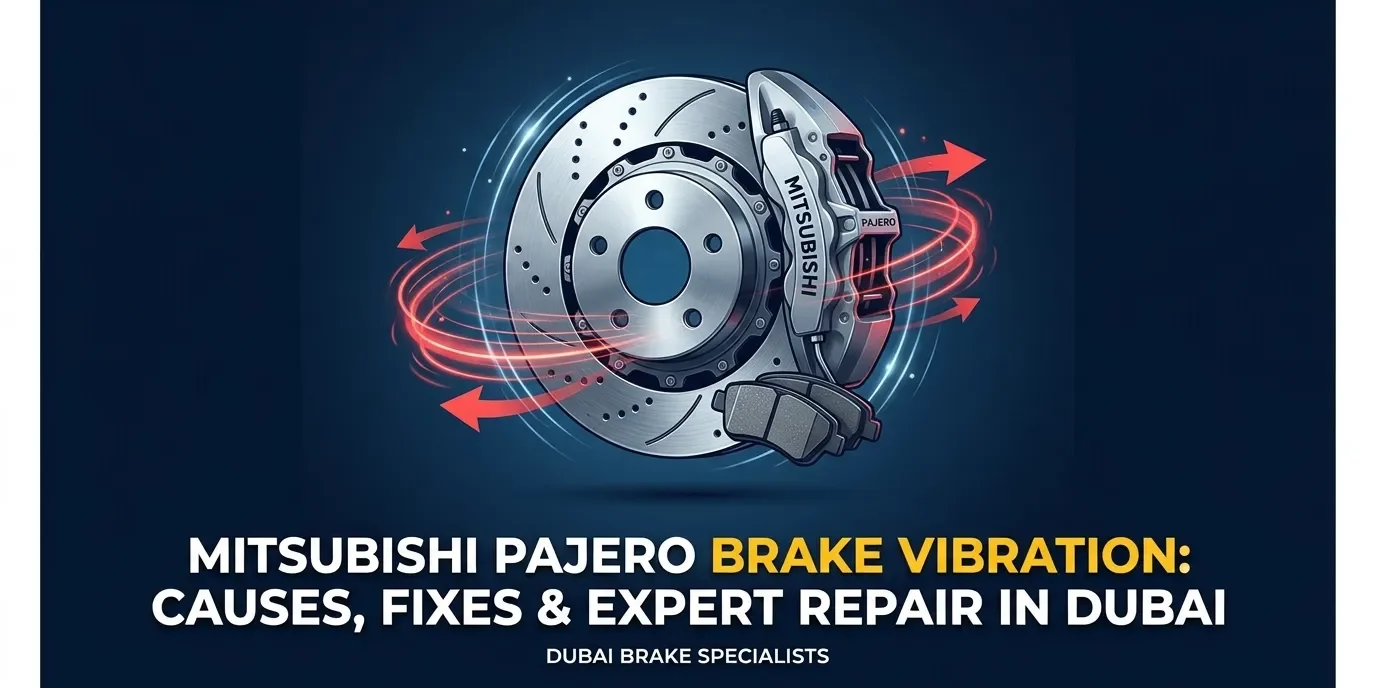
Have you noticed your Mitsubishi Pajero shaking when you press the brake pedal? Perhaps the steering wheel starts vibrating when slowing down on Sheikh Zayed Road, or you feel an unusual pulsation through the brake pedal during everyday driving. These symptoms should never be ignored because they may indicate a problem with your braking system, suspension, or steering components.
Mitsubishi Pajero Brake Vibration Repair starts with identifying the actual source of the problem rather than replacing parts without proper inspection. In this guide, we explain the common causes of brake vibration, warning signs to watch for, professional repair solutions, and why timely brake maintenance matters in Dubai.
What Causes Mitsubishi Pajero Brake Vibration?
Brake vibration occurs when your vehicle shakes, shudders, or produces unusual feedback through the steering wheel or brake pedal during braking. It usually indicates uneven braking pressure, worn components, or problems with the wheels and suspension system.
For Mitsubishi Pajero owners, the issue can become more noticeable during high speed braking, repeated stops in traffic, or after long journeys. The exact cause depends on when the vibration happens and which part of the vehicle experiences it.
Here are the most common reasons behind this problem.
7 Common Causes of Mitsubishi Pajero Brake Vibration
1. Uneven or Damaged Brake Discs
Brake discs are responsible for creating friction with the brake pads to slow down your Pajero. Over time, they can develop uneven thickness, excessive runout, heat spots, or surface damage.
When the brake pads contact an uneven disc surface, braking force may fluctuate. This often creates steering wheel vibration, especially when applying the brakes at higher speeds.
Common reasons include excessive heat, incorrect installation, uneven pad deposits, and worn disc surfaces.
A professional technician should measure brake disc thickness and lateral runout before recommending resurfacing or replacement. Resurfacing is only suitable when the disc remains within the manufacturer’s minimum thickness specifications.
2. Worn Mitsubishi Pajero Brake Pads
Brake pads gradually lose their friction material through regular use. When they become too thin or wear unevenly, they may not make consistent contact with the brake discs.
This can affect braking performance and create vibration, squealing, or grinding sounds.
You may notice these warning signs:
- Squealing noises when applying the brakes.
- Grinding sounds during braking.
- Reduced braking response.
- Uneven brake pad thickness.
- Increased stopping distance.
Replacing worn brake pads with suitable components can restore proper braking performance. However, the brake discs and calipers should also be inspected to prevent the same problem from returning.
3. Sticking Brake Calipers
Brake calipers apply pressure to the brake pads when you press the brake pedal. If a caliper piston becomes stuck or the sliding pins cannot move freely, the brake pad may remain in contact with the disc.
This creates continuous friction and excessive heat around the affected wheel. Over time, it can lead to uneven brake pad wear, disc damage, and vibration.
For example, if your Mitsubishi Pajero pulls towards one side while braking or you notice a burning smell near a wheel, a sticking caliper could be responsible.
Caliper inspection, cleaning, appropriate lubrication, seal replacement, or complete replacement may be required depending on the condition.
4. Worn Suspension and Steering Components
Not every vibration during braking comes directly from the braking system. Worn suspension and steering components can also make your Pajero shake when slowing down.
The vehicle’s weight places considerable demands on its suspension, especially during sudden stops. If important components develop excessive movement, the vibration may become more noticeable under braking.
Parts that may need inspection include:
- Control arm bushings.
- Ball joints.
- Tie rod ends.
- Steering linkage.
- Shock absorbers.
- Wheel bearings.
Replacing a brake disc without checking these components may not solve the problem. A complete inspection helps identify whether the vibration comes from the brakes, suspension, or both.
5. Overheated Brake Discs and Pads
Frequent braking, aggressive driving, long downhill journeys, and carrying heavy loads can increase brake temperatures.
Excessive heat may damage disc surfaces, affect brake pad friction, and create uneven deposits on the braking surface.
Dubai’s hot weather, combined with congested roads and repeated braking, makes proper brake maintenance particularly important.
Watch for these symptoms:
- Burning smell after repeated braking.
- Dark or blue heat marks on brake discs.
- Reduced braking effectiveness.
- Unusual brake noises.
- Vibration after several consecutive stops.
If you notice these signs, have the braking system inspected instead of assuming that allowing the vehicle to cool will solve the problem.
6. Incorrect Wheel Installation
Sometimes, brake vibration develops after tyre replacement, wheel removal, or previous brake servicing.
Dirt, corrosion, or debris between the wheel hub and brake disc mounting surfaces can prevent the components from sitting correctly. Uneven wheel nut tightening can also contribute to installation related problems.
A professional inspection should check the wheel mounting surfaces, disc seating, wheel studs, and manufacturer specified tightening torque.
This is particularly important after installing new brake discs because incorrect fitting can contribute to recurring vibration.
7. ABS Sensor or Braking System Problems
The Anti-lock Braking System (ABS) helps prevent the wheels from locking during emergency braking.
It uses wheel speed sensors to monitor wheel movement and control brake pressure when necessary. A faulty sensor, damaged wiring, or electronic braking system issue may cause unusual brake feedback.
You may notice an ABS warning light, unexpected pedal pulsation, or unusual braking behaviour.
Remember that temporary brake pedal pulsation during genuine ABS activation is normal. However, repeated vibration during ordinary braking requires professional diagnosis.
Warning Signs Your Mitsubishi Pajero Needs Brake Repair
Recognising early symptoms can help you avoid more serious braking problems.
Here are some common signs that indicate your Pajero needs attention.
Steering Wheel Shaking: If the steering wheel vibrates when you apply the brakes, the front brake discs, wheel hubs, or suspension components may need inspection.
Brake Pedal Pulsation: A brake pedal that repeatedly pushes back against your foot during normal braking may indicate disc thickness variation or another braking system issue.
Vehicle Pulling to One Side: If your Pajero moves towards the left or right while braking, possible causes include sticking calipers, uneven braking pressure, or worn suspension components.
Grinding or Squealing Noises: Grinding can indicate severely worn brake pads, while squealing may be caused by pad wear indicators or surface contamination.
Longer Stopping Distance: If your Pajero takes longer to stop than usual, worn pads, damaged discs, or hydraulic problems may be affecting braking performance.
If you experience severe vibration, grinding, brake fluid leakage, a soft brake pedal, or reduced braking ability, stop driving when safe and arrange professional assistance.
How Professionals Diagnose Mitsubishi Pajero Brake Vibration
Replacing brake components without identifying the actual problem can waste money and lead to recurring issues.
At Car Garage Auto Services, a systematic inspection approach is important when assessing Mitsubishi Pajero brake vibration.
The diagnostic process should cover the following areas.
Brake Pad and Disc Inspection
The technician checks brake pad thickness, uneven wear, contamination, and physical damage. Brake discs are also examined for scoring, heat marks, corrosion, and uneven surfaces.
Special measuring tools can help identify disc thickness variation and excessive lateral runout. These measurements help determine whether resurfacing or replacement is appropriate.
Brake Caliper and Fluid Inspection
The caliper pistons, seals, and sliding pins are checked for restricted movement. The technician also examines the brake hoses and hydraulic system for leaks or damage.
Brake fluid condition and level should be checked according to the manufacturer’s maintenance requirements.
Suspension and Steering Inspection
If the brake components appear normal, attention should turn to suspension and steering parts.
Control arm bushings, ball joints, tie rods, and wheel bearings should be inspected for excessive play or damage.
ABS Diagnostic Scanning
If an electronic braking issue is suspected, diagnostic equipment can help identify stored ABS fault codes and sensor related problems.
The technician can then investigate the affected sensor, wiring, or control system.
Final Road Test
After the necessary repairs, a controlled road test helps confirm whether the vibration has been resolved.
The technician should check braking response, steering stability, unusual noises, and overall vehicle behaviour.
Mitsubishi Pajero Brake Vibration Repair: What Are the Solutions?
The correct repair depends on the inspection results. Not every Mitsubishi Pajero with brake vibration needs a complete brake system replacement.
Here are the common repair solutions.
| Identified Problem | Recommended Repair |
|---|---|
| Uneven or damaged brake discs | Disc resurfacing or replacement |
| Worn brake pads | Brake pad replacement |
| Sticking brake calipers | Caliper servicing or replacement |
| Damaged suspension bushings | Suspension component replacement |
| Faulty ABS sensor | Sensor or wiring repair |
| Incorrect wheel installation | Proper wheel and disc refitting |
Using suitable replacement components and following correct installation procedures are important for maintaining reliable braking performance.
A technician should also check related components to reduce the risk of premature wear after the repair.
Why Mitsubishi Pajero Brake Maintenance Matters in Dubai
Driving conditions in Dubai can place additional demands on your Pajero’s braking system.
Heavy Traffic: Frequent stopping and starting on busy roads increases brake pad and disc usage. Repeated braking can also increase heat around the braking components.
High Temperatures: Dubai’s hot climate, combined with demanding driving conditions, makes regular brake inspections important for identifying heat related wear.
Desert and Off Road Driving: Sand and dust can accumulate around wheels and braking components. After demanding off road journeys, checking the brakes is a sensible maintenance practice.
Long Distance Journeys: If you regularly travel between Dubai, Abu Dhabi, and Sharjah, properly maintained brakes are important for consistent stopping performance.
Regular inspections help identify worn components before they affect your vehicle’s braking ability.
How to Prevent Brake Vibration in Your Mitsubishi Pajero
Although brake components naturally wear over time, good maintenance habits can reduce the chances of premature damage.
Follow these practical recommendations:
- Inspect brake pads and discs at recommended service intervals.
- Replace worn brake pads before they damage the discs.
- Use quality components suitable for your Pajero model.
- Avoid unnecessary sudden braking.
- Maintain a safe following distance in heavy traffic.
- Check brake fluid according to the manufacturer’s schedule.
- Inspect calipers and sliding pins during brake servicing.
- Ensure wheels are installed using the correct tightening procedure.
- Check suspension and steering components regularly.
- Arrange a brake inspection after demanding off road driving.
Taking care of small brake problems early can help prevent more expensive repairs later.
Expert Mitsubishi Pajero Brake Vibration Repair in Dubai at Car Garage Auto Services
Experiencing steering wheel shaking or brake pedal vibration can make driving your Mitsubishi Pajero uncomfortable and potentially unsafe.
At Car Garage Auto Services, identifying the source of the problem should always come before recommending repairs. A proper inspection helps determine whether the issue involves brake discs, brake pads, calipers, ABS components, or suspension parts.
Our automotive repair approach focuses on understanding the vehicle’s condition and recommending suitable solutions rather than replacing components unnecessarily.
Whether your Pajero needs brake pad replacement, disc inspection, caliper servicing, or suspension related repairs, getting the problem checked early can help maintain reliable braking performance.
If your Mitsubishi Pajero vibrates when braking, contact Car Garage Auto Services in Dubai to arrange a professional inspection. Let a qualified technician assess the problem and help you get back on the road with greater confidence.
Frequently Asked Questions
1. Why does my Mitsubishi Pajero vibrate when braking at high speeds?
Your Mitsubishi Pajero may vibrate during high speed braking because of uneven brake disc thickness, excessive disc runout, worn brake pads, or damaged suspension components. A professional inspection can identify the exact cause.
2. Can worn brake discs cause steering wheel shaking in a Pajero?
Yes. Uneven brake disc surfaces or thickness variation can create inconsistent braking force. This may cause the steering wheel to shake when slowing down, especially at higher speeds.
3. Is it safe to drive a Mitsubishi Pajero with brake vibration?
Driving with brake vibration is not recommended without understanding the cause. Severe shaking, grinding noises, reduced braking performance, or a soft brake pedal require immediate attention. Stop driving when safe and arrange professional assistance.
4. How much does Mitsubishi Pajero brake repair cost in Dubai?
The cost depends on the problem, Pajero model, replacement parts, and labour involved. Brake pad replacement usually involves different costs from brake disc replacement, caliper servicing, or ABS repairs. A vehicle inspection is necessary to provide an accurate quotation.
5. When should I replace Mitsubishi Pajero brake pads?
Brake pads should be replaced when their friction material reaches the manufacturer’s minimum recommended thickness or when damage and uneven wear are identified. Regular inspections help determine when replacement is necessary.
6. Why does my Pajero brake pedal pulsate during normal driving?
Brake pedal pulsation during normal braking can indicate disc thickness variation, excessive disc runout, or another braking system problem. If it happens repeatedly outside ABS activation, arrange a brake inspection.
Conclusion
Mitsubishi Pajero brake vibration can develop for several reasons, including uneven brake discs, worn pads, sticking calipers, overheated components, and damaged suspension parts.
The important thing is to identify the actual cause before replacing any components. Proper diagnosis, suitable replacement parts, and regular maintenance help maintain reliable braking performance.
If you notice unusual vibration while braking, do not wait for the problem to become worse. Contact Car Garage Auto Services in Dubai for a professional Mitsubishi Pajero brake inspection and get the right repair solution for your vehicle.