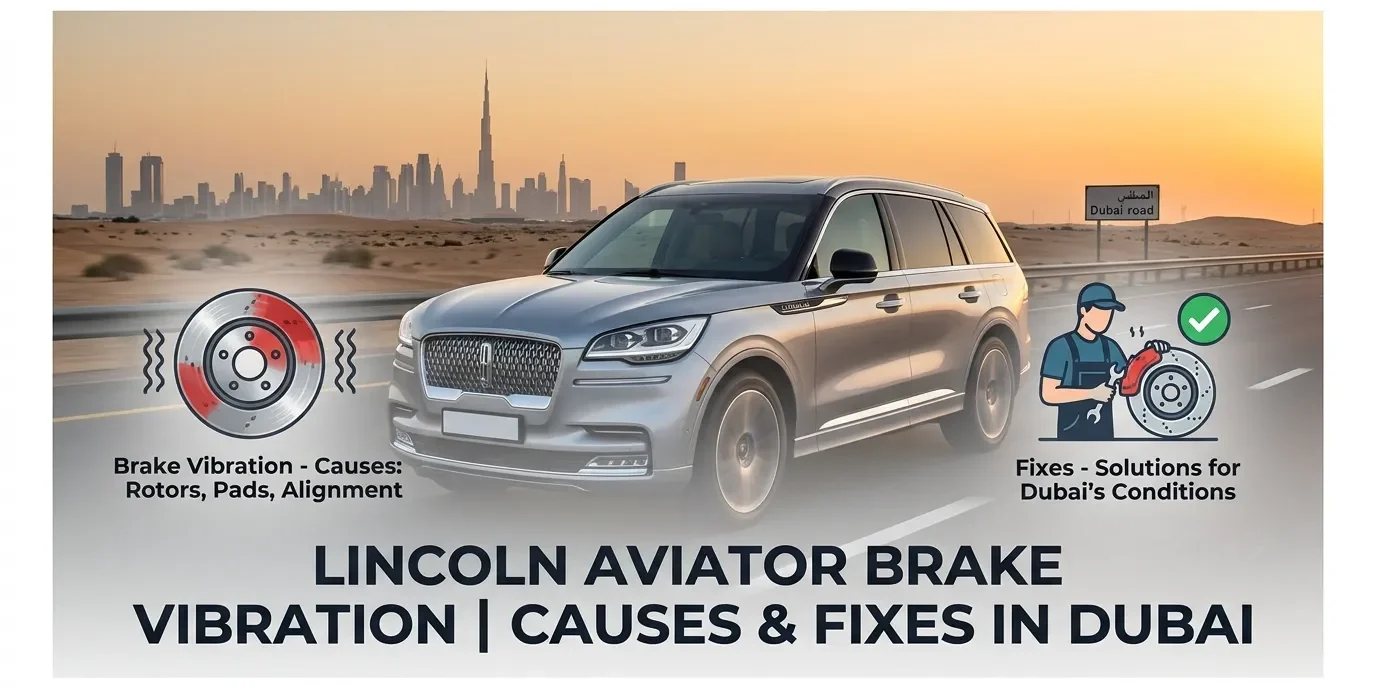
Have you noticed your Lincoln Aviator shaking when you press the brakes? Perhaps the steering wheel starts vibrating when slowing down on Sheikh Zayed Road, or you feel a pulsing sensation through the brake pedal when approaching a traffic signal. These symptoms can make driving uncomfortable and may indicate an underlying braking problem.
Finding the right Lincoln Aviator brake vibration fixes starts with understanding what is causing the vibration. Worn brake pads, uneven brake rotors, sticking calipers, and suspension problems can all affect braking performance.
In this guide, we explain the common causes of Lincoln Aviator brake vibration, how technicians diagnose the problem, and which repairs can help restore smooth and reliable braking in Dubai.
What Is Lincoln Aviator Brake Vibration?
Lincoln Aviator brake vibration is an unusual shaking or pulsating sensation that occurs when you apply the brakes. You may feel it through the steering wheel, brake pedal, driver’s seat, or entire vehicle.
The problem often becomes more noticeable when braking at moderate or high speeds. For example, your Aviator may drive smoothly at 40 km/h but start shaking when you slow down from 100 km/h.
A properly functioning braking system should provide consistent stopping power without unusual vibration. When brake components develop uneven surfaces, excessive wear, or mechanical faults, braking performance can become inconsistent.
Identifying the source early helps prevent further damage and unnecessary repair expenses.
7 Common Causes of Lincoln Aviator Brake Vibration
Several mechanical problems can cause your Lincoln Aviator to vibrate during braking. Understanding these issues helps you recognize warning signs before they become more serious.
1. Uneven or Damaged Brake Rotors
Brake rotors are metal discs that rotate with your wheels. When you press the brake pedal, the brake pads clamp against the rotors to slow down your vehicle.
Over time, repeated braking, excessive heat, uneven wear, and surface damage can affect rotor condition. Technicians may identify rotor thickness variation or excessive lateral runout, both of which can contribute to brake judder.
Common symptoms include:
- Steering wheel shaking when braking.
- Pulsation through the brake pedal.
- Vibration when slowing down from highway speeds.
- Uneven braking response.
- Unusual noise during braking.
For example, if your Lincoln Aviator starts shaking when you apply the brakes at 90 to 110 km/h, the front rotors should be checked. However, a proper inspection is necessary because similar symptoms can also come from suspension or wheel-related problems.
2. Worn or Poor-Quality Brake Pads
Brake pads gradually lose their friction material through normal use. When the pads become too thin, glazed, contaminated, or unevenly worn, they may not provide consistent contact with the rotors.
This can affect braking smoothness and may produce vibration or unusual sounds.
Watch for these warning signs:
- Squealing when applying the brakes.
- Metallic grinding sounds.
- Reduced braking response.
- Uneven brake pad thickness.
- Increased stopping distance.
Using suitable replacement brake pads is important for a luxury SUV like the Lincoln Aviator. The correct friction material should match the vehicle’s braking requirements.
Replacing the pads without inspecting the rotors and calipers may not solve the original problem.
3. Sticking or Faulty Brake Calipers
Brake calipers control the pressure applied by the brake pads. If a caliper piston becomes stuck or its guide pins stop moving freely, the pads may continue rubbing against the rotor even when you release the brake pedal.
This creates additional friction and heat, which can lead to uneven wear and braking vibration.
You may notice that your Lincoln Aviator pulls to one side, produces a burning smell, or develops excessive heat around one wheel.
A technician should inspect the caliper piston, seals, guide pins, and brake fluid condition. Depending on the damage, cleaning, servicing, or caliper replacement may be required.
4. Uneven Brake Pad Material Deposits
Not every brake vibration problem requires new rotors.
Sometimes, friction material transfers unevenly from the brake pads onto the rotor surface. This can happen after repeated heavy braking, excessive heat, or improper bedding-in of newly installed pads.
The uneven friction can create a juddering sensation when you slow down.
A technician should examine the rotor surface and determine whether cleaning, resurfacing within manufacturer specifications, or replacement is the appropriate solution.
5. Worn Suspension and Steering Components
Your Lincoln Aviator’s suspension system helps maintain stability and control. When braking, the vehicle’s weight shifts forward, placing additional pressure on the front suspension.
If suspension or steering components are already worn, this movement can make vibration more noticeable.
Possible causes include:
- Worn control arm bushings.
- Damaged ball joints.
- Loose tie rod ends.
- Worn wheel bearings.
- Damaged suspension joints.
For example, if you feel vibration during normal driving as well as braking, the problem may not be limited to the brake system.
A complete suspension and steering inspection can help identify the actual source.
6. Wheel, Tire, and Alignment Problems
Damaged tires, bent wheels, incorrect tire pressure, and wheel imbalance can also produce vibrations.
These problems usually become noticeable at particular driving speeds. However, braking can make existing vibration more obvious because additional forces are transferred through the wheels and suspension.
If your Aviator shakes even when you are not pressing the brake pedal, technicians should inspect the tires, wheels, and wheel bearings before recommending brake repairs.
7. ABS or Electronic Braking System Problems
Modern Lincoln Aviator models use advanced braking technology. Depending on the model year and configuration, electronic braking controls and regenerative braking systems may also affect how braking feels.
If the ABS activates during hard braking on a slippery surface, brake pedal pulsation can be normal. However, repeated pulsation during ordinary braking on dry roads should be investigated.
A diagnostic scan may help identify ABS sensor faults, electronic braking issues, or relevant software concerns.
Certain Lincoln Aviator hybrid models may also require additional attention to regenerative braking performance. The correct diagnosis depends on the vehicle’s model year and system configuration.
How Dubai Driving Conditions Affect Lincoln Aviator Brakes
Driving conditions in Dubai can place additional demands on your Lincoln Aviator’s braking system.
Frequent traffic stops, long highway journeys, and high summer temperatures can influence brake wear and operating temperatures.
Stop-and-go traffic: Driving through Downtown Dubai, Business Bay, Deira, and other busy areas often involves repeated braking. This increases the workload on brake pads and rotors.
High temperatures: Dubai’s summer heat can make it more challenging to manage brake temperatures, especially during repeated heavy braking. The braking system is designed to handle normal operating conditions, but excessive heat can contribute to accelerated wear and friction material deterioration.
Highway driving: Slowing down from higher speeds requires considerable braking force. If the rotors or pads are already worn, vibration may become more noticeable during deceleration.
Dust and road contamination: Fine particles and environmental contamination can affect braking surfaces and contribute to noise or abnormal wear. Regular inspections help identify these problems before they develop further.
Understanding these factors makes regular brake maintenance especially important for Lincoln Aviator owners in Dubai.
How to Diagnose Lincoln Aviator Brake Vibration
Replacing brake components without identifying the actual problem can increase repair costs. A systematic inspection helps determine whether the vibration comes from the rotors, pads, calipers, suspension, or electronic braking system.
A professional inspection should include the following checks.
1. Road Test and Symptom Evaluation
The technician first evaluates when the vibration occurs.
Important questions include whether the shaking happens during light braking, heavy braking, or only at higher speeds. The technician also checks whether the vibration is felt through the steering wheel, brake pedal, or vehicle body.
This helps narrow down the possible causes.
2. Brake Pad Condition Check
The brake pads should be inspected for remaining friction material, uneven wear, glazing, contamination, and physical damage.
If one pad is significantly thinner than the other, the caliper and its sliding mechanism should also be examined.
3. Brake Rotor Measurement
A visual inspection alone may not reveal every rotor problem.
Technicians can use precision measuring tools to check:
- Rotor thickness.
- Thickness variation.
- Lateral runout.
- Surface scoring.
- Cracks and heat-related damage.
These measurements help determine whether the rotor can be resurfaced or needs replacement.
4. Caliper and Brake Fluid Inspection
The brake calipers should be checked for piston movement, seal damage, corrosion, and fluid leakage.
Brake fluid condition should also be evaluated according to the manufacturer’s maintenance requirements. Contaminated or moisture-affected brake fluid may need replacement.
5. Suspension and Wheel Inspection
If the braking system appears normal, the inspection should extend to the suspension, steering, wheel bearings, tires, and wheels.
This is particularly important when the vibration also occurs during normal driving.
6. Electronic Diagnostic Scan
A compatible diagnostic scanner can help identify ABS-related fault codes and other electronic braking concerns.
For hybrid Aviator models, technicians may also need to evaluate regenerative braking operation and relevant software information.
Effective Lincoln Aviator Brake Vibration Fixes
Once the underlying problem has been identified, the appropriate repair can be selected. The goal should be to restore consistent braking performance rather than simply remove the vibration temporarily.
Brake Rotor Resurfacing or Replacement
If the rotors have surface irregularities but remain within the manufacturer’s permitted thickness specifications, resurfacing may be an option.
However, cracked rotors, severely damaged surfaces, or rotors below minimum thickness must be replaced.
The technician should always follow Lincoln’s service specifications when making this decision.
Brake Pad Replacement
Worn or damaged brake pads should be replaced with components suitable for the Lincoln Aviator.
New pads should be installed correctly, with the braking surfaces and related hardware inspected. Proper bedding-in procedures should also be followed where required.
Brake Caliper Repair
If a sticking caliper is responsible for uneven braking, the technician may need to service or replace it.
Restoring proper caliper movement helps prevent continuous friction and uneven pad wear.
Suspension Component Replacement
Damaged control arm bushings, ball joints, tie rod ends, or wheel bearings should be repaired or replaced when inspection confirms they are contributing to the vibration.
This helps improve vehicle stability and steering response.
ABS and Electronic Brake System Repair
If diagnostic testing identifies an electronic braking fault, the relevant sensors, wiring, control components, or software should be checked according to manufacturer procedures.
This is particularly important for newer and hybrid Lincoln Aviator models.
Why Choose Car Garage Auto Services for Lincoln Aviator Brake Repair in Dubai?
A luxury SUV requires careful attention to its braking and suspension systems. Selecting the correct replacement parts and diagnosing the issue properly are important steps towards maintaining reliable performance.
At Car Garage Auto Services, Lincoln Aviator owners can seek professional assistance for brake-related concerns and general vehicle maintenance in Dubai.
A proper brake inspection helps identify whether your vehicle needs new brake pads, rotor servicing, caliper repairs, or further suspension and electronic diagnostics.
Instead of replacing multiple components without confirmation, the focus should be on understanding the symptoms and identifying the repair that addresses the actual problem.
Whether your Lincoln Aviator experiences steering wheel vibration, brake pedal pulsation, or unusual braking noises, arranging an inspection can help you make an informed repair decision.
Frequently Asked Questions
1. Why does my Lincoln Aviator shake when braking at high speeds?
Your Lincoln Aviator may shake at higher speeds because of uneven brake rotor surfaces, rotor thickness variation, or excessive rotor runout. Worn suspension components and wheel-related problems can also contribute. A professional inspection is needed to confirm the cause.
2. Can I drive my Lincoln Aviator with vibrating brakes?
It is not recommended to ignore persistent brake vibration. It may indicate a problem with the rotors, pads, calipers, or other braking components. If you experience severe shaking, reduced braking performance, a warning light, or grinding noises, stop driving when safe and arrange professional assistance.
3. Do Lincoln Aviator brake rotors need replacement or resurfacing?
It depends on their condition and measurements. Rotors may be resurfaced if permitted by manufacturer specifications and if sufficient thickness remains. Cracked, severely damaged, or excessively thin rotors require replacement.
4. How much does Lincoln Aviator brake repair cost in Dubai?
The cost depends on the model year, damaged components, replacement part quality, and labor involved. Replacing brake pads generally costs less than replacing rotors or calipers. A proper inspection and quotation will help determine the actual repair cost.
5. How often should I inspect my Lincoln Aviator brakes?
Brake inspections should follow Lincoln’s recommended maintenance schedule. You should also arrange an inspection whenever you notice vibration, unusual noises, pulling during braking, or changes in pedal feel. Driving conditions and brake wear can affect how frequently additional inspections are needed.
Conclusion
Brake vibration in your Lincoln Aviator should never be treated as just a driving comfort issue. It can indicate uneven brake rotors, worn pads, sticking calipers, suspension damage, or electronic braking problems.
The best Lincoln Aviator brake vibration fixes begin with accurate diagnosis. Replacing components without checking the complete braking system may not resolve the problem and can lead to unnecessary expenses.
Dubai’s traffic conditions and frequent braking make proper maintenance especially important for luxury SUV owners.
If your Lincoln Aviator is shaking when braking, experiencing pedal pulsation, or producing unusual brake noises, contact Car Garage Auto Services to arrange a professional inspection in Dubai. Identifying the problem early can help restore smooth braking and keep your SUV ready for the road