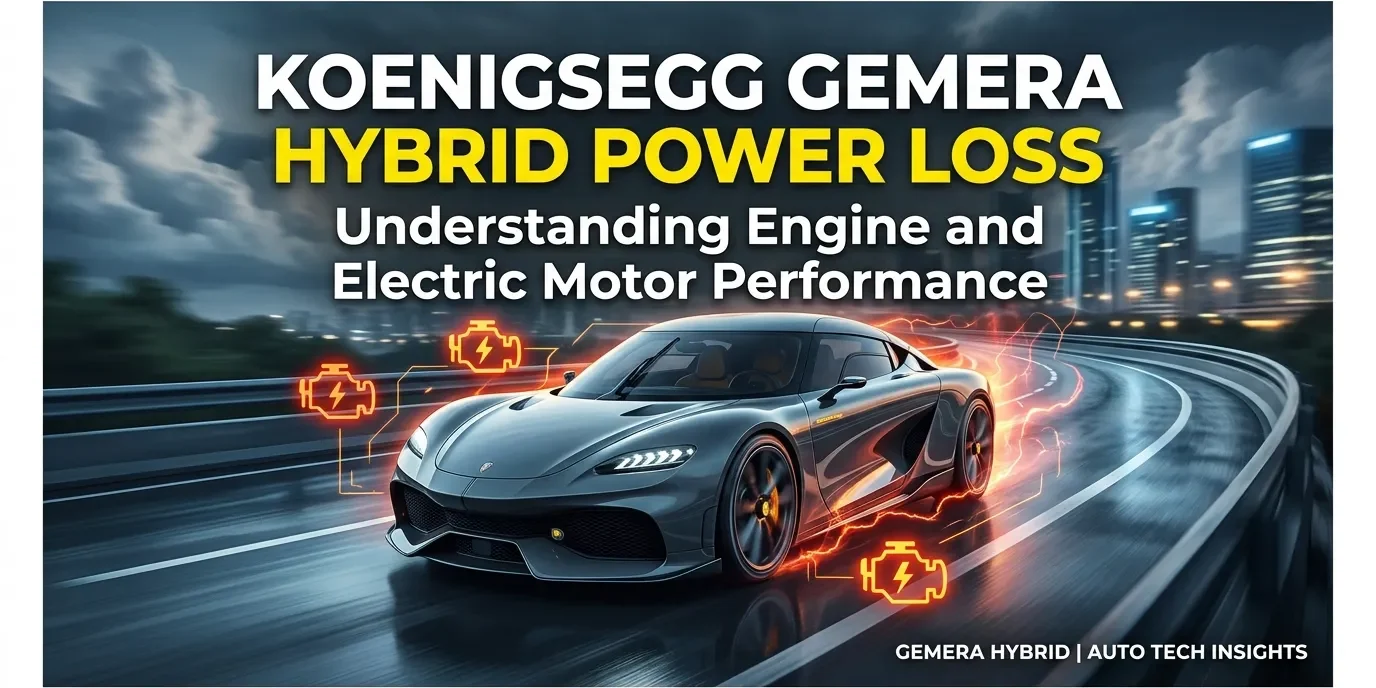
A Koenigsegg Gemera is designed to deliver extraordinary performance by combining a powerful combustion engine with advanced electric motor technology. However, when the vehicle starts losing acceleration, responding slowly, or delivering less power than expected, the problem may involve more than the engine alone. Koenigsegg Gemera Hybrid Power Loss can be linked to battery performance, electric motor faults, engine management issues, or problems within the hybrid drivetrain.
Dubai’s hot climate can also place additional demands on high-performance cooling and electrical systems. Understanding how these components work together is important when identifying the cause of reduced performance.
In this guide, we explain the common reasons behind hybrid power loss, the warning signs owners should watch for, and how professional diagnostics can help protect the performance of this exceptional hypercar.
Understanding the Koenigsegg Gemera Hybrid Powertrain
The Koenigsegg Gemera uses an advanced hybrid powertrain that combines internal combustion technology with electric propulsion. Depending on the model configuration, its powertrain uses either the twin-turbocharged 2.0-litre three-cylinder Tiny Friendly Giant (TFG) engine or a 5.0-litre twin-turbocharged V8 paired with Koenigsegg’s Dark Matter electric motor.
The TFG configuration was introduced with three electric motors, while the HV8 configuration uses a different electric drive arrangement. Both are engineered to deliver exceptional combined performance.
The original TFG configuration produces a combined output of up to 1,700 hp, while the HV8 version is rated at up to 2,300 hp.
These systems depend on several components working together:
- Internal combustion engine for petrol-powered performance.
- Electric motors for additional power and instant torque.
- High-voltage battery for storing and delivering electrical energy.
- Hybrid control systems for managing power distribution.
- Advanced transmission and drivetrain components for transferring power to the wheels.
- Cooling systems for controlling engine, battery, and electric motor temperatures.
When one component fails to operate correctly, the vehicle may not deliver its expected performance.
What Is Koenigsegg Gemera Hybrid Power Loss?
Koenigsegg Gemera hybrid power loss occurs when the vehicle produces less combined power than expected from its engine and electric propulsion system. It may appear as slower acceleration, reduced electric assistance, inconsistent throttle response, or a warning message on the dashboard.
Unlike a conventional petrol-powered vehicle, the Gemera relies on communication between its combustion engine, electric drive system, battery, and electronic control modules.
For example, the petrol engine may appear to operate normally while the electric motor provides less assistance than expected. In another situation, the vehicle may experience reduced engine performance because of a fault in its fuel delivery, ignition, or turbocharging system.
Identifying the source requires examining the complete hybrid powertrain rather than replacing individual components based on symptoms alone.
Common Causes of Koenigsegg Gemera Hybrid Power Loss
Several mechanical, electrical, and electronic problems can affect the Gemera’s performance. The following are important areas that require attention during professional inspection.
1. High-Voltage Battery Performance Problems
The high-voltage battery plays a major role in delivering electrical energy to the hybrid system. If its performance is affected, the vehicle may have limited access to electric assistance.
Battery-related problems can develop because of cell imbalance, temperature-related protection, damaged connections, or faults within the battery management system.
Common warning signs include:
- Reduced electric driving performance.
- Unexpected changes in battery charge levels.
- Hybrid system warning messages.
- Reduced acceleration under certain driving conditions.
- Unusual battery temperature readings.
In Dubai, high ambient temperatures make battery thermal management particularly important. A cooling system problem may cause the battery management system to limit power to protect the high-voltage components.
A proper inspection should examine battery health data, temperature readings, cell voltage balance, and relevant control system fault codes.
2. Electric Motor Performance Issues
The Gemera’s electric drive system is designed to provide immediate torque and support the combustion engine during acceleration.
If an electric motor develops an electrical, mechanical, or temperature-related fault, the vehicle may experience reduced hybrid performance.
Possible causes include:
- Electric motor temperature problems.
- Electrical connection damage.
- Insulation faults.
- Position sensor problems.
- Motor control system errors.
- Cooling system restrictions.
A driver may notice weaker acceleration even when the petrol engine sounds normal.
Electric motor performance should be assessed using suitable diagnostic equipment and manufacturer-specific technical procedures. Replacing a motor without identifying the original fault can lead to unnecessary repair costs.
3. Engine Performance and Turbocharger Problems
The combustion engine remains an important part of the Gemera’s overall performance. A problem affecting fuel delivery, ignition, air intake, or turbocharger operation can reduce the power available from the petrol engine.
Depending on the engine configuration, possible warning signs include:
- Slower acceleration.
- Reduced boost pressure.
- Engine hesitation.
- Unusual exhaust smoke.
- Engine warning lights.
- Irregular engine operation.
Turbocharger-related problems deserve particular attention because the Gemera’s engines use forced induction to produce high power.
A restricted air intake, boost leak, faulty sensor, or turbocharger control issue may prevent the engine from delivering its expected output.
Professional engine diagnostics can help identify abnormal boost readings, fuel pressure problems, ignition faults, and other performance-related issues.
4. Hybrid Control Module and Sensor Faults
The hybrid control system manages communication between the engine, electric motors, battery, and transmission.
It uses information from multiple sensors to determine how much power each system should provide. If a sensor sends incorrect information or a control module develops a fault, the vehicle may not distribute power correctly.
Potential problem areas include:
- Battery monitoring sensors.
- Motor temperature sensors.
- Engine management sensors.
- High-voltage system monitoring.
- Communication between electronic control modules.
- Hybrid power management software.
For example, an incorrect temperature reading may cause the system to limit electric assistance even when the actual component temperature is within its normal operating range.
This is why reading fault codes alone is not always enough. Technicians should compare live sensor data, operating conditions, and manufacturer specifications before deciding on a repair.
5. Cooling System Problems in Dubai’s Climate
Heat management is especially important for high-performance hybrid vehicles.
Dubai’s summer temperatures can increase the cooling demands placed on the engine, battery, electric motors, and associated electrical components.
If a cooling circuit develops a leak, a pump stops working correctly, or a radiator becomes restricted, the affected component may operate outside its intended temperature range.
The vehicle’s protection systems may respond by reducing available power.
Warning signs can include:
- Higher-than-normal temperature readings.
- Cooling system warning messages.
- Reduced performance after extended driving.
- Coolant leaks.
- Cooling fans operating unusually.
- Hybrid system temperature warnings.
Owners should never ignore overheating warnings. Continuing to drive under excessive temperatures can increase the risk of expensive component damage.
6. Transmission and Drivetrain Issues
The Gemera uses advanced transmission technology to transfer power from its combustion engine and electric drive system to the wheels.
A drivetrain problem may affect how effectively the vehicle delivers its available power.
Possible symptoms include unusual noises, inconsistent acceleration, abnormal vibration, or unexpected changes in power delivery.
Potential inspection areas include transmission control systems, drivetrain connections, mechanical components, and relevant electronic sensors.
The exact diagnostic process depends on whether the vehicle uses the TFG or HV8 powertrain configuration.
How to Recognise Early Signs of Hybrid Power Loss
Recognising performance changes early can help prevent a minor issue from developing into a more serious repair.
Some symptoms may appear gradually, while others can occur suddenly.
Pay attention to these warning signs:
| Symptom | Possible area of concern |
|---|---|
| Slower acceleration | Engine or electric motor |
| Reduced electric assistance | Battery or hybrid control system |
| Hybrid system warning | Electronic control or battery system |
| Engine hesitation | Fuel, ignition, or turbocharger |
| Unusual temperature readings | Cooling system |
| Unexpected power limitation | Thermal protection or drivetrain fault |
| Abnormal drivetrain noise | Transmission or mechanical components |
These symptoms do not confirm a specific failure. They indicate areas that require further investigation.
If a high-voltage or overheating warning appears, follow the vehicle’s safety instructions and avoid continuing to drive until the issue has been assessed.
How Professional Diagnostics Identify Koenigsegg Gemera Hybrid Problems
Diagnosing hybrid power loss requires a systematic approach. Simply clearing warning lights or replacing a battery will not necessarily solve the underlying problem.
A professional inspection should focus on identifying the actual cause of reduced performance.
Step 1: Initial Vehicle Inspection
The diagnostic process begins with checking the vehicle’s overall condition.
Technicians may inspect visible wiring, electrical connections, cooling components, fluid levels, and signs of physical damage.
The vehicle’s warning messages and reported driving symptoms should also be reviewed.
Step 2: Electronic Fault Code Analysis
Suitable diagnostic equipment is used to retrieve relevant fault codes from accessible vehicle control systems.
These codes can help identify communication problems, abnormal sensor readings, engine faults, or hybrid system issues.
However, fault codes should be treated as diagnostic clues rather than automatic instructions to replace a component.
Step 3: Battery and Electric Motor Assessment
The high-voltage battery and electric drive system require careful evaluation.
Depending on available manufacturer-specific diagnostic access, the assessment may include battery state of health, cell voltage balance, temperature readings, electrical connections, and motor-related data.
High-voltage testing must only be performed by appropriately trained technicians using approved safety procedures.
Step 4: Engine and Turbocharger Inspection
If the combustion engine is not delivering its expected performance, technicians should examine its operating data.
This may involve checking fuel pressure, ignition performance, intake air measurements, boost pressure, and relevant engine sensors.
The aim is to identify whether the engine is producing less power or whether the hybrid system is limiting its contribution.
Step 5: Cooling System and Drivetrain Checks
The final assessment should consider thermal management and power delivery.
Cooling pumps, radiators, coolant circuits, and relevant temperature sensors may require inspection. The transmission and drivetrain should also be evaluated if the symptoms suggest a mechanical or power transfer problem.
Once the findings are reviewed, the appropriate repair plan can be recommended.
Why Dubai’s Climate Makes Hybrid System Maintenance Important
Dubai presents challenging operating conditions for high-performance vehicles. Long periods of high temperatures, heavy traffic, and repeated stop-and-go driving can place additional demands on cooling and electrical systems.
For a hybrid hypercar such as the Koenigsegg Gemera, temperature management is especially important because several major systems operate together.
Regular maintenance can help reduce the risk of unexpected performance problems.
Important maintenance considerations include:
- Checking coolant condition and monitoring the cooling system.
- Inspecting electrical connections for damage or corrosion.
- Monitoring battery performance and temperature data.
- Following the manufacturer’s engine oil specifications.
- Checking the air intake and turbocharger systems.
- Investigating warning messages without unnecessary delays.
- Following the recommended service schedule for the specific vehicle configuration.
Owners should always use manufacturer-approved specifications and service procedures. Generic maintenance recommendations may not be suitable for this specialised hybrid powertrain.
Why You Should Not Ignore Koenigsegg Gemera Performance Problems
A small change in acceleration may seem unimportant at first, especially if the vehicle continues to operate normally.
However, reduced performance can sometimes indicate an underlying electrical, mechanical, or thermal problem.
Ignoring the warning signs may increase the risk of further damage, particularly when a cooling or high-voltage system is involved.
Early diagnosis offers several advantages:
- Helps identify the source of reduced power.
- Reduces the risk of unnecessary component replacement.
- Helps protect expensive hybrid system components.
- Supports reliable engine and electric motor operation.
- Helps maintain the vehicle’s overall performance.
For a vehicle with such advanced engineering, accurate diagnosis is more valuable than guessing which component needs replacement.
Koenigsegg Gemera Hybrid Diagnostics and Repair Support in Dubai
If your Koenigsegg Gemera is experiencing reduced acceleration, hybrid system warnings, or unusual engine performance, a detailed technical inspection is an important first step.
Car Garage Auto Services in Dubai provides automotive inspection and repair support for performance and luxury vehicles. When dealing with a specialised hybrid hypercar, the diagnostic process must be matched to the vehicle’s exact powertrain configuration and technical requirements.
Depending on the available equipment and specialist support, relevant inspection areas may include:
- Engine performance and fault diagnosis.
- Cooling system inspection.
- Electrical connection assessment.
- Turbocharger performance checks.
- Hybrid system fault investigation.
- Transmission and drivetrain inspection.
Koenigsegg-specific software access, high-voltage repair capability, and manufacturer-approved procedures should be confirmed before any specialist work is undertaken.
The goal is to identify the underlying cause of power loss and recommend the correct next step rather than replacing expensive parts unnecessarily.
If your Gemera is showing signs of reduced hybrid performance, contact Car Garage Auto Services to discuss the symptoms and arrange an appropriate inspection.
Conclusion
Koenigsegg Gemera hybrid power loss can result from several issues involving the combustion engine, electric motors, high-voltage battery, cooling system, or drivetrain.
Because these components work together, identifying the actual cause requires more than a basic engine inspection. Proper diagnostic testing helps establish whether the problem is mechanical, electrical, or related to hybrid power management.
In Dubai’s demanding climate, maintaining the cooling and electrical systems is particularly important for protecting high-performance vehicle components.
If you notice slower acceleration, reduced electric assistance, or hybrid system warnings, arrange a professional assessment before the problem becomes more serious. Car Garage Auto Services can help you understand the available inspection and repair options for your vehicle.