Mercedes-Benz is known for luxury, comfort, and advanced engineering. Many people choose a Mercedes because it offers a smooth driving experience and excellent performance. Whether you drive a Mercedes C-Class, E-Class, S-Class, GLC, GLE, or AMG model, you expect your car to be reliable for many years.
However, like every vehicle, a Mercedes-Benz can develop problems over time. Regular driving, high temperatures, and heavy traffic can put extra pressure on important parts of the vehicle. In Dubai, these conditions are even more challenging. The hot climate, long daily drives, and stop-and-go traffic can make some problems appear sooner than expected.
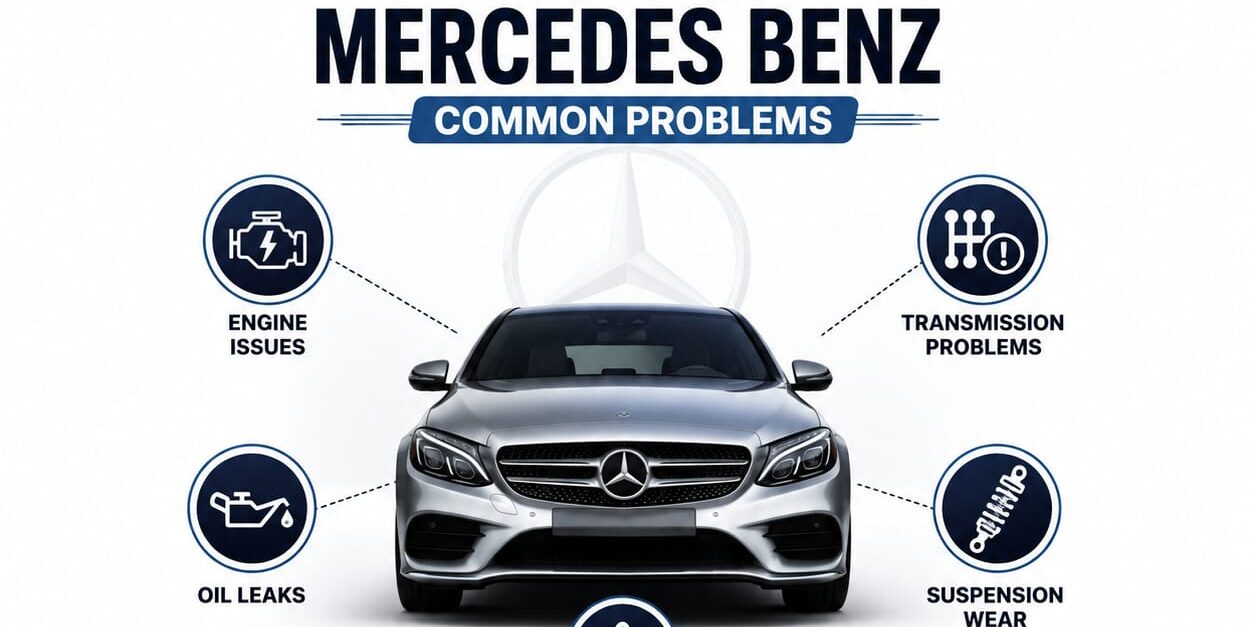
Knowing the 5 Mercedes Benz Common Problems can help you detect small issues before they become expensive repairs. Many Mercedes owners ignore early warning signs because the car still feels comfortable to drive. Unfortunately, delaying repairs often leads to bigger mechanical failures, higher repair costs, and unexpected breakdowns.
The good news is that most Mercedes problems can be prevented with regular maintenance and professional inspections. Replacing worn parts at the right time, using genuine components, and following the manufacturer’s service schedule can keep your vehicle running smoothly for years.
In this guide, you will learn about the 5 Mercedes Benz Common Problems that every owner should know. We will explain what causes these issues, the warning signs to watch for, and how they can be repaired before they become serious.
If you own a Mercedes-Benz in Dubai, this guide will also explain why the local climate affects your vehicle differently compared to other countries. Understanding these factors can help you protect your investment and avoid unnecessary repair bills.
Whether your Mercedes is brand new or has covered thousands of kilometers, this article will help you understand the most common problems and how to keep your luxury vehicle in excellent condition.
Why Mercedes-Benz Cars Face More Problems in Dubai
Mercedes-Benz vehicles are built with advanced technology, powerful engines, and intelligent electronic systems. While these features improve comfort and performance, they also require proper maintenance, especially in a city like Dubai.
One of the biggest challenges is the extreme summer heat. Engine oil, coolant, transmission fluid, and other essential fluids work much harder when outside temperatures remain very high for long periods. Rubber seals, hoses, and plastic components also wear out faster because of continuous exposure to heat.
Heavy traffic is another reason Mercedes vehicles experience additional wear. Many drivers spend long hours on busy roads where the vehicle constantly stops and starts. This creates extra stress on the automatic transmission, cooling system, brakes, and engine.
Dust and sand are also common across the UAE. Fine sand particles can block air filters, reduce cooling efficiency, and affect engine performance if regular servicing is ignored.
Modern Mercedes-Benz vehicles rely on many electronic systems. Components such as the Engine Control Unit (ECU), sensors, cameras, parking assistance systems, and infotainment screens communicate with each other continuously. When one sensor fails, it can trigger warning lights or affect the performance of other systems.
Routine maintenance becomes even more important in Dubai because these conditions increase the workload on every major component. Regular oil changes, coolant inspections, transmission servicing, brake checks, battery testing, and computer diagnostics help detect problems before they become costly repairs.
At Car Garage Auto Services, Mercedes specialists use advanced diagnostic equipment to inspect every important system and identify hidden faults before they lead to major damage. Preventive maintenance not only improves reliability but also helps maintain the value and performance of your Mercedes-Benz.
Now that you understand why Dubai’s driving conditions can affect your vehicle, let’s look at the 5 Mercedes Benz Common Problems that every owner should know, starting with one of the most common issues: engine oil leaks.
Problem #1 Engine Oil Leaks
Engine oil leaks are one of the 5 Mercedes Benz Common Problems that many owners experience. This issue can affect both newer and older Mercedes models. If you notice a small oil stain under your car, do not ignore it. A minor leak today can turn into a major engine repair tomorrow.
Engine oil plays an important role in your Mercedes-Benz. It lubricates moving engine parts, reduces friction, controls engine temperature, and prevents excessive wear. When the oil level becomes low because of a leak, the engine has to work harder. This increases heat and can cause serious internal damage if the problem is left untreated.
In Dubai, engine oil leaks can become worse because of the extreme weather. High temperatures cause rubber seals and gaskets to become hard and brittle over time. Once these parts lose their flexibility, oil begins to escape from the engine.
What Causes Engine Oil Leaks in a Mercedes-Benz?
Several parts can cause an oil leak. Some leaks are small and difficult to notice, while others become obvious very quickly.
The most common causes include:
- Worn valve cover gasket
- Damaged oil filter housing gasket
- Leaking oil cooler seals
- Cracked oil pan gasket
- Worn crankshaft seals
- Loose or damaged drain plug
- Old engine seals that have become dry because of heat
Most of these components naturally wear out with age. However, regular inspections can detect these problems before they become expensive.
Warning Signs of an Engine Oil Leak
Many Mercedes owners do not realize they have an oil leak until the warning light appears on the dashboard. Learning the early signs can help you act quickly.
Watch for these symptoms:
- Oil spots under your parked vehicle
- Burning oil smell inside or outside the car
- Smoke coming from the engine bay
- Low engine oil warning message
- Oil level dropping between services
- Dirty engine covered with fresh oil
- Engine running hotter than normal
If you notice even one of these signs, it is best to have your Mercedes inspected as soon as possible.
Why You Should Never Ignore an Oil Leak
Some drivers continue using their vehicle even after seeing a small oil leak. This can become a very costly mistake.
When engine oil drops below the recommended level, important components such as the pistons, crankshaft, camshaft, and turbocharger receive less lubrication. Without enough oil, metal parts begin rubbing against each other. This creates excessive heat and causes rapid wear.
Over time, the engine may develop knocking noises, poor performance, or even complete engine failure. In severe cases, replacing an engine can cost far more than repairing a simple gasket.
Oil leaks can also damage other parts of the vehicle. Oil may drip onto belts, hoses, electrical connectors, or hot exhaust components. This not only reduces the life of nearby parts but may also create a burning smell or smoke.
How Professional Technicians Diagnose the Problem
Finding the exact source of an oil leak requires experience. A professional technician first cleans the engine thoroughly. After cleaning, the engine is inspected while running to identify where fresh oil is escaping.
Modern Mercedes-Benz vehicles may also require electronic diagnostics to check oil pressure sensors and related warning systems. A complete inspection ensures that hidden leaks are not missed.
How Engine Oil Leaks Are Repaired
The repair depends on the source of the leak. In most cases, the damaged gasket or seal is replaced with a high-quality OEM or genuine Mercedes-Benz part.
After the repair, fresh engine oil and a new oil filter are installed if required. The technician then checks the engine carefully to confirm that the leak has been completely fixed.
At Car Garage Auto Services, Mercedes specialists perform detailed engine inspections using advanced diagnostic equipment. Every repair follows manufacturer recommendations, ensuring your vehicle remains safe, reliable, and ready for Dubai’s demanding driving conditions.
Fixing an oil leak early is always less expensive than replacing damaged engine components. Regular servicing and timely inspections are the best ways to keep your Mercedes engine performing at its best.
Problem #2 Cooling System Failure and Engine Overheating
Your Mercedes-Benz engine produces a large amount of heat every time you drive. The cooling system controls this heat and keeps the engine operating at the correct temperature. When any part of this system fails, the engine can overheat within minutes.
Cooling system failure is another one of the 5 Mercedes Benz Common Problems, especially in Dubai, where summer temperatures can place extra pressure on the radiator, water pump, coolant hoses, and thermostat.
A healthy cooling system protects the engine from overheating, improves fuel efficiency, and extends the life of important engine components. Even a small coolant leak can quickly become a serious problem if ignored.
In the next section, we will explain the most common causes of Mercedes cooling system failure, the warning signs you should never ignore, and the best repair solutions for Dubai drivers.
What Causes Cooling System Failure in a Mercedes-Benz?
Several components work together to keep your Mercedes engine cool. If one part stops working properly, the entire cooling system can be affected.
The most common causes include:
- A leaking radiator
- A faulty water pump
- A damaged thermostat
- Cracked or leaking coolant hoses
- A worn expansion tank
- A faulty radiator fan
- Low or contaminated coolant
In Dubai, these parts are exposed to very high temperatures almost every day. Heat causes rubber hoses and seals to wear out faster than they would in cooler climates. Over time, small coolant leaks can develop without the driver noticing.
Warning Signs of Cooling System Problems
Your Mercedes usually gives several warning signs before the engine overheats completely. Paying attention to these symptoms can help you avoid serious engine damage.
Look out for these signs:
- The engine temperature gauge is higher than normal.
- A coolant warning message appears on the dashboard.
- Steam comes from under the bonnet.
- The air conditioning is no longer cooling properly.
- Sweet-smelling coolant around the vehicle.
- Coolant leaking under the car.
- The engine loses power during driving.
If you notice any of these symptoms, stop driving as soon as it is safe to do so. Continuing to drive with an overheating engine can cause permanent engine damage.
Why Engine Overheating Is Dangerous
Many drivers believe they can continue driving for a few more kilometers after the temperature warning appears. This is one of the biggest mistakes a Mercedes owner can make.
When the engine overheats, metal components expand beyond their normal limits. This can damage the cylinder head, head gasket, pistons, valves, and even the engine block.
A blown head gasket may allow coolant and engine oil to mix together. This reduces lubrication inside the engine and can quickly lead to severe internal damage.
Engine overheating can also affect the turbocharger, sensors, ignition system, and electronic components. Repair costs increase significantly if the problem is ignored.
How Cooling System Problems Are Diagnosed
Professional technicians use several methods to find the exact cause of overheating.
The cooling system is pressure tested to locate hidden leaks. The radiator, water pump, thermostat, cooling fan, coolant reservoir, and hoses are inspected carefully. Electronic diagnostics are also used to check temperature sensors and cooling fan operation.
A complete inspection helps identify the real problem instead of simply replacing parts without proper testing.
How Cooling System Problems Are Repaired
The repair depends on the faulty component.
A leaking radiator may need replacement. A worn water pump or damaged thermostat should be replaced immediately. Old coolant hoses should also be changed if they show signs of cracking or swelling.
After replacing damaged parts, the cooling system is flushed and filled with the correct Mercedes-approved coolant. Air trapped inside the system is removed to ensure proper coolant circulation.
At Car Garage Auto Services, Mercedes specialists inspect the complete cooling system instead of repairing only the visible problem. This approach helps prevent repeat failures and keeps your vehicle reliable even during Dubai’s hottest months.
Regular coolant inspections and preventive maintenance can save you from expensive engine repairs and unexpected roadside breakdowns.
Problem #3 Automatic Transmission Problems
The automatic transmission is one of the most advanced systems in a Mercedes-Benz. It delivers smooth gear changes, improves driving comfort, and helps the engine perform efficiently. However, it is also one of the most complex and expensive components to repair.
Transmission problems are among the 5 Mercedes Benz Common Problems that owners should never ignore. A small issue, such as delayed shifting or old transmission fluid, can eventually lead to major transmission failure if left untreated.
Dubai’s heavy traffic places extra stress on automatic transmissions. Constant stopping, starting, and slow-moving traffic force the gearbox to change gears repeatedly throughout the day. Over time, this increases wear on internal components.
Common Signs of Mercedes Transmission Problems
Your Mercedes transmission usually shows warning signs before it fails completely.
Watch for these symptoms:
- Delayed gear engagement
- Hard or jerky gear changes
- Gear slipping while driving
- Difficulty shifting into Drive or Reverse
- Transmission warning light
- Unusual humming or grinding noises
- Burning smell from underneath the vehicle
- Reduced acceleration
If you notice any of these signs, schedule a transmission inspection as soon as possible.
What Causes Mercedes Transmission Problems?
Several issues can affect the transmission system.
Common causes include:
- Old or dirty transmission fluid
- Low transmission fluid level
- Valve body failure
- Torque converter wear
- Transmission Control Module (TCM) faults
- Worn clutch packs inside the gearbox
- Damaged transmission seals
- Software issues affecting gear shifting
Many of these problems develop gradually. Regular servicing helps detect them before major damage occurs.
Why You Should Never Ignore Transmission Problems
Your Mercedes-Benz transmission is responsible for transferring power from the engine to the wheels. Every time you accelerate, slow down, or change speed, the transmission works continuously in the background. When it starts showing signs of trouble, acting quickly can save you thousands of dirhams in repair costs.
Many Mercedes owners continue driving even after noticing delayed gear shifts or slight jerking. At first, these symptoms may seem small, but they often indicate that internal transmission components are wearing out.
Low or dirty transmission fluid is one of the most common causes of transmission damage. Transmission fluid lubricates moving parts, reduces heat, and helps create smooth gear changes. Over time, the fluid becomes dirty and loses its protective properties. Without proper lubrication, internal gears and clutch packs wear much faster.
Ignoring these warning signs can lead to serious problems such as complete transmission failure, loss of power while driving, poor fuel economy, and expensive gearbox replacement.
How Mercedes Transmission Problems Are Diagnosed
Modern Mercedes-Benz vehicles use advanced electronic systems to monitor transmission performance. Professional technicians combine electronic diagnostics with mechanical inspections to find the exact cause of the problem.
The diagnostic process usually includes:
- Reading fault codes using Mercedes STAR Diagnostic equipment
- Checking transmission fluid condition and level
- Inspecting the transmission pan for metal particles
- Testing the valve body and solenoids
- Inspecting the torque converter
- Road testing the vehicle to monitor gear changes
- Checking the Transmission Control Module (TCM)
A complete diagnosis helps identify the root cause instead of replacing parts unnecessarily.
How Transmission Problems Are Repaired
The correct repair depends on the condition of the transmission.
Minor issues may only require replacing old transmission fluid and the transmission filter. If the valve body or solenoids are faulty, these components can often be repaired or replaced without changing the entire gearbox.
More serious problems may require replacing damaged clutch packs, seals, bearings, or the torque converter. In severe cases, a complete transmission rebuild or replacement may be necessary.
At Car Garage Auto Services, Mercedes transmission specialists use manufacturer-approved repair procedures and high-quality OEM parts. Every transmission is carefully tested after repairs to ensure smooth gear changes and reliable performance on Dubai’s roads.
Regular transmission servicing is one of the best investments you can make to avoid costly gearbox repairs.
Problem #4 Suspension and AIRMATIC Suspension Problems
Mercedes-Benz vehicles are famous for their smooth and comfortable ride. Whether you are driving through city traffic or cruising on Sheikh Zayed Road, the suspension system keeps the vehicle stable and comfortable.
Many premium Mercedes models use the AIRMATIC Air Suspension System, which automatically adjusts ride height and improves driving comfort. While this technology offers excellent performance, it also requires proper maintenance.
Suspension problems are another one of the 5 Mercedes Benz Common Problems that owners frequently experience, especially as the vehicle gets older.
Common Suspension Problems
The suspension system contains many moving parts that wear out over time.
Common problems include:
- Air suspension leaks
- Worn shock absorbers
- Damaged air struts
- Weak suspension compressor
- Broken control arm bushings
- Worn ball joints
- Faulty ride height sensors
- Suspension warning lights
These issues often develop gradually, so many drivers do not notice them until ride quality becomes noticeably worse.
Signs Your Mercedes Suspension Needs Attention
A damaged suspension system usually gives several warning signs.
Watch for these symptoms:
- One side of the vehicle sits lower than the other.
- The ride feels rough over small bumps.
- The vehicle bounces more than normal.
- Knocking or clunking noises from underneath the car.
- Uneven tyre wear.
- Steering feels unstable.
- Suspension warning light appears on the dashboard.
- The vehicle leans while turning.
These signs should never be ignored because suspension problems affect both comfort and safety.
Why Suspension Problems Become Worse in Dubai
Dubai’s roads are generally in excellent condition, but high temperatures still affect suspension components.
Heat causes rubber bushings and seals to wear more quickly. Dust and sand can also enter moving suspension parts, increasing wear over time. Long daily drives and repeated speed bumps place additional pressure on shock absorbers, control arms, and air suspension components.
Vehicles equipped with AIRMATIC suspension require regular inspections because even a small air leak can force the compressor to work harder. Eventually, this can damage the compressor and increase repair costs.
Suspension Diagnosis and Repair
Professional technicians inspect the complete suspension system to identify worn or damaged parts.
This includes checking:
- Air struts
- Shock absorbers
- Suspension compressor
- Control arms
- Bushings
- Ball joints
- Steering components
- Ride height sensors
Electronic diagnostics are also performed on vehicles equipped with AIRMATIC suspension to identify stored fault codes.
At Car Garage Auto Services, Mercedes suspension specialists perform complete inspections using advanced diagnostic equipment. Worn components are replaced with high-quality OEM parts to restore ride comfort, handling, and safety.
Repairing suspension problems early helps prevent additional damage to tyres, steering components, and the braking system.
Problem #5 Electrical and Electronic System Problems
Modern Mercedes-Benz vehicles contain dozens of computers, sensors, and electronic control modules that work together every time you drive.
These advanced systems improve safety, comfort, fuel efficiency, and performance. However, they also make electrical faults one of the most common issues Mercedes owners experience.
Common Mercedes Electrical and Electronic Problems
Modern Mercedes-Benz vehicles use advanced technology to control almost every function of the car. Systems such as the Engine Control Unit (ECU), Transmission Control Module (TCM), Anti-lock Braking System (ABS), parking sensors, cameras, infotainment system, battery management system, and climate control all communicate with each other.
When one electronic component fails, it can affect several other systems. This is why electrical problems can sometimes seem confusing.
Some of the most common electrical issues include:
- Battery draining quickly
- Check Engine Light staying on
- Faulty oxygen sensors
- Parking sensor failure
- Malfunctioning infotainment screen
- Power window problems
- Door lock issues
- Lighting system faults
- Starter motor problems
- Alternator failure
- ECU communication errors
- Sensor failures
These problems can appear in both older and newer Mercedes-Benz models.
Warning Signs of Electrical Problems
Electrical faults often start with small warning signs before they become major issues.
Pay attention if you notice:
- Dashboard warning lights
- Difficulty starting the engine
- Battery warning light
- Flickering headlights
- Touchscreen not responding
- Parking sensors not working
- Power seats or windows stopping suddenly
- Unusual battery drain
- Random warning messages on the dashboard
Ignoring these symptoms may leave you stranded with a vehicle that refuses to start.
Why Mercedes Electrical Problems Need Professional Diagnosis
Unlike mechanical problems, electrical faults cannot usually be identified by visual inspection alone.
Mercedes-Benz vehicles contain multiple control modules connected through complex communication networks. A fault in one module may trigger warning lights in another system.
Professional technicians use Mercedes STAR Diagnostic equipment to communicate with the vehicle’s computers, read stored fault codes, perform live data analysis, and identify the exact source of the problem.
Replacing parts without proper diagnosis often wastes time and money.
How Electrical Problems Are Repaired
The repair process depends on the cause of the fault.
A weak battery may simply need replacement. A faulty alternator may not be charging the battery correctly. Damaged sensors, wiring, or electronic modules may also require repair or replacement.
After repairs are completed, technicians clear fault codes and perform a complete system test to ensure every electronic system is working correctly.
At Car Garage Auto Services, experienced Mercedes technicians use advanced diagnostic technology to accurately identify electrical faults and repair them according to Mercedes-Benz standards.
Regular battery testing and electronic inspections can prevent unexpected breakdowns and improve your vehicle’s reliability.
Early Warning Signs Your Mercedes Needs Immediate Inspection
Many expensive repairs begin with small warning signs that drivers ignore.
If you notice any of the following symptoms, schedule an inspection as soon as possible.
- Engine warning light
- Oil leaking under the vehicle
- Coolant loss
- Rising engine temperature
- Hard or delayed gear shifts
- Suspension noise
- Vehicle sitting unevenly
- Battery warning light
- Burning smell
- Poor fuel economy
- Unusual engine vibrations
- Strange noises while driving
Finding the problem early usually means a faster and more affordable repair.
How Regular Mercedes Maintenance Prevents Costly Repairs
Preventive maintenance is the easiest way to avoid the 5 Mercedes Benz Common Problems discussed in this guide.
Following the recommended service schedule keeps every major system working efficiently.
A complete Mercedes service should include:
- Engine oil and filter replacement
- Coolant inspection
- Transmission service
- Brake inspection
- Suspension check
- Battery testing
- Computer diagnostics
- Air filter replacement
- Cabin filter replacement
- AC performance check
- Tyre inspection
- Fluid level inspection
Regular servicing not only reduces repair costs but also improves safety, fuel efficiency, and the resale value of your Mercedes-Benz.
Why Mercedes Owners in Dubai Choose Car Garage Auto Services
Choosing the right workshop is just as important as maintaining your vehicle.
At Car Garage Auto Services, we understand the unique challenges Mercedes-Benz owners face in Dubai. Our experienced technicians have the knowledge and equipment needed to diagnose and repair complex Mercedes systems accurately.
Why customers trust us:
- Mercedes-Benz specialists
- Advanced Mercedes STAR Diagnostic equipment
- Genuine and OEM replacement parts
- Transparent pricing
- Fast turnaround time
- Comprehensive vehicle inspections
- High-quality workmanship
- Customer-focused service
- Reliable Mercedes maintenance and repairs
Whether your Mercedes needs routine servicing, engine repairs, transmission diagnostics, suspension work, or electrical troubleshooting, our team is committed to keeping your vehicle performing at its best.
Frequently Asked Questions
What are the most common Mercedes-Benz problems?
The most common issues include engine oil leaks, cooling system failure, automatic transmission problems, suspension faults, and electrical system issues. Regular maintenance helps prevent these problems from becoming serious.
Is Mercedes-Benz reliable in Dubai?
Yes. Mercedes-Benz vehicles are reliable when maintained properly. Because Dubai has high temperatures and heavy traffic, following the recommended service schedule is especially important.
Why does my Mercedes overheat in Dubai?
Overheating is usually caused by coolant leaks, a faulty thermostat, a worn water pump, radiator problems, or cooling fan failure. Dubai’s hot climate increases the risk if these components are not maintained.
How often should I service my Mercedes-Benz?
Most Mercedes models should be serviced every 10,000 to 15,000 kilometers or once a year, depending on the model and driving conditions. Vehicles driven daily in Dubai may benefit from more frequent inspections.
What causes Mercedes transmission problems?
Old transmission fluid, worn clutch packs, valve body failure, torque converter wear, and electronic control module faults are among the most common causes.
Can I drive with an engine oil leak?
Driving with an oil leak is not recommended. Low engine oil can cause severe engine damage and significantly increase repair costs.
Are genuine Mercedes parts important?
Yes. Genuine or high-quality OEM parts are designed specifically for your vehicle and provide better reliability, safety, and long-term performance.
Conclusion
Owning a Mercedes-Benz is a rewarding experience, but every luxury vehicle needs proper care to stay reliable. Understanding the 5 Mercedes Benz Common Problems helps you recognize early warning signs before they turn into expensive repairs.
Engine oil leaks, cooling system failures, transmission issues, suspension wear, and electrical faults are the problems most Mercedes owners are likely to face during ownership. The good news is that these issues can usually be prevented or repaired when detected early.
Routine maintenance, professional diagnostics, and timely repairs are the keys to keeping your Mercedes-Benz safe, reliable, and enjoyable to drive on Dubai’s roads. Ignoring small problems may save money today, but it often leads to much larger repair bills in the future.
If your Mercedes-Benz is showing warning lights, unusual noises, poor performance, or any of the symptoms discussed in this guide, do not wait for the problem to become worse.
Car Garage Auto Services is your trusted destination for professional Mercedes-Benz repair and maintenance in Dubai. From advanced diagnostics and routine servicing to complex engine, transmission, suspension, and electrical repairs, our experienced technicians are committed to delivering dealership-quality workmanship with honest advice and transparent pricing.
Book your Mercedes inspection today and let our experts help keep your vehicle performing like new, no matter where your journey takes you in Dubai.