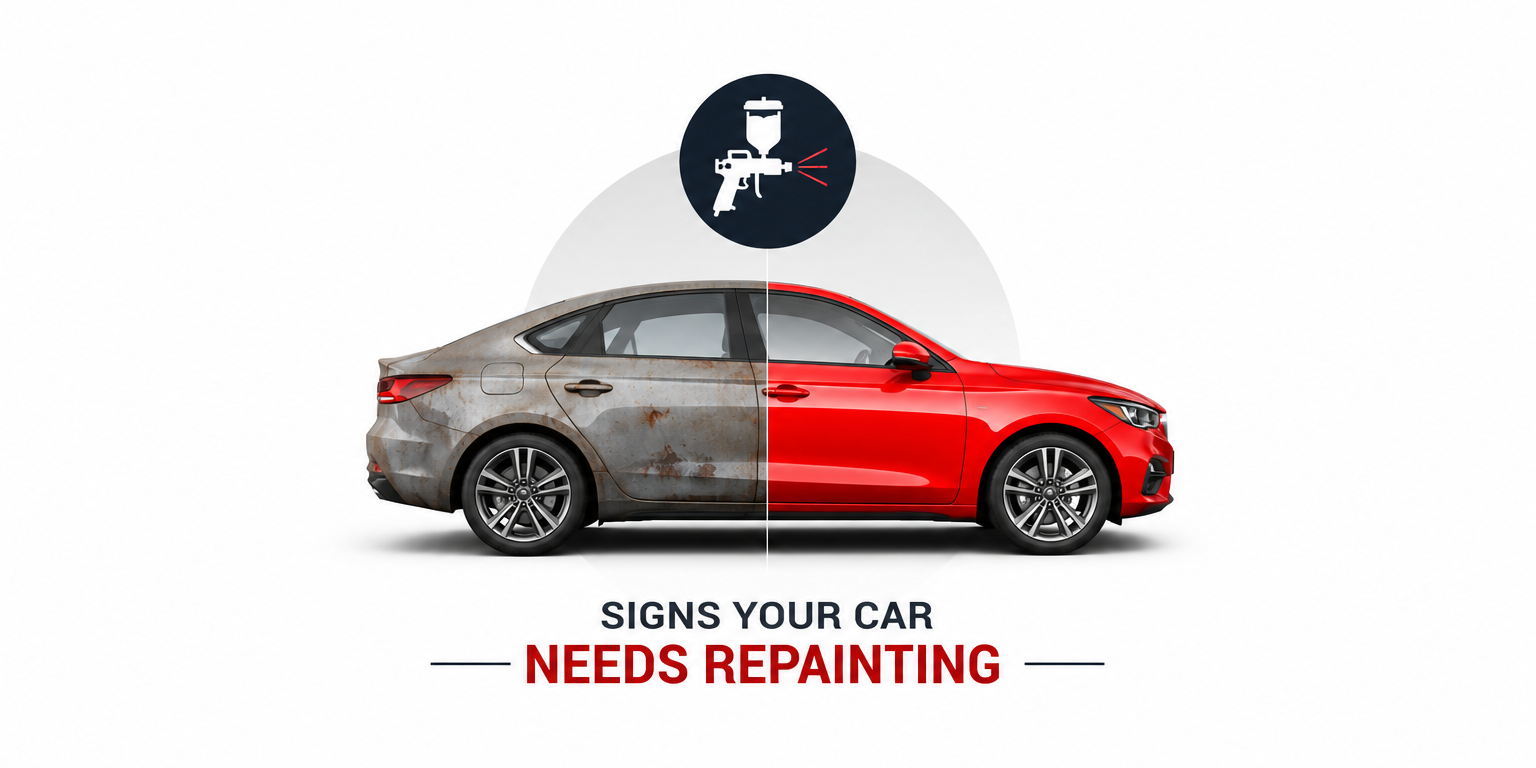
You wash your car every week. You park it in the shade when you can, and it still looks tired. The color feels flat under the sun. There’s a rough patch on the bonnet you can feel with your fingertip. The bumper has a scratch that keeps catching your eye every time you walk past it.
If that sounds familiar, you may be staring at the early signs your car needs repainting. You are not imagining it. Recognizing these issues early can help you plan repainting before the problems worsen. Pay attention to fading color, peeling edges, or dull patches after washings.
I have worked under the bonnet and around body panels in Dubai’s workshops for over two decades.
Paint damage is one of the most common reasons customers visit us.
This guide explains what to look for and why the climate speeds up damage.
If you’re unsure, Signs Your Car Needs Repainting can be a helpful reference.
Why Car Paint Fails Faster in Dubai
Before we get into the warning signs, it helps to understand why this is such a common issue here specifically. Dubai’s climate is brutal on automotive paint, and it is not just about heat.
June and July bring an average maximum UV index of 9 in Dubai, a level classified as very high risk for unprotected exposure, and that same intensity hits your car’s paint every single day it sits outside. Summer highs regularly climb past 40°C, and on the hottest weekends, temperatures across the UAE have touched 48°C. That combination of relentless UV radiation and extreme heat is exactly what damages a clear coat and pigment layer over time.
Here is what actually happens on a molecular level. UV rays punch through the clear coat and break down the chemical bonds that hold paint pigments together, a process called photodegradation, and the heat speeds up a separate reaction called oxidation, where oxygen bonds with the exposed paint surface and leaves it chalky and dull. Add in fine desert sand acting like sandpaper in the wind, road salt near the coast, and bird droppings that turn acidic in direct sun, and you have a perfect storm for paint failure. Cars in hot, sun-heavy regions consistently show oxidation and fading years earlier than identical cars in milder climates.
That is why a car that is only four or five years old in Dubai can already show paint problems that would take a decade to appear in a cooler country.
What Is Paint Oxidation? (Quick Answer)
Paint oxidation is a chemical reaction where oxygen breaks down unprotected car paint after UV rays have already weakened the clear coat. It shows up as a chalky, rough, or hazy film on the surface, and it is one of the earliest visible signs that repainting may be needed soon.
10 Signs Your Car Needs Repainting
Not every scratch or dull patch means you need a full respray. But when you start seeing several of these signs together, or one of them severely, it is time to get the car assessed properly.
- Fading or dull color. If your car’s paint looks washed out compared to when you bought it, especially on the roof, bonnet, and boot, UV exposure is breaking down the pigment. This is usually the first sign and the easiest to miss because it happens gradually.
- Chalky or rough texture. Run your hand over the paint after a wash. If it feels gritty or powdery instead of smooth, that is oxidation. A light case can sometimes be corrected with polishing, but advanced oxidation usually means the clear coat is already compromised.
- Clear coat peeling or flaking. Once you can see or feel actual flakes lifting off the surface, polishing will not fix it. The protective layer has failed and the base paint underneath is exposed to the elements.
- Cracking, sometimes called alligatoring. This looks like a spider web or dried mud pattern across the paint. It usually happens on older cars or ones that had a poor-quality paint job to begin with, and it is a clear sign the surface needs to be stripped back and redone.
- Rust bubbles under the paint. If you see small raised bumps, especially near wheel arches, door edges, or the bottom of doors, moisture has gotten under the paint and started corroding the metal. This needs urgent attention because rust spreads.
- Deep scratches down to metal or primer. A scratch that only affects the clear coat can often be buffed out. A scratch that exposes gray primer or bare metal will rust quickly in Dubai’s humidity near the coast, and it needs proper paint repair, not just a cover-up.
- Mismatched patchwork from old repairs. If a previous repair used the wrong paint code or wasn’t blended into the surrounding panel, you will notice a visible color or gloss difference in daylight. This is extremely common with budget bodywork and is one of the top reasons customers come to us for a proper respray.
- Swirl marks that won’t buff away. Fine spiderweb scratches that show up under direct sunlight, often from automatic car washes or improper drying, can eventually thin the clear coat enough that repainting becomes the only real fix.
- Stone chips and sandblasting on the front end. Highway driving on Sheikh Zayed Road and desert routes throws up grit that chips paint on the bonnet, mirrors, and bumper. A few chips can be touched up, but widespread pitting across a panel usually calls for a full respray of that section.
- Sun-related discoloration on dark-colored cars. Black, navy, and dark gray vehicles absorb far more heat than lighter colors, which accelerates oxidation. If you own a dark car in Dubai and it looks patchy or hazy after only a couple of years, this is likely why.
Case Study 1: The Five-Year-Old Black SUV
A customer brought in a five-year-old black SUV that had spent most of its life parked outdoors in Al Quoz. From ten feet away it looked fine. Up close, the bonnet, roof, and boot lid had a hazy, almost gray cast compared to the doors and side panels, which were still glossy because they got some shade from the building next to his villa.
This is a textbook oxidation pattern. Horizontal panels take the most direct sun, so they fail first. We tried a machine polish and compound first, which is always the cheaper option to attempt before jumping to paint. It improved the bonnet slightly but the roof paint had thinned too much from years of sun exposure and previous aggressive washing, so polishing alone could not restore the gloss without risking burning through the clear coat. We ended up repainting the roof, bonnet, and boot lid to match the factory black, blending carefully into the A and C pillars so there was no visible line. The car left looking like a two-year-old vehicle again.
The lesson here: dark cars parked outside in Dubai need proactive protection, not reactive fixes. If you own one, a ceramic coating or regular quality wax genuinely buys you years before you are facing this kind of job.
Case Study 2: The Insurance Repair That Went Wrong Twice
Another customer came to us after an accident repair done elsewhere left his silver sedan’s front bumper and fender a slightly different shade than the rest of the car. It was subtle in the shade but obvious under direct sunlight, exactly the kind of mismatch we mentioned above. He had already gone back to the original shop once, and they had resprayed it a second time with the same result.
The problem turned out to be twofold. First, they were mixing paint without properly verifying the factory color code against the actual panel, which drifts slightly with age and sun exposure, so a fresh-mixed color rarely matches an older panel exactly without adjustment. Second, they were not blending the new paint into the adjacent panels, which is standard practice to hide any minor variation. We remixed and tinted the color to match the faded original paint rather than the factory spec, then blended it across the door and rear quarter panel as well as the bumper and fender. Under direct sun, it now reads as one continuous color.
This case is a good reminder that repainting a car is a craft, not just spraying color out of a can. Color matching, blending, and surface prep are where an inexperienced shop goes wrong, and it usually costs the customer more in the end when they have to redo it properly.
How Do I Know If I Need a Touch-Up, a Panel Respray, or a Full Repaint?
This is the question we get asked constantly, and the honest answer depends on how much of the car is affected and how deep the damage goes.
- Touch-up paint works for small, isolated chips or scratches that have not spread and do not expose bare metal. It is the cheapest fix but only cosmetic on a small scale.
- Panel or spot repaint makes sense when damage is limited to one or two panels, like a bumper after a minor bump or a door with a long scratch. A skilled painter blends the new paint into surrounding panels so there’s no visible edge.
- Full repaint becomes necessary when oxidation, fading, or clear coat failure has spread across multiple panels, when the car has significant rust, or when you want a complete color change. It is the most expensive option but also the most thorough.
A simple rule of thumb from the workshop floor: if you can fix the problem area without anyone noticing where the old paint ends and the new paint begins, spot repair is enough. If the damage is spread across the car or the color has faded unevenly everywhere, a full respray gives a far better and longer-lasting result than patching section by section.
What Actually Happens During a Professional Car Respray
A quality repaint is not just spraying color onto the existing surface. Here is the process our technicians follow, and it’s worth knowing so you can judge whether a garage is cutting corners.
- Inspection and color matching. We assess the extent of the damage and match the exact factory paint code, adjusted for any fading on the rest of the car.
- Surface preparation. This includes sanding down the old paint, treating any rust, and repairing dents or imperfections in the bodywork before a drop of new paint goes on.
- Masking. Trim, glass, badges, and adjacent panels are carefully covered to protect them from overspray.
- Primer application. A proper primer coat helps the new paint adhere and protects bare metal from corrosion.
- Base coat application. The color coat is applied in a controlled, dust-free booth to avoid the specks and unevenness you often see from roadside or garage-floor jobs.
- Clear coat and curing. A clear protective layer is applied and cured, which is what gives modern paint its shine and UV resistance.
- Polishing and quality check. The finished panel is polished and compared against the rest of the vehicle in daylight, not just under workshop lighting, to confirm a true color match.
Skipping any of these steps, especially surface prep and proper booth conditions, is exactly why cheap paint jobs peel, fade fast, or never quite match.
Common Mistakes Car Owners Make With Paint Damage
- Ignoring small chips. A tiny stone chip left untreated lets moisture and air reach bare metal, and in Dubai’s coastal humidity that can turn into rust within months.
- Choosing the cheapest quote without asking about process. A low price often means no proper booth, rushed prep, or cheaper paint that fades again within a year.
- DIY spray cans on visible panels. These almost never match factory color or gloss level, and the difference is obvious once the car is back in daylight.
- Delaying rust repair. Rust spreads under paint even when the surface looks fine. By the time bubbling is visible, the damage underneath is usually worse than it appears.
- Skipping ceramic coating or wax after a respray. Fresh paint is just as vulnerable to Dubai’s sun as old paint. Protecting it early extends the life of the work significantly.
Why Work With a Specialist Garage Instead of a Roadside Painter
Dubai has plenty of quick, cheap paint options, and for a scuffed bumper on a budget, that might be fine. But for anything involving color matching, rust treatment, or panels visible in daylight, the difference between an experienced team and a rushed job shows up within months, not years.
At Car Garage Auto Service, our car painting service in Dubai handles everything from single panel touch-ups to full resprays, with proper color matching and booth-based application rather than guesswork. If the damage came from an accident, our car body repair and collision repair teams handle the structural and panel work first, so the paint goes onto a properly restored surface, not just over dents. For chips, scuffs, or dents that don’t need a full respray, our car dent repair and car detailing services can often restore the panel without any paint work at all.
We’ve been doing this in Al Quoz for over 22 years, across thousands of vehicles and nearly every make sold in the UAE, from everyday family cars to luxury and performance brands. If you’re not sure whether your car needs a touch-up or a full respray, the simplest next step is to bring it in for a free visual inspection rather than guessing from a quote over the phone.
Frequently Asked Questions
How often does a car need repainting in Dubai’s climate? There’s no fixed timeline, but factory paint on a car parked outdoors in Dubai typically starts showing noticeable fading or oxidation within five to eight years, faster on dark colors. Cars kept in covered parking with regular waxing or ceramic coating can go well beyond that before needing a respray.
Can I just polish my car instead of repainting it? Polishing works for light oxidation and swirl marks that haven’t gone past the clear coat. If the clear coat is cracked, peeling, or the color itself looks faded rather than just dull, polishing will not fix it and repainting is the only real solution.
How long does a full car respray take? A single panel respray usually takes one to two days including drying and curing time. A full car respray typically takes three to seven days depending on the extent of prep work, rust treatment, and the number of coats required for a proper factory-quality finish.
Will a repaint affect my car’s resale value? A professional, well-matched repaint generally protects resale value by removing visible fading, rust, or damage. A poor-quality repaint with mismatched color or visible overspray can actually hurt resale value, since buyers and inspectors often check for this specifically.
Does insurance cover car repainting in Dubai? It depends on your policy and whether the paint damage resulted from an accident, which is usually covered under comprehensive insurance, versus general wear like sun fading, which typically is not. It’s worth checking your policy details or asking your garage to help coordinate directly with your insurer.
Final Thoughts
Dubai’s sun and heat are not gentle on car paint, and the signs your car needs repainting usually build up slowly before they become obvious. Fading, chalkiness, cracking, rust bubbles, and mismatched old repairs are all signals worth acting on before they get worse and more expensive to fix. The good news is that most of these problems have a clear, proportionate solution, whether that’s a small touch-up, a blended panel respray, or a full color-matched job done properly in a controlled booth.
If your car is showing any of the signs above, don’t wait for it to get worse. Book a free inspection with Car Garage Auto Service and our technicians will tell you honestly whether you need a touch-up, a spot repair, or a full respray, along with a clear price before any work begins.