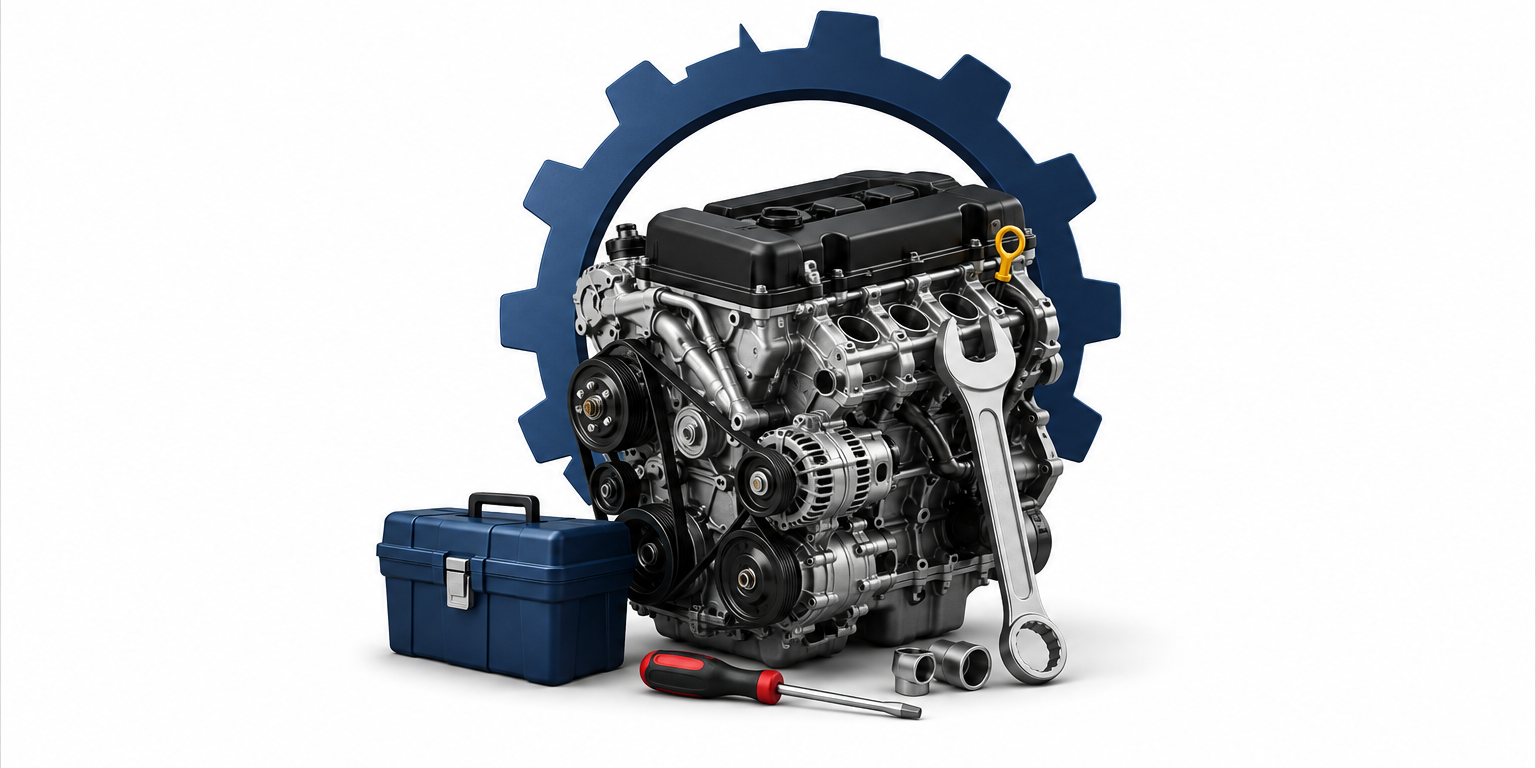
Your car jerks at every red light on Sheikh Zayed Road. There’s a knocking sound under the bonnet that wasn’t there last week. The check engine light won’t turn off, no matter how many times you restart the car. If any of this sounds familiar, you’re probably wondering the same thing every worried driver asks me at the workshop: what is an engine repair, exactly, and how do I know if my car needs one?
I’ve been fixing engines in Dubai for over 22 years, and I’ve seen almost every version of this question walk through my garage doors. In this guide, I’ll explain what engine repair actually means, the warning signs you shouldn’t ignore, what causes engine trouble in Dubai’s climate specifically, and how to tell the difference between a quick fix and a major job. No jargon, no scare tactics, just what I’d tell you if you were standing in my workshop right now.
What Is an Engine Repair?
Engine repair is the process of diagnosing and fixing problems inside a vehicle’s engine so it runs safely, efficiently, and reliably again. This can range from replacing a faulty sensor or gasket to more involved work like fixing a timing chain, repairing a head gasket, or rebuilding internal components after wear or damage.
Not every engine issue needs a full teardown. Sometimes it’s a fifteen minute fix. Other times, it’s a multi day job. The key is knowing which one you’re actually dealing with, and that starts with proper diagnostics, not guesswork.
How a Car Engine Actually Works (In Simple Terms)
You don’t need an engineering degree to understand your engine, and honestly, you shouldn’t need one to trust the person repairing it either. Here’s the short version.
Your engine burns a mix of fuel and air inside sealed cylinders. That controlled explosion pushes pistons up and down, which turns the crankshaft, which eventually turns your wheels. Meanwhile, oil is constantly circulating to keep every moving part lubricated and cool, coolant is flowing through the radiator to stop things from overheating, and a network of sensors is feeding data to your car’s computer to keep the whole process balanced.
When any one part of that system fails, the rest of the engine starts to struggle. That’s when you start noticing symptoms.
Signs You Might Need Engine Repair
After two decades of listening to engines, I can usually tell what’s wrong before the car even reaches the ramp. Here are the signs I tell every customer never to ignore:
- Warning lights on the dashboard, especially the check engine light or oil pressure light
- Unusual noises like knocking, ticking, grinding, or a sound like marbles in a can
- White, blue, or black smoke coming from the exhaust
- A burning smell while driving, particularly a hot oil or rubber smell
- Loss of power or hesitation when accelerating
- Rough idling or the car shaking noticeably at a stop
- Higher fuel consumption than usual with no change in driving habits
- Oil or coolant leaks visible under the car after parking
If you’re noticing even two of these together, it’s worth getting the car looked at. Waiting rarely makes engine problems cheaper. It almost always makes them worse.
Why Dubai’s Roads and Climate Are Tough on Engines
This is the part that most generic car advice online misses, because it’s written for cooler climates. Dubai is a different beast entirely, and I see the effects of it daily.
Summer temperatures regularly cross 45°C, which puts constant stress on cooling systems, engine oil, and rubber components like hoses and belts. Add in stop start traffic on roads like Al Khail or Sheikh Zayed during rush hour, and engines spend a lot of time working hard at low speeds with limited airflow. Fine sand and dust also get into air filters faster here than in most countries, which means clogged filters and reduced engine efficiency if maintenance isn’t kept up.
In my experience, the number one cause of premature engine failure in Dubai isn’t bad driving. It’s delayed maintenance during peak summer months, when the engine is already under the most strain.
Types of Engine Repair: Minor, Major, and Overhaul
Not all engine repairs are equal, and understanding the difference helps you make better decisions and avoid overpaying.
Minor Engine Repairs
These are smaller fixes that address a specific issue without opening up the engine block. Examples include replacing a faulty sensor, fixing a vacuum leak, changing spark plugs, or repairing a small oil leak from a gasket. Most of these can be completed in a single day.
Major Engine Repairs
This level of work usually involves components like the timing belt or chain, head gasket, water pump, or turbocharger. It takes longer and costs more, but it’s still far less invasive than replacing the engine altogether.
Engine Overhaul or Rebuild
This is the most extensive option, where the engine is partially or fully disassembled, worn internal parts like pistons, rings, and bearings are replaced, and the engine is rebuilt to close to original specification. I usually recommend this only when the engine has significant internal wear but the block itself is still in good condition.
What is the difference between engine repair and engine overhaul? Engine repair fixes a specific fault without dismantling the engine. An overhaul disassembles the engine to replace worn internal components and restore performance closer to factory condition.
How Professional Engine Diagnostics Work
A good engine repair always starts with proper diagnostics, not assumptions. Here’s what that typically looks like at a serious workshop:
- Computer diagnostic scan to read fault codes from the engine control unit
- Visual inspection for leaks, worn belts, damaged hoses, and loose connections
- Compression test to check how well each cylinder is sealing
- Fluid checks for oil condition, coolant levels, and signs of contamination
- Road test, if needed, to reproduce the issue under real driving conditions
- Clear explanation of findings before any work begins, along with cost estimates
I always tell new customers this: if a garage wants to start replacing parts before running proper diagnostics, that’s a red flag. Guessing costs you money. Diagnostics save it.
What Affects the Cost of Engine Repair?
I get asked about pricing constantly, and honestly, anyone who gives you an exact number without seeing the car is either guessing or trying to lock you in. What I can tell you are the real factors that affect cost.
- The extent of the damage. A sensor replacement costs far less than a head gasket job.
- Your car’s make and model. Parts for a Range Rover or Mercedes cost more than parts for a Toyota or Nissan.
- Genuine versus aftermarket parts. Genuine parts cost more upfront but usually last longer, especially in Dubai heat.
- Labor time. More complex jobs take longer, and skilled labor reflects that.
- How early the problem was caught. Catching an issue early is almost always cheaper than waiting until it damages other components.
That last point is the one I wish more drivers understood. A AED 300 sensor problem, ignored for six months, can turn into a AED 5,000 engine job. I’ve watched it happen more times than I’d like.
Repair or Replace? How I Help Customers Decide
This is one of the hardest calls in my job, and it depends on more than just the repair cost. I usually weigh it against three things: the car’s age and overall condition, how much the repair costs compared to the car’s current value, and whether this is an isolated issue or part of a pattern of ongoing problems.
If a car is generally reliable and the repair cost is reasonable relative to its value, repair almost always makes sense. If the engine has multiple failing systems and repair costs are approaching what the car is worth, it’s worth having an honest conversation about your options before spending more money chasing one issue after another.
Common Mistakes Drivers Make With Engine Problems
After 22 years, certain mistakes come up again and again.
Ignoring the check engine light because the car “still drives fine” is probably the most common one. By the time a car noticeably struggles, the underlying issue has often been building for weeks. Delaying an oil change to save a small amount of money is another, since oil breaks down faster in Dubai’s heat and old oil accelerates engine wear significantly. Choosing the cheapest quote without asking what’s included also tends to backfire, because some quotes skip diagnostics entirely and simply guess at the fix. And continuing to drive with a coolant leak, hoping it will hold until the weekend, is one of the fastest ways to turn a AED 200 fix into a AED 4,000 one.
How Car Garage Auto Service Approaches Engine Repair
I run Car Garage Auto Service in Al Quoz, Dubai, and everything I’ve shared above is exactly how we handle every car that comes through our doors. We start with proper engine diagnostics and repair rather than jumping straight to part replacement, we explain what we find in plain language before any work begins, and we give you honest options rather than pushing the most expensive fix.
Because engine health is connected to the rest of the car, we also look at related systems during the same visit. That includes checking your car maintenance schedule, confirming your oil change intervals are on track, and making sure your car AC isn’t putting extra load on the engine in summer, since that’s a common but overlooked stress point here in Dubai.
If you’re not sure whether what you’re hearing or feeling in your car is serious, a proper vehicle inspection is the fastest way to find out. And if your car breaks down and can’t make it to us, we offer roadside assistance and towing across Al Quoz and the surrounding areas, so you’re not stuck figuring it out alone.
Frequently Asked Questions
What is an engine repair in simple terms? Engine repair means fixing a specific fault inside the engine, such as a leak, worn part, or faulty sensor, so the engine runs properly again. It’s different from a full rebuild, which involves replacing multiple internal components.
How do I know if my engine problem is serious? Warning signs like knocking noises, smoke from the exhaust, overheating, or a check engine light paired with reduced power usually indicate a serious issue. A proper diagnostic scan will confirm the exact cause.
Is engine repair expensive in Dubai? Costs vary widely based on the car model, the parts needed, and the extent of the damage. Minor repairs like sensor or gasket replacements are relatively affordable, while major internal work costs more. Getting an early diagnosis is the best way to keep costs down.
Can I keep driving with the check engine light on? It depends on the fault code, but it’s risky to assume it’s minor. Some issues are harmless in the short term, while others can cause serious engine damage if ignored. A quick diagnostic scan will tell you which situation you’re in.
How often should I get my engine checked? Ideally, have your engine checked during every scheduled service, and immediately if you notice new noises, smells, warning lights, or a drop in performance, especially during Dubai’s summer months.
Final Thoughts
An engine repair isn’t just about fixing whatever’s broken today. It’s about catching problems early, understanding what your car is actually telling you, and making decisions based on real diagnostics instead of guesswork. Dubai’s heat and traffic put engines through more stress than most drivers realize, which makes early attention even more important here than in many other places.
If your car has been giving you warning signs, whether it’s a strange noise, a stubborn dashboard light, or a change in how it drives, don’t wait for it to get worse. Book a diagnostic check with Car Garage Auto Service in Al Quoz, Dubai, and let 22 years of hands on experience tell you exactly what’s going on, and what it will actually take to fix it.