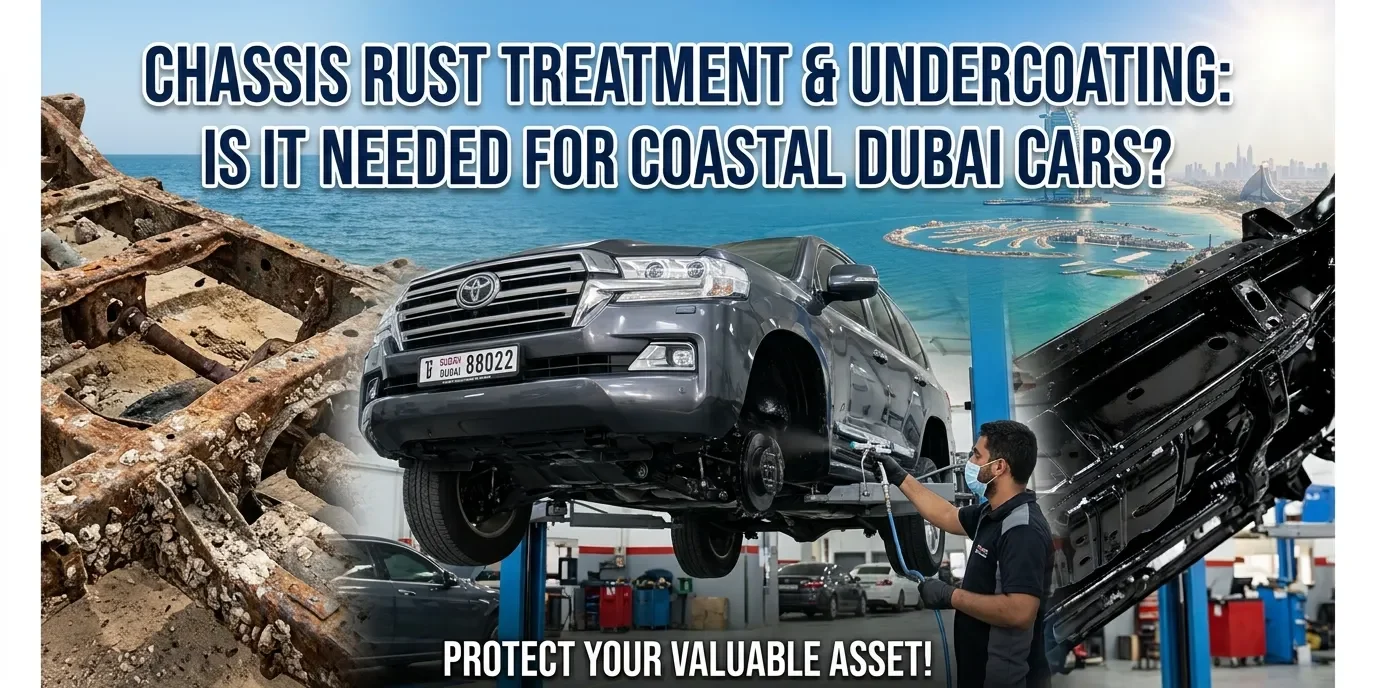
Living in Dubai means dealing with coastal humidity, high temperatures, blowing sand, and occasional heavy rain. While these conditions are part of everyday life, they can also affect your car’s underbody over time. Many drivers focus on paint protection and regular servicing but overlook the metal components underneath their vehicles.
Car chassis rust repair Dubai services can help address corrosion before it causes more serious damage. However, does every car in Dubai need chassis undercoating, or is it only useful in certain conditions? Understanding the difference between rust treatment, underbody protection, and routine inspection can help you make the right decision for your vehicle.
In this guide, we explain how chassis rust develops, which Dubai vehicles may need extra protection, how undercoating works, and when professional treatment is worth considering.
What Is Chassis Rust, and Why Does It Matter?
Chassis rust is corrosion that develops when metal components react with moisture and oxygen. It can affect parts of a vehicle’s frame, suspension mounting points, brackets, fasteners, and other exposed metal components underneath the car.
Not all underbody rust is equally serious. A small amount of surface corrosion on a non-critical metal component is different from deep corrosion around structural areas, suspension mounting points, or other load-bearing parts. The location and depth of the rust determine how urgently it needs attention.
For Dubai drivers, the important thing is not to assume that a car is protected simply because it looks clean from the outside. Corrosion can develop underneath a vehicle without being visible during a normal walkaround.
Can Coastal Dubai Conditions Cause Chassis Rust?
Yes, coastal conditions can increase the risk of corrosion, particularly when moisture and salt deposits remain on exposed metal. However, living near the coast does not automatically mean your car will develop serious rust.
Dubai has a hot climate, but humidity can rise considerably, especially near the sea and during humid periods. Vehicles regularly exposed to coastal air, wet roads, or contaminated water may face a higher corrosion risk than vehicles kept in dry, sheltered conditions.
Several local factors can affect your car’s underbody.
Coastal Humidity and Salt Exposure
Moist air can leave moisture on exposed surfaces. Near the coast, airborne salt may also settle on a vehicle’s underbody. Salt deposits can encourage corrosion when moisture is present, particularly on damaged protective coatings and exposed metal.
A car parked outdoors near the sea may experience different conditions from one stored in a dry, enclosed parking area. Over time, regular exposure can make underbody inspections more important.
Sand, Dust, and Road Debris
Dubai’s roads and construction areas can expose vehicles to sand, dust, and small stones. Although sand itself does not automatically cause rust, road debris can damage protective coatings and expose the metal underneath.
Sand and dirt can also collect in underbody recesses and around wheel arches. If these areas remain damp or trap salty deposits, corrosion may become more likely.
Rainwater and Floodwater Exposure
Heavy rain and water accumulation can expose parts of a vehicle’s underbody to moisture and road contaminants. Vehicles driven through standing water may also retain dirt and deposits in areas that are difficult to clean.
If your car has been exposed to floodwater, a thorough inspection is sensible. Pay particular attention to the underbody, electrical connectors, brake components, and suspension areas. Water exposure does not guarantee rust, but it can reveal existing weaknesses in protective coatings and create other mechanical problems.
What Is Chassis Undercoating?
Chassis undercoating is a protective layer applied to suitable surfaces underneath a vehicle to help reduce exposure to moisture, road contaminants, and other environmental factors.
Depending on the product and application method, undercoating may use rubberized, wax-based, or other specialist protective materials. Different products serve different purposes, so choosing the correct coating for the vehicle and the area being treated is important.
Undercoating is not the same as rust repair. It is primarily a preventive measure when applied to suitable, properly prepared surfaces. If corrosion is already present, the affected area may need cleaning, rust removal, treatment, or repair before any protective coating is applied.
A professional inspection helps determine whether your vehicle needs undercoating, targeted corrosion protection, or more extensive chassis rust repair.
Is Chassis Undercoating Necessary for Cars in Dubai?
No, chassis undercoating is not necessary for every car in Dubai. Whether it is worthwhile depends on the vehicle’s existing factory protection, parking conditions, driving habits, age, and exposure to moisture or salt.
Many modern vehicles already have factory-applied coatings, sealants, and corrosion protection. Adding another layer without assessing the existing protection may provide little benefit and can create problems if the wrong product is used.
Undercoating may be worth considering if your vehicle regularly faces conditions that increase corrosion risk.
For example, a car frequently parked outdoors near the coast may benefit from an underbody inspection and targeted protection for vulnerable areas. A vehicle that spends most of its time in a covered parking area and has intact factory protection may need only routine inspections and cleaning.
Before investing in undercoating, consider these factors:
- Vehicle age: Older vehicles may have worn, damaged, or deteriorated protective coatings.
- Parking conditions: Regular outdoor parking near the sea can increase exposure to humidity and airborne salt.
- Driving environment: Frequent driving on rough roads or construction routes may expose the underbody to debris.
- Previous water exposure: Floodwater or repeated water exposure can justify a more detailed inspection.
- Existing corrosion: Visible rust should be assessed and addressed before preventive coating is considered.
The goal is to protect the vehicle where necessary, not to apply a coating simply because the car is driven in Dubai.
Signs Your Car May Need Chassis Rust Repair in Dubai
Chassis corrosion can remain hidden for a long time. You may not notice a problem until a mechanic inspects the underside of the vehicle or corrosion becomes visible around exposed components.
Recognizing early warning signs can help you arrange an inspection before the damage becomes more difficult to manage.
1. Orange or Brown Patches on Metal
Orange or brown discoloration can indicate surface rust on exposed metal components, brackets, fasteners, or other underbody parts.
Not every rust patch requires major repair. However, corrosion should be assessed to determine whether it is limited to the surface or has affected the metal more deeply.
2. Flaking Metal or Peeling Protective Coating
If the factory coating or an older underbody treatment begins peeling, the metal beneath it may become exposed to moisture and contaminants.
Rust that causes metal to flake, blister, or break apart needs closer inspection. Avoid covering the affected area with a fresh layer of undercoating before the underlying condition has been assessed.
3. Corrosion Around Suspension Mounting Points
Suspension mounting points and other structural areas deserve particular attention. Significant corrosion in these locations can affect the strength of the metal and the safe operation of the vehicle.
If a mechanic finds deep rust, perforation, or weakened metal around a structural component, professional assessment is important. Depending on the damage, the vehicle may require specialist metal repair or replacement of an affected component.
4. Previous Flood or Water Damage
A vehicle that has been driven through floodwater or exposed to standing water may need more than a routine underbody wash.
Water can leave dirt and contaminants in hidden areas and may affect electrical systems, connectors, brakes, and other components. An inspection can help identify corrosion risks and other water-related damage before they develop into more expensive problems.
Chassis Rust Treatment vs. Undercoating: What Is the Difference?
Rust treatment and undercoating are related, but they serve different purposes. Understanding the difference helps you avoid paying for a protective layer when your car actually needs repairs.
| Service | Main purpose | When it may be needed |
|---|---|---|
| Chassis rust inspection | Identifies corrosion and assesses its severity | During routine checks or after water exposure |
| Rust removal | Removes corrosion from suitable affected surfaces | When surface rust is present |
| Rust treatment | Treats prepared metal using an appropriate corrosion-control system | When the product is suitable for the metal and condition |
| Chassis undercoating | Adds a protective layer to suitable underbody surfaces | When additional protection is justified |
| Structural rust repair | Restores or replaces damaged structural metal or components | When corrosion has weakened critical areas |
The correct approach depends on the condition of your vehicle. Surface rust may be manageable with suitable preparation and treatment, while deeper corrosion can require specialist repair.
For example, if a mechanic finds light surface rust on a non-structural bracket, cleaning and appropriate corrosion protection may be sufficient. If the same inspection reveals perforation around a suspension mounting point, applying undercoating will not restore the metal’s strength.
How Is Professional Chassis Rust Repair Carried Out?
A proper repair begins with an inspection, not with applying a coating. The mechanic needs to identify the affected areas and understand whether the corrosion is superficial or has damaged the underlying metal.
Although the exact process varies by vehicle, a professional chassis rust repair service generally involves the following steps.
Step 1: Inspect the underbody
The technician examines accessible chassis sections, suspension components, mounting points, wheel arches, and existing protective coatings. Areas with visible rust, trapped dirt, or coating damage receive closer attention.
Step 2: Assess the severity of corrosion
The technician determines whether the rust is limited to the surface or has caused pitting, metal loss, or structural damage. Heavily corroded areas may need specialist assessment before further work can proceed.
Step 3: Clean and prepare the affected surfaces
Dirt, loose corrosion, and unsuitable coating material must be removed as appropriate. Proper preparation helps ensure that subsequent treatments can work as intended.
Step 4: Treat or repair the damaged area
Suitable surface corrosion may be treated with a compatible corrosion-control product. If the metal is badly weakened, the affected section or component may require professional repair or replacement.
Step 5: Apply protective coating where appropriate
Once the surface has been properly prepared and any required repairs have been completed, a suitable protective coating may be applied. The product must be compatible with the vehicle and the area being treated.
Step 6: Check the finished work
The technician checks the treated areas and confirms that important components remain accessible and free from inappropriate coating. Brake friction surfaces, exhaust components, electrical connections, drainage openings, and other restricted areas must be protected from unsuitable products.
Following the correct process helps avoid a common mistake: hiding corrosion beneath a new coating without addressing the damage underneath.
What Are the Benefits of Chassis Undercoating?
When selected and applied correctly, undercoating can provide useful protection in the right conditions. However, the results depend on the product, surface preparation, existing factory protection, and ongoing maintenance.
The main potential benefits include:
Reduced exposure to moisture and contaminants. A suitable coating can create a barrier between protected metal surfaces and environmental contaminants.
Additional protection for vulnerable areas. Properly selected products may help protect suitable underbody sections where the original coating is damaged or additional protection is justified.
Support for long-term vehicle maintenance. Preventing corrosion in vulnerable areas may help reduce future repair needs, although no coating can guarantee a rust-free vehicle.
Peace of mind after an underbody inspection. Knowing the condition of the chassis and the steps taken to protect vulnerable areas can help you make better maintenance decisions.
It is important to keep expectations realistic. Undercoating does not repair structural damage, eliminate all corrosion risks, or replace regular vehicle inspections.
Common Undercoating Mistakes Dubai Drivers Should Avoid
Choosing the wrong treatment can waste money or make existing corrosion harder to inspect. Before approving an undercoating service, make sure the work addresses your vehicle’s actual needs.
Applying Undercoating Over Existing Rust
This is one of the most important mistakes to avoid. A coating applied over loose rust or poorly prepared metal may fail to bond properly and can conceal continuing corrosion.
The affected area should be inspected, cleaned, and treated appropriately before a protective layer is applied.
Assuming Every Car Needs a Thick Protective Layer
More coating does not automatically mean better protection. Your car may already have an effective factory coating, and adding an incompatible material can interfere with existing protection or make future inspections more difficult.
A targeted approach is often more appropriate than coating every visible surface.
Ignoring Drainage Openings and Sensitive Components
Some underbody areas must remain clear so water can drain properly. Protective products should also be kept away from brake friction surfaces, exhaust components, and other areas where contamination could affect operation.
An experienced technician should understand where undercoating is appropriate and where it should not be applied.
Forgetting About Regular Inspections
Even a properly applied coating needs attention over time. Road debris, maintenance work, and normal vehicle use can damage protective layers.
Periodic inspections help identify peeling coatings, exposed metal, and early corrosion before more extensive work becomes necessary.
How Often Should You Inspect Your Car’s Chassis in Dubai?
There is no single inspection schedule that suits every vehicle. The right interval depends on the manufacturer’s maintenance guidance, driving conditions, vehicle age, and previous exposure to water or corrosive contaminants.
For a car regularly driven near the coast or parked outdoors, checking the underbody during routine servicing is a sensible approach. An additional inspection may be worthwhile after floodwater exposure, underbody impact, or noticeable damage to a protective coating.
If your vehicle has existing corrosion, follow the repair specialist’s recommendations for follow-up checks. Cars with significant previous rust may need closer monitoring than vehicles with intact factory protection.
You can also help protect your car through simple maintenance habits:
- Wash away accumulated dirt and contaminants from the underbody when appropriate, particularly after exposure to muddy or contaminated water.
- Have damaged underbody coatings inspected rather than covering them yourself.
- Address visible rust early instead of waiting for it to spread.
- Follow the vehicle manufacturer’s maintenance recommendations.
- Keep records of corrosion treatment and any repairs performed.
These steps help you focus on prevention without paying for unnecessary treatments.
Where Can You Get Car Chassis Rust Repair in Dubai?
If you notice rust underneath your vehicle, or you are unsure whether your car needs additional underbody protection, arrange a professional inspection before deciding on a treatment.
Car Garage Auto Services can be your point of contact for discussing your vehicle’s underbody condition and the repair or maintenance options available. An appropriate inspection should establish where corrosion is present, how serious it is, and whether the vehicle needs rust treatment, undercoating, or more extensive repairs.
When choosing a workshop, ask a few practical questions. Will the technician inspect the chassis before recommending a coating? How will existing rust be treated? Is the proposed product suitable for your vehicle? Will structural corrosion be assessed separately?
Clear answers help you understand the recommended work and avoid paying for a service that does not solve the underlying problem.
The best solution is not always the most expensive one. For some vehicles, cleaning and routine inspections may be enough. Others may benefit from targeted corrosion treatment or professionally applied underbody protection.
Conclusion: Does Your Dubai Car Need Chassis Undercoating?
Chassis undercoating can be useful for certain vehicles in Dubai, especially those regularly exposed to coastal humidity, salt deposits, water, and road debris. However, it is not a universal requirement, and a car with sound factory protection may not need an additional layer.
The most important step is to understand your vehicle’s actual condition. If you notice surface rust, damaged protective coatings, or signs of previous water exposure, arrange an inspection before corrosion becomes more serious.
For car chassis rust repair Dubai, choosing the correct treatment starts with identifying the problem. Contact Car Repair Auto Services to discuss your vehicle’s underbody inspection and suitable repair options. A proper assessment can help you protect vulnerable areas, maintain your vehicle responsibly, and avoid unnecessary work.
Frequently Asked Questions
1. Is chassis undercoating necessary in Dubai?
No, chassis undercoating is not necessary for every car in Dubai. Vehicles with intact factory protection and limited exposure to corrosive conditions may not need additional coating. An inspection can help determine whether targeted protection is worthwhile.
2. Can coastal humidity cause car chassis rust in Dubai?
Yes, coastal humidity can contribute to corrosion when moisture remains on exposed metal. Airborne salt deposits can increase the risk, particularly where protective coatings are damaged. However, corrosion also depends on the vehicle’s condition, parking environment, and maintenance history.
3. Can you apply undercoating over existing chassis rust?
Applying undercoating directly over loose or untreated rust is generally not recommended. The affected area should be assessed and prepared first. Depending on the severity, it may require rust removal, suitable treatment, or structural repair before a protective coating is applied.
4. How do I know if my car needs chassis rust repair?
Look for orange or brown corrosion, flaking metal, damaged underbody coatings, and rust around suspension mounting points. Severe corrosion, perforation, or weakened structural metal requires prompt professional assessment. Some corrosion is hidden, so a visual inspection from above may not reveal the full problem.
5. How much does car chassis rust repair cost in Dubai?
The cost depends on the location and severity of the corrosion, the vehicle model, the accessibility of the affected area, and the work required. Surface rust treatment is generally less involved than structural metal repair. Request an inspection and an itemized quotation before approving the work.