You washed your car on Friday. By Tuesday, it already looks dusty, dull, and somehow older than it did last month. If you live in Dubai, this isn’t bad luck. It’s physics. Between the relentless sun, the humidity spikes, and the sand that seems to find its way onto every surface, Dubai is one of the toughest environments in the world for car paint to survive in.
In this guide, we’ll break down what actually happens to paint in Dubai’s climate, which paint types and finishes hold up best, and the maintenance habits that separate a car that still looks new after five years from one that looks tired after two. We’ll also share a few real cases from cars we’ve worked on at our garage, so you’re not just getting theory.
Why Dubai Weather Is So Hard on Car Paint
Dubai summers regularly push past 40°C, and daytime highs during peak summer months average <cite index=”6-1″>around 36.5°C in July and August</cite>, with actual surface temperatures on a parked car running much higher than the air temperature. On particularly intense days, the National Centre of Meteorology has recorded readings <cite index=”7-1″>as high as 46.7°C in areas including Dubai</cite>, and coastal humidity can climb to levels that keep moisture sitting on the car’s surface long after sunrise.
This combination, heat plus UV plus humidity plus dust, attacks paint from multiple directions at once:
- UV radiation penetrates the clear coat and breaks down the chemical bonds holding pigment together, which is what causes fading and that chalky, washed-out look over time.
- Extreme heat speeds up oxidation, the reaction between oxygen and the paint surface, essentially “cooking” the finish faster than it would degrade in a milder climate.
- Fine sand and dust act like a mild abrasive every time it’s wiped off incorrectly, creating micro-scratches that dull the shine.
- High humidity and salt air near the coast contribute to corrosion on exposed metal edges and trim.
None of this is unique to Dubai. It happens everywhere. But the intensity and duration of sun exposure here compress years of normal wear into a much shorter timeline. Independent research on vehicles in high-UV regions found that constant sun exposure can shorten a paint job’s usable life by as much as half, with visible damage showing up in as little as two to three years for cars parked outdoors most of the day.
What Is the Best Car Paint for Dubai’s Heat and Sun?
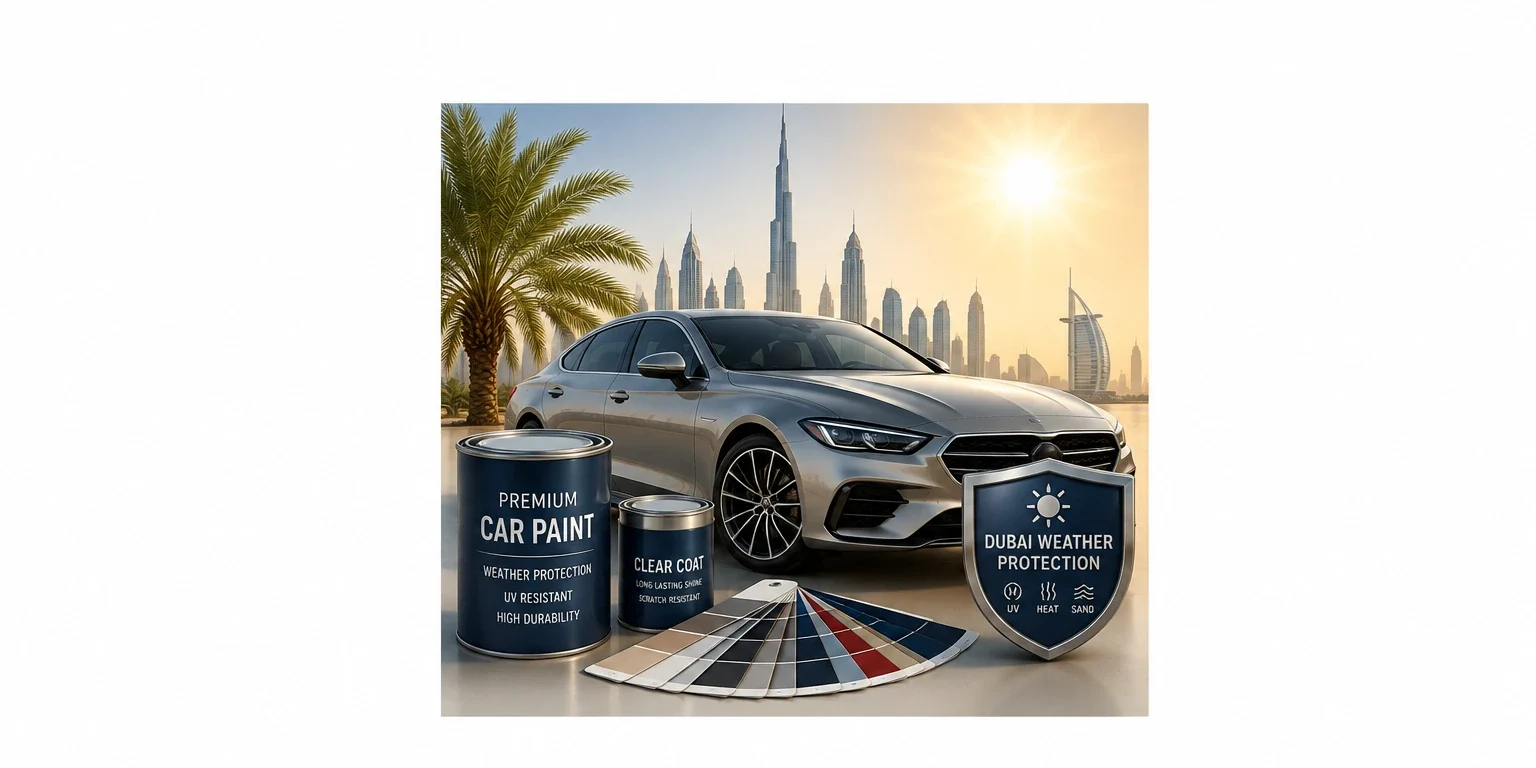
In short: the best option is a factory or aftermarket two-component (2K) urethane base coat paired with a high-quality UV-resistant clear coat, ideally in a lighter or metallic shade, and finished with a ceramic coating or PPF layer for added protection.
Here’s why each part of that matters.
1. Two-Component (2K) Urethane Paint Systems
Modern 2K urethane paints bond more tightly to the base layer and resist environmental damage far better than older single-stage acrylic paints. They hold gloss longer, resist chemical staining, and are the standard used by most reputable body shops and dealerships today. If you’re getting a full respray, this is the system you want, not a cheaper single-stage alternative.
2. A UV-Stabilized Clear Coat
The clear coat is your car’s first line of defense. It’s not just about shine, it’s the layer that absorbs and deflects most of the UV damage before it reaches the color coat underneath. Ask specifically for a clear coat rated for high UV resistance. Cheaper clear coats break down faster in direct sun and are one of the most common reasons cars in Dubai develop that “cloudy” look within a year or two.
3. Color Choice Actually Matters
Darker colors like black, navy, and deep red absorb more heat and UV energy, which accelerates fading and oxidation. Lighter colors and metallics reflect more light and tend to hide fine scratches and dust better between washes. This doesn’t mean you shouldn’t buy a black car in Dubai, plenty of owners do and keep them looking sharp, but it does mean darker cars need a more disciplined protection routine.
4. Ceramic Coating or Paint Protection Film (PPF)
Paint alone, no matter how good, isn’t enough in this climate. A ceramic coating adds a hard, UV-resistant layer on top of the clear coat that reflects heat and repels water, dust, and light chemical contamination. PPF goes a step further, offering a physical barrier against stone chips and abrasion on high-impact areas like the hood, mirrors, and bumper. Most cars we protect in Dubai get a combination: PPF on impact zones, ceramic coating everywhere else.
Real Case: Two Cars, Two Very Different Outcomes
We recently worked on two nearly identical SUVs, same model, same year, both parked outdoors daily. One owner had a basic wax applied every few months and washed the car at home with regular sponges. The other had a ceramic coating applied at our garage roughly 14 months earlier and stuck to a proper two-week wash schedule.
The difference was dramatic. The waxed car showed visible clear coat dulling on the hood and roof, the two panels that take the most direct sun, along with faint swirl marks from improper washing. The ceramic-coated car still had strong gloss retention and noticeably better water beading, a simple test that tells you a lot about how intact the protective layer still is. Same climate, same exposure, very different results based purely on the protection method used.
This is the pattern we see constantly. It’s rarely about the paint brand alone. It’s about the system, quality base paint, a strong clear coat, and a protective top layer, working together.
How Often Should You Protect Your Car’s Paint in Dubai?
A reasonable baseline is a ceramic coating refresh or inspection every 12 to 24 months, depending on the product used and how often the car is parked outdoors. Wax alone needs reapplication every 6 to 8 weeks since it breaks down faster under intense heat. PPF is typically rated for 5 to 10 years but should still be inspected annually for lifting edges or yellowing.
Common Mistakes That Speed Up Paint Damage
A lot of the damage we see isn’t from the weather alone, it’s from how the car is cared for in between.
- Washing the car in direct midday sun, which causes water spots and can bake soap residue into the finish.
- Using dry cloths or automated brush washes that drag grit across the surface.
- Skipping regular washes because “it’ll just get dusty again,” which lets contaminants sit on the paint longer.
- Parking under trees that drop sap, or near construction sites with heavy dust and debris.
- Delaying touch-ups on small chips, which lets moisture and heat get under the paint and start corrosion.
Practical Tips to Protect Your Car Paint
- Wash your car every one to two weeks using the two-bucket method and a pH-neutral shampoo.
- Park in shaded or covered areas whenever possible, even a basic car cover helps on days without covered parking.
- Apply a ceramic coating or sealant rather than relying on wax alone.
- Get chips and scratches touched up quickly before they spread.
- Have your paint and coating condition checked every year, especially before and after summer.
Where Car Garage Auto Service Fits In
At Car Garage Auto Service, we work with Dubai’s climate every day, not against a generic playbook built for milder cities. Whether you need a full respray with a proper 2K urethane system, a ceramic coating application, or paint protection film on a new vehicle, our team builds the protection plan around how you actually use and park your car. If you’re not sure whether your current finish is holding up, a quick inspection can tell you a lot before real damage sets in.
Final Thoughts
There’s no single “best” car paint that works in isolation here. The winning combination for Dubai is a quality 2K urethane paint with a UV-resistant clear coat, smart color choices where possible, and a protective layer like ceramic coating or PPF on top. Add consistent, correct washing habits, and you can realistically keep a finish looking close to new for years, even in one of the harshest climates in the world for vehicle exteriors.
If your car’s paint is already showing early signs of fading or dullness, it’s worth getting it looked at sooner rather than later. The earlier you protect it, the less you’ll spend restoring it later.
Frequently Asked Questions
What is the best paint type for cars in Dubai’s climate? A two-component (2K) urethane paint system with a UV-resistant clear coat is the most durable option, offering better heat resistance and slower fading compared to older single-stage acrylic paints.
Does car color affect how fast paint fades in Dubai? Yes. Darker colors like black and deep red absorb more heat and UV radiation, which speeds up oxidation and fading. Lighter and metallic shades tend to reflect more heat and show wear less obviously.
How often should I wash my car in Dubai to protect the paint? Every one to two weeks is a good baseline, using proper technique and pH-neutral products, since dust and humidity build up quickly and can damage the clear coat if left too long.
Is ceramic coating worth it in Dubai’s heat? Generally, yes. Ceramic coating adds a UV-resistant, heat-reflective layer that slows down fading and oxidation significantly compared to paint left unprotected or maintained with wax alone.
How long does paint protection film last in Dubai conditions? Quality PPF typically lasts 5 to 10 years, though annual inspections are recommended to catch early signs of lifting or yellowing caused by prolonged heat exposure.