
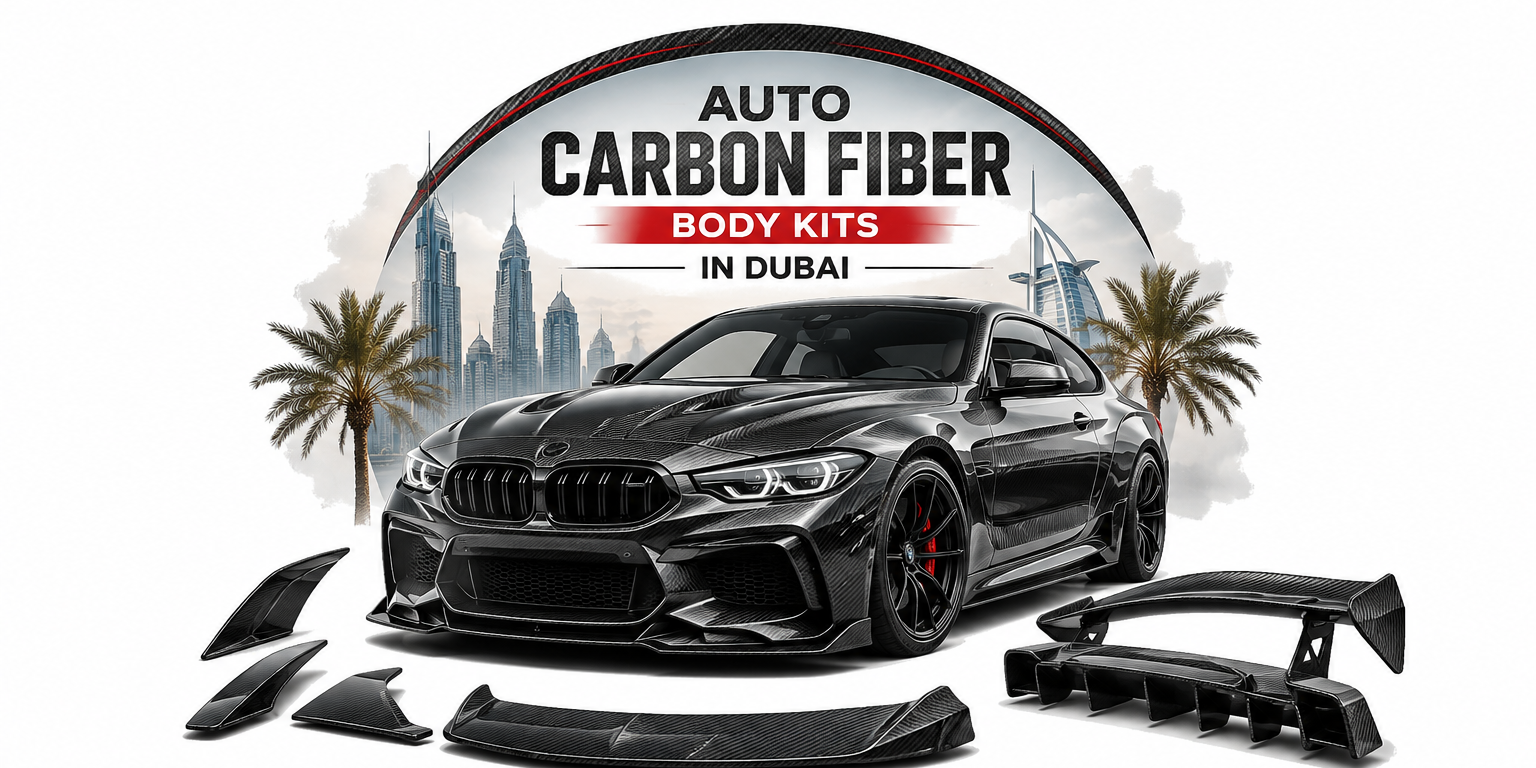
Walk through Al Quoz, JBR, or Sheikh Zayed Road on any given evening and you will spot at least one car wearing a carbon fiber body kit that turns heads at every red light. Dubai has become one of the world’s biggest markets for custom car styling, and carbon fiber is the material everyone wants right now. But not every kit on the market is worth your money, and not every installer knows how to fit one correctly.
In this guide, I will walk you through everything you need to know about auto carbon fiber body kits in Dubai, from what they actually are, to how much they cost, to the mistakes that ruin an otherwise beautiful car. This comes from years of hands on work in Dubai’s garages, not just theory pulled from a spec sheet.
What Is a Carbon Fiber Body Kit?
A carbon fiber body kit is a set of exterior car parts, such as bumpers, hoods, spoilers, side skirts, and diffusers, made from woven carbon fiber sheets bonded with resin. The material is prized because it is roughly five times stronger than steel by weight, yet far lighter than steel or even fiberglass. This combination of strength and low weight is exactly why race teams and premium car manufacturers use it.
For everyday car owners in Dubai, a carbon fiber kit does two things at once. It changes the way the car looks, giving it a more aggressive or sporty stance, and it can shave real weight off the vehicle, which slightly improves handling and acceleration on high performance cars.
Why Dubai Car Owners Are Choosing Carbon Fiber Over Other Materials
Dubai’s car culture is unlike most other cities. Between the density of luxury and sports cars on the road, the extreme summer heat, and a community that genuinely cares about how a car looks and performs, carbon fiber has become the default choice for serious modifications.
Here is what we see driving that demand at the garage level:
- Heat resistance. Fiberglass and ABS plastic kits can warp, crack, or discolor under Dubai’s summer heat, which regularly passes 45 degrees Celsius on asphalt surfaces. Properly cured carbon fiber holds its shape far better.
- Weight savings that matter. On performance cars like a Porsche 911, Mercedes AMG, or BMW M series, shedding even 5 to 10 kilograms off body panels has a noticeable effect on throttle response and cornering.
- Resale appeal. A well installed carbon fiber kit, done cleanly by a reputable shop, can actually help a car stand out in Dubai’s active used car market, especially for enthusiast models.
- Status and visual identity. Let’s be honest, a lot of buyers in Dubai want their car to look distinct from the next one in the parking lot. Carbon fiber weave has become a visual signature of a well built car.
Carbon Fiber vs Fiberglass vs ABS Plastic Body Kits
This is one of the most common questions we get at the garage, and it deserves a straight answer instead of marketing spin.
Carbon fiber is the strongest and lightest of the three, with the best heat and UV resistance. It costs the most, and a poorly made kit can still crack if it uses too much resin or too few fiber layers, so the manufacturer matters more than the material itself.
Fiberglass is more affordable and easier to repair if it cracks, but it is heavier than carbon fiber and more prone to flexing or warping in direct sun over time. Many mid range kits use fiberglass with a carbon fiber vinyl wrap to mimic the look at a lower price.
ABS plastic is the cheapest option and the most common on factory aftermarket parts. It holds paint well and resists minor impacts, but it adds more weight than either alternative and does not offer the same premium finish under close inspection.
If your goal is genuine performance benefit and a showroom finish, real carbon fiber is worth the investment. If you are working with a tighter budget and mainly want the visual style, a fiberglass kit with a carbon wrap can be a smart middle ground.
Types of Carbon Fiber Body Kits Available in Dubai
Not every customer needs a full kit. In fact, most of our clients start with one or two components before deciding whether to go further. The most requested parts include:
- Front and rear bumpers, which reshape the car’s overall stance and are often the first thing people notice.
- Hoods (bonnets), frequently upgraded for both looks and weight savings on the front axle.
- Side skirts, which lower the visual profile of the car and give it a more grounded look.
- Rear diffusers, popular on performance sedans and coupes for both style and mild aerodynamic benefit.
- Spoilers and trunk lids, common on sports cars where rear downforce and a track inspired look matter.
- Mirror caps and trim pieces, a lower cost entry point for owners who want a taste of carbon fiber styling without committing to a full kit.
How the Installation Process Actually Works
A lot of buyers assume a body kit installation is as simple as bolting on new parts. In reality, a proper job involves several stages, and skipping any of them is where most bad installations go wrong.
- Vehicle inspection and fitment check. The technician checks the car’s exact trim and factory measurements, since even the same model year can have panel variations.
- Test fitting. The kit is dry fitted without adhesive or paint to check panel gaps and alignment before any permanent work begins.
- Surface preparation. Panels are sanded, cleaned, and primed so paint and clear coat bond properly to the carbon fiber weave.
- Painting or clear coating. If the kit is painted to match the car, this is done in a controlled booth. Exposed weave kits get a UV protective clear coat instead.
- Mounting and alignment. Parts are fitted using a mix of factory mounting points, adhesive, and where needed, discreet fasteners, with careful attention to panel gaps.
- Final quality check. The car is inspected under different lighting to catch any gaps, paint imperfections, or fitment issues before it goes back to the customer.
Rushing any of these steps is the number one reason kits end up looking uneven or start lifting at the edges within a few months.
What Does a Carbon Fiber Body Kit Cost in Dubai?
Pricing depends heavily on the brand of car, the number of parts in the kit, whether the carbon is real or a vinyl wrap imitation, and the reputation of the manufacturer. As a rough guide from what we see in the market:
- Single components like a hood or front lip typically range from AED 2,500 to AED 8,000 depending on the car model.
- Mid size upgrades such as a bumper and side skirt combo often fall between AED 8,000 and AED 18,000.
- Full body kits on performance cars, including bumpers, skirts, diffuser, and spoiler, can range from AED 20,000 well into six figures for exotic brands using premium manufacturers.
These numbers do not include paint matching, professional installation labor, or any structural adjustments the car might need. Anyone quoting a price far below market average is usually cutting corners on either the material or the labor, and that catches up with you within a year.
Common Mistakes Car Owners Make With Body Kits
After years of fixing other shops’ work, a few patterns show up again and again.
Buying based on photos alone. A kit that looks perfect in an online listing photo can have poor panel fitment on your specific car. Always ask for fitment references for your exact model and year.
Choosing the cheapest installer. Carbon fiber work is unforgiving. A shop with little experience in composite materials often overheats the resin during painting, which weakens the panel and shortens its lifespan.
Ignoring proper curing time. Rushing the paint or clear coat curing process leads to fading, yellowing, or peeling within months, especially under Dubai’s sun exposure.
Skipping a structural check. Some kits change how a bumper absorbs impact in a minor collision. A qualified technician should confirm the kit does not compromise safety mounting points.
Not asking about warranty. A reputable installer stands behind their work. If a shop will not commit to any warranty on fitment or finish, that is a warning sign.
How to Choose the Right Garage for Carbon Fiber Body Kit Installation in Dubai
This is where experience really separates a good result from an expensive regret. Look for a workshop that can show you real photos of past installations, not just stock manufacturer images. Ask direct questions about their painting process, the brands of carbon fiber kits they trust, and how they handle panel alignment.
At Car Garage Auto Service, our team in Al Quoz has spent years working on car body repair and car painting for a wide range of luxury and performance brands. That background in body work matters just as much as the styling side, because a carbon fiber kit is only as good as the surface preparation and alignment behind it.
We also handle related work that often comes up alongside a body kit project, including car bumper repair, car dent repair, and full car collision repair if your vehicle needs structural correction before a new kit can be fitted properly. Once the styling work is done, many clients follow up with car detailing to bring out the full finish of the new panels.
We work across a wide range of makes, from Mercedes Benz and BMW to Porsche and Range Rover, so the team understands the specific panel layouts and mounting quirks of each brand rather than applying a one size fits all approach.
How to Maintain a Carbon Fiber Body Kit in Dubai’s Climate
A carbon fiber kit is an investment, and a little routine care keeps it looking sharp for years.
- Wash the car regularly to remove dust and sand before it scratches the clear coat.
- Park in shade or use a car cover when possible to reduce prolonged UV exposure.
- Avoid automatic car washes with stiff brushes, which can lift edges on bonded panels.
- Have the clear coat inspected yearly, since UV damage typically shows up as dullness before it becomes visible cracking.
- Address any small chips or lifting edges quickly rather than waiting, since moisture and heat make small issues worse fast.
What Is the Best Type of Carbon Fiber for Dubai’s Heat?
Pre preg carbon fiber, cured in an autoclave under controlled heat and pressure, holds up best in Dubai’s climate because it has fewer resin inconsistencies than hand laid wet carbon. It costs more, but for a city where cars sit in direct sun for hours daily, that extra durability is usually worth the price difference.
How Long Does a Carbon Fiber Body Kit Installation Take?
A single component like a hood or front lip usually takes one to two days including paint and curing time. A full body kit installation, done properly with test fitting, painting, and quality checks, typically takes five to ten working days depending on the complexity of the car and the number of parts involved.
Final Thoughts
A carbon fiber body kit can transform how your car looks and, on the right vehicle, even how it performs. But the material is only half the equation. The other half is choosing a garage that understands surface preparation, panel alignment, and Dubai’s climate well enough to make that investment last.
If you are considering a carbon fiber upgrade, take the time to compare real installation photos, ask about the process, and choose a team with a proven track record in body work, not just a parts supplier. The right installation pays off in how the car looks years down the line, not just on the day it leaves the shop.
If you are ready to explore your options, reach out to the team at Car Garage Auto Service for an honest assessment of your car and a clear quote before any work begins.
Frequently Asked Questions
Is a carbon fiber body kit worth it in Dubai? Yes, for most owners of performance or luxury vehicles, a genuine carbon fiber kit is worth it. It resists Dubai’s heat better than fiberglass or plastic alternatives, adds a lighter and more durable finish, and holds its appearance longer when installed correctly.
Does a carbon fiber body kit affect my car’s warranty? It can, depending on your manufacturer’s terms and whether the installation involves cutting or drilling into factory panels. Always check with your dealership or read your warranty terms before starting any exterior modification.
Can a damaged carbon fiber panel be repaired? Minor surface damage can often be repaired by a specialist using resin and matching clear coat. Deep structural cracks usually require panel replacement rather than repair.
How do I know if a carbon fiber kit is real or a vinyl wrap imitation? Real carbon fiber has a slightly textured, three dimensional weave you can feel under light finger pressure, and it is noticeably lighter than the factory panel it replaces. A vinyl wrap looks similar in photos but feels flat and adds no weight change.
Will a carbon fiber body kit change my car’s insurance premium? It can, since some insurers classify body kits as modifications that may affect repair costs. It is worth informing your insurer before installation so your policy stays accurate.


