The first time you sit inside a parked car on a Dubai afternoon in July, you understand immediately why window tinting is not a luxury here. It is a necessity. The heat is not just uncomfortable. It is the kind of heat that makes you question every life decision that led to you opening that car door. The steering wheel burns your hands. The seatbelt buckle is a hazard. And the air conditioning, working at full blast, takes a full five minutes to make the cabin bearable.
Window tinting changes that experience completely. But here is what most people get wrong. They think any tint will do the job. They pick the cheapest option, get it installed at the first available shop, and wonder why it is bubbling and fading within a year. The difference between a good tinting decision and a bad one comes down to knowing what you are buying, what the law allows, and who you trust to install it.
This guide covers everything. By the end, you will know exactly what window tint is right for your car, what it should cost, how long it will last, and how to keep it in great condition for years to come.
What Window Tinting Actually Does for Your Car
Most drivers think of tinting as an aesthetic upgrade. It does make a car look sharper and more polished, but that is almost secondary to what it actually does beneath the surface.
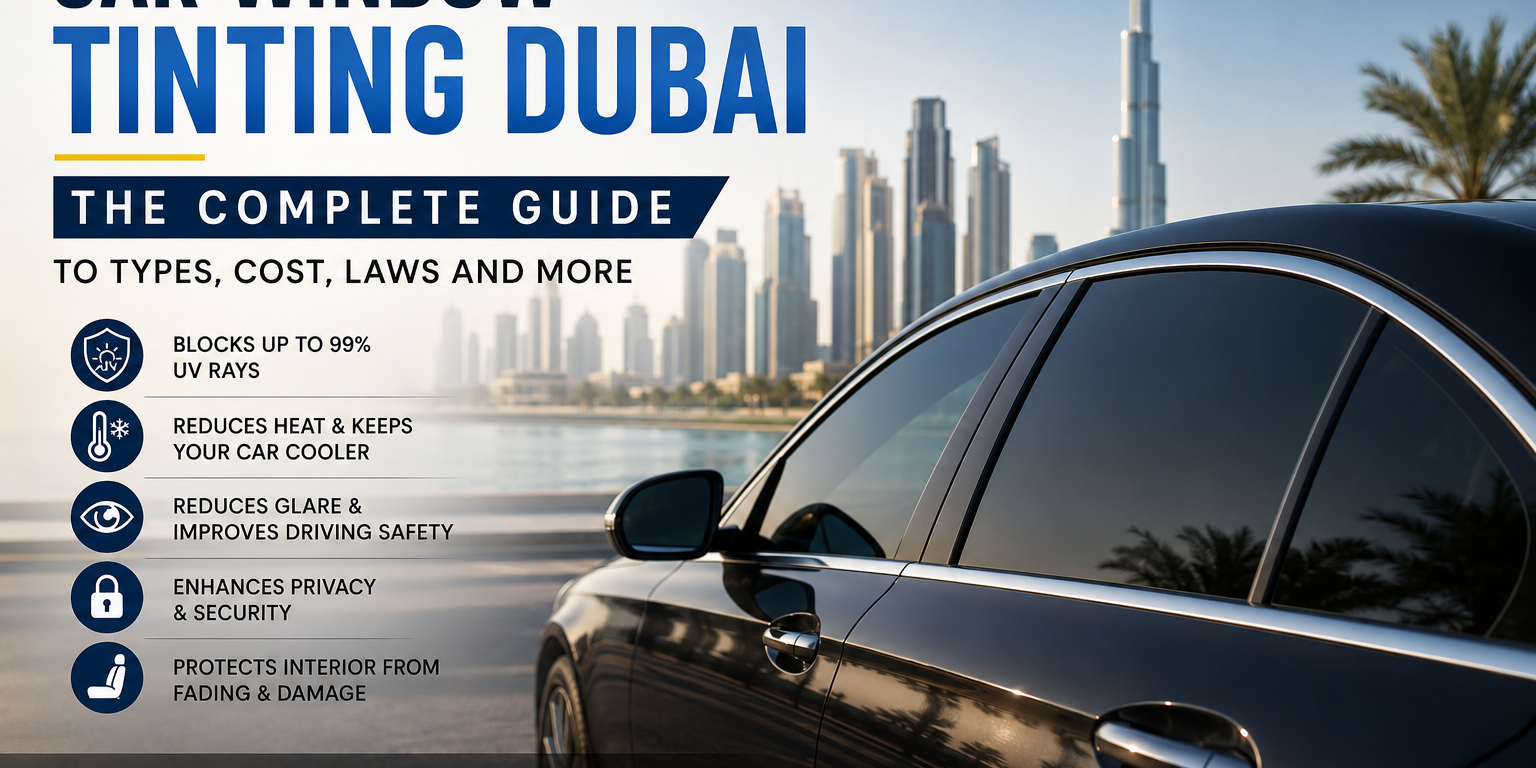
Sunlight contains three types of radiation. Visible light is what you can see. Ultraviolet radiation is what damages your skin and fades your car’s interior. Infrared radiation is what generates heat. Standard untreated glass does almost nothing to stop infrared from entering your cabin. It passes right through, gets absorbed by your seats and dashboard, and radiates back as heat. Your car becomes a greenhouse.
A quality window film blocks a significant percentage of that infrared radiation before it enters the cabin. The result is a car that is measurably cooler, even before you start the engine. Interior temperatures in tinted vehicles can run 10 to 20 degrees Celsius lower than untinted equivalents parked in the same conditions. For a city where summer temperatures regularly exceed 45 degrees Celsius, that difference is not a statistic. It is something you feel in your body every single day.
Beyond heat, a quality film blocks up to 99 percent of UV radiation. This protects the skin of everyone inside the vehicle, preserves the colour and condition of your seats, dashboard, and door panels, and extends the life of your entire interior. Drivers who commute daily in Dubai’s sun are accumulating UV exposure on their left arm and face through the driver’s side window in ways most people never think about. A good tint addresses that silently and consistently.
There is also glare reduction, which matters more than people acknowledge. Sun glare during morning and evening commutes is one of the most common contributors to near misses on Dubai’s highways. Reducing that glare through proper side window tinting makes a real difference to driver safety and fatigue.
Another often-overlooked benefit is improved driving comfort during long journeys. By reducing solar heat and blocking harmful UV rays, quality window tint helps maintain a more consistent cabin temperature while protecting your dashboard, leather seats, steering wheel, and other interior surfaces from premature fading and cracking. In Dubai’s climate, this can help preserve your vehicle’s resale value over time.
The Different Types of Window Tint Films
Not all window tint is the same product. The market offers several distinct film technologies, and the differences between them are significant.
Dyed film is the entry level option. It absorbs solar heat and reduces glare at an accessible price point. The downside is that it fades relatively quickly under intense UV exposure and offers the weakest heat rejection performance of all the available options.
Metalized film adds small metallic particles to reflect heat and UV more effectively. It is more durable than dyed film and stronger at heat rejection, but the metallic content can interfere with GPS signals, mobile connectivity, and radio reception. For many drivers, that tradeoff is not acceptable.
Carbon film is where performance and value genuinely meet. Carbon tint contains no metal, so there is zero signal interference. It blocks a substantial amount of infrared radiation, has a clean matte appearance that looks premium on virtually any vehicle, and holds its colour without fading for years. For the majority of car owners in Dubai looking for a meaningful upgrade at a sensible price, carbon tint is the strongest recommendation.
Ceramic film is the benchmark for performance. It uses nano ceramic particles that are non metallic and non conductive, delivering the highest levels of heat rejection, blocking up to 99 percent of UV rays, and maintaining exceptional optical clarity at any shade level. Ceramic tint does not fade, does not interfere with any signals, and can last for the entire ownership period of the vehicle with proper care. It costs more upfront, but drivers who choose ceramic consistently report that it is worth the investment.
Crystalline or clear film is a specialised option for drivers who want maximum UV and heat protection without any visible darkening of the glass. It looks like completely clear glass while still doing meaningful protective work underneath. It is ideal for situations where dark windows are restricted by law or simply not preferred.
What Does Window Tinting Cost in Dubai?
Price is usually the first question, and it deserves a straight answer.
For a standard sedan, dyed film installation typically falls between AED 150 and AED 350. Carbon film for the same car runs from AED 400 to AED 900. Ceramic film generally starts at AED 900 and can reach AED 1,800 or more depending on the brand and the installer. For SUVs and larger vehicles, expect these figures to increase by 30 to 50 percent due to the additional glass surface area.
What drives that range within each category? Film brand and quality, the experience of the installer, and what is included in the package. A professional installation should include the film, a full surface preparation, application by a trained technician, warranty coverage on both the film and the workmanship, and removal of any existing tint if applicable.
The most important thing to understand about price is this. A cheap tint job that fails in 18 months and needs to be replaced costs more in the long run than a quality installation done right the first time. When you factor in removal costs, downtime, and reinstallation, the economics of going cheap rarely work in your favour.
| Window Tint Type | Typical Price Range* |
|---|---|
| Dyed Window Tint | AED 150–350 |
| Carbon Window Tint | AED 400–900 |
| Ceramic Window Tint | AED 900–1,800+ |
*Prices vary depending on the vehicle size, film brand, and installation requirements.
Why Do Car Window Tinting Prices Vary?
Many customers compare car window tinting prices in Dubai before booking, but the cheapest quote isn’t always the best value. The final car window tinting cost depends on the type of film, your vehicle size, installation quality, and warranty coverage.
For example, ceramic window tint is more expensive than dyed or carbon film because it offers superior heat rejection, better UV protection, and a longer lifespan. Larger vehicles such as SUVs also require more film, which increases the overall installation cost. Choosing a professional installer ensures precise application, long-lasting performance, and fewer issues like bubbling, peeling, or fading.
If you’re comparing window tinting prices, ask what’s included in the package. A quality installation should include premium tint film, professional fitting, and a workmanship warranty, giving you better value over the life of your vehicle.
Is Window Tinting Legal in the UAE?
This is the question that trips up many car owners, and it is worth getting right before you spend a single dirham.
In the UAE, the Roads and Transport Authority sets clear limits on how dark tinted windows can be. The measure used is Visible Light Transmission, expressed as a percentage. A lower percentage means a darker tint. A higher percentage means more light passes through.
For front side windows, the minimum VLT permitted is 30 percent. This means the film must allow at least 30 percent of light through. For front windshields, no darkening film is permitted beyond a narrow strip at the very top of the glass. Rear windows and the rear windshield have slightly more flexibility, with many authorities accepting down to 20 percent VLT, though this can vary by emirate.
Vehicles are checked for tint compliance at registration renewal inspections and can be stopped at roadside enforcement points. Fines for non compliant tinting can reach AED 500, and the vehicle may be required to have the offending film removed before passing inspection.
One common mistake is adding aftermarket film to a car that already has factory privacy glass. The combined VLT of the factory glass and the new film may fall below the legal threshold even when neither would be a problem individually. A professional installer will always measure the existing glass before applying any new film to ensure the final result stays compliant.
The good news is that modern ceramic and carbon films perform outstandingly well at legal VLT levels. The heat and UV protection you need does not require illegal darkness. The technology in the film does the work, not the shade.
How Long Does Window Tint Last?
The honest answer depends on the film type and the quality of the installation.
A basic dyed film in Dubai’s climate may show visible deterioration within one to two years. Bubbling, colour shift toward purple or brown, and edge peeling are the typical signs. A quality carbon film professionally installed can last five to seven years before any meaningful degradation appears. A premium ceramic film from a reputable manufacturer, properly installed and maintained, can last ten years or more. Some ceramic manufacturers offer lifetime warranties.
The factors within your control are straightforward. Parking in covered or shaded locations reduces cumulative UV and heat exposure significantly. Using ammonia free cleaning products on interior glass is critical, as ammonia based cleaners degrade window film adhesive over time. Avoiding rolling down freshly tinted windows for at least three to four days after installation allows the adhesive to cure properly.
The team at Car Garage Auto Service in Dubai installs films from verified manufacturers and provides warranty documentation with every job, so you have a clear understanding of what is covered and for how long from day one.
Keeping your vehicle in top condition doesn’t stop with quality window tint. Regular maintenance, including air conditioning servicing and interior detailing, helps maximise comfort and protect your car from Dubai’s extreme weather throughout the year.
Signs Your Window Tint Needs Replacing
Knowing when to replace your tint is as important as knowing what to buy in the first place.
Bubbling anywhere on the film means the adhesive bond has broken down. Even small bubbles near the edges indicate the film is failing and will deteriorate further. Colour change, particularly a shift toward purple or brownish tones in areas of heavy sun exposure, means the dye is breaking down and the film is no longer providing effective UV protection. Hazy or blurry visibility through the glass is a safety concern, not just an aesthetic one. Edge peeling that exposes the glass underneath shows the adhesive at the most vulnerable points has failed.
If your vehicle has failed a UAE registration inspection for window condition, the time to act is immediately. Professional removal and replacement from a qualified installer is the cleanest solution, and it also protects the rear window defrost element that amateur removal often damages.
Ceramic vs Carbon: Which One Should You Choose?
If your budget accommodates either option, this comparison helps make the decision clearer.
Carbon film delivers excellent heat rejection, zero signal interference, a premium matte appearance, strong UV blocking, and colour stability that outlasts basic alternatives by years. It is the ideal choice for drivers who want genuine performance without the highest price point.
Ceramic film delivers all of those things at a higher level. Better heat rejection, superior optical clarity particularly at lighter shades, and a lifespan that can span the entire time you own the vehicle. For drivers in Dubai who spend significant time in their cars, commute daily through intense summer heat, or simply want the best available protection for themselves and their vehicle’s interior, ceramic is the definitive answer.
The difference in cost between the two is real, but when spread over the lifespan of the film, the premium for ceramic often works out to a very small daily figure. That context makes the decision easier for most people who think it through.
| Feature | Carbon Tint | Ceramic Tint |
|---|---|---|
| Heat Rejection | Excellent | Outstanding |
| UV Protection | Up to 99% | Up to 99% |
| Signal Interference | None | None |
| Durability | 5–7 Years | 10+ Years |
| Price | More Affordable | Premium |
| Best For | Everyday Drivers | Maximum Heat & UV Protection |
Caring for Your Tinted Windows
After installation, the first three to four days are critical. Do not roll down tinted windows during this period. You may see small water bubbles in the glass during the first two weeks. These are part of the normal curing process and will disappear as the adhesive fully bonds.
For ongoing maintenance, use only ammonia free glass cleaners on interior tinted surfaces. Apply with a soft microfibre cloth using gentle pressure. Avoid paper towels, rough sponges, or any abrasive material. Check the edges of your windows periodically for any signs of lifting and have them assessed by a professional if you notice changes. Monthly cleaning is all the routine care your tint needs to stay in excellent condition.
For comprehensive technical information on film performance standards, the International Window Film Association at https://www.iwfa.com is the most authoritative global resource available on the subject.
Frequently Asked Questions
Can I tint my front windshield in Dubai? A full darkening tint on the front windshield is not permitted under UAE regulations. A narrow strip of tint at the very top of the windshield, typically no more than 10 to 15 centimetres, is generally accepted. The windshield must maintain maximum driver visibility at all times.
Will window tint affect my GPS or mobile signal? Only metallic films carry this risk. Carbon and ceramic films contain no metallic particles and have zero effect on GPS, mobile connectivity, radio, or any other electronic signal.
How long after tinting can I wash my car? Wait at least three to four days before running any water over freshly tinted windows. For the first wash, avoid directing high pressure water jets directly at the window edges.
Does window tinting really help with fuel efficiency? Yes, measurably so. A cooler cabin means your air conditioning does not have to work as hard to reach a comfortable temperature, which reduces the load on the engine and lowers fuel consumption. In Dubai’s climate, the air conditioning system is one of the largest fuel consumers in everyday driving.
Can tinting be removed if I want to change it or sell the car? Yes. Professional removal using proper technique takes the film off cleanly without leaving adhesive residue on the glass. This is important for rear windows with defrost elements, where improper removal can cause damage.
Is all window tinting the same quality? Absolutely not. Film quality varies significantly between manufacturers and product lines. A professional installer who uses verified, branded films with manufacturer warranties is providing a very different product than an unbranded film from an unknown source, even if both look identical at installation.
How much does car window tinting cost in Dubai?
The cost of car window tinting in Dubai depends on your vehicle type, the tint film you choose, and the installation quality. Standard dyed films are more affordable, while carbon and ceramic window tints offer better heat rejection, UV protection, and durability at a higher price.
Which window tint is best for Dubai’s hot weather?
For Dubai’s extreme temperatures, ceramic window tint is the best choice because it blocks a higher percentage of infrared heat and harmful UV rays while maintaining excellent visibility. Carbon tint is also a great option if you’re looking for strong performance at a more affordable price.
Why is ceramic window tint more expensive?
Ceramic tint uses advanced nano-ceramic technology that provides superior heat rejection, better UV protection, and a longer lifespan than standard dyed films. Although the initial cost is higher, it offers better long-term value and improved driving comfort.
Does darker window tint block more heat?
Not necessarily. Heat rejection depends more on the quality of the window film than its darkness. A high-quality ceramic tint can reject more heat than a darker, low-quality dyed film while remaining within UAE legal tint limits.
How do I choose the right window tint for my car?
The right tint depends on your budget, driving habits, and performance requirements. If you spend a lot of time driving in Dubai, ceramic tint offers the best overall protection. For everyday use with excellent value, carbon tint is a popular choice.
Making the Right Decision
Window tinting in Dubai is one of the most practical and high impact upgrades you can make to a vehicle. It protects your health, preserves your car’s interior, reduces fuel consumption, improves safety, and makes every drive more comfortable. Done right, it is an investment that delivers value every single day.
Done wrong, it is a frustration that costs you more money over time than doing it properly from the start.
The professionals at Car Garage Auto Service bring genuine expertise to every tinting job, working with verified film brands, calibrated VLT measurement equipment, and a commitment to installations that meet UAE legal requirements and last for years. Whether you are choosing between carbon and ceramic, upgrading from an existing tint, or starting fresh, a conversation with experienced hands always produces a better outcome than guessing alone. If you’re unsure which tint is right for your vehicle, our specialists can explain the differences between dyed, carbon, and ceramic window films, recommend a legal tint percentage for your car, and provide transparent pricing before installation begins.
Your car spends a lot of time in the Dubai sun. Make sure its windows are actually working for you.
If you’re looking for professional car window tinting in Dubai, choosing the right film is just as important as choosing the right installer. At Car Garage Auto Service, we help you compare different tint options, explain their benefits, and recommend the best solution based on your budget, driving habits, and vehicle type. Our goal is to provide long-lasting protection, improved comfort, and professional installation you can rely on.